
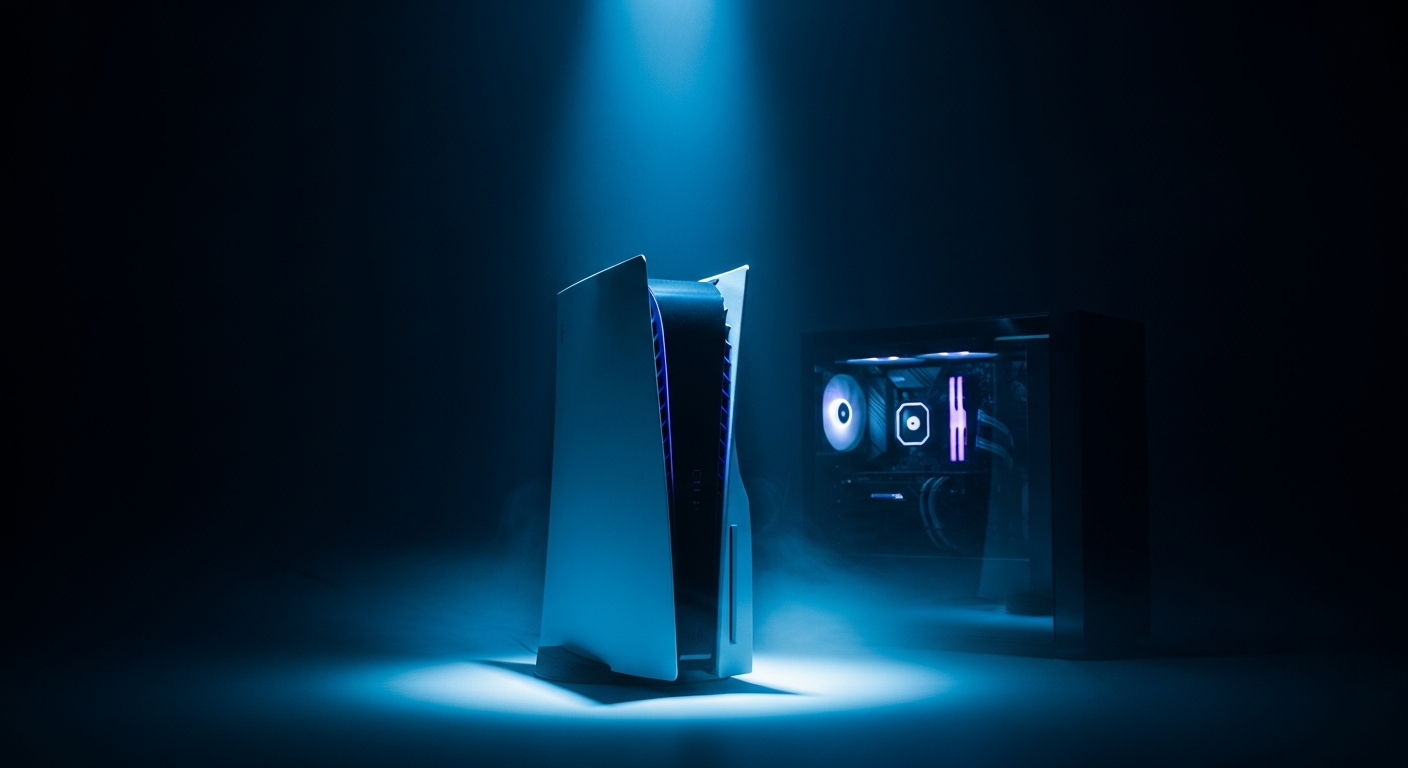
It finally happened. The wall between the PC Master Race and the living room consoles has officially crumbled for good.
The News
Gabe Newell, the visionary leader of Valve, predicted a decade ago that consoles would eventually stop trying to reinvent the wheel. He argued that the proprietary hardware of the past was a dead end for the industry. Today, every major player in the market from the Sony PlayStation 5 to the Xbox Series X utilizes AMD RDNA architecture. This shift marks the total dominance of PC-derived graphics across the entire gaming landscape. It means developers no longer have to fight unique silicon to make games look incredible on your television.
The Breakdown
- Modern consoles like the PS5 and Xbox Series X run on custom AMD Zen 2 and RDNA 2 chipsets.
- Cross-platform development is faster than ever because the hardware architectures are virtually identical to Windows machines.
- The Steam Deck proved that handheld PC hardware can outperform traditional console-style portable designs.
- Legacy proprietary chips like the PlayStation 3 Cell processor are officially a relic of the past.
The Jay Respawns Take
Look. This is the best possible outcome for anyone who actually plays games. We no longer have to worry about terrible ports or weird performance bottlenecks that only exist on one specific platform.
The bottom line is that your living room box is now just a streamlined PC. This makes game preservation much easier and keeps the barrier to entry low for indie developers. We are entering a golden age of compatibility that respects your time and your wallet. Related: PlayStation’s 2028 Disc Ban Validates Kojima’s Warning on Cloud Gaming. Related: Grab 4 Free Saros PS5 Avatars Right Now.
Stay tuned. This is going to be a wild one to track.
The era of proprietary console silicon is dead and PC tech won the war.






Comments