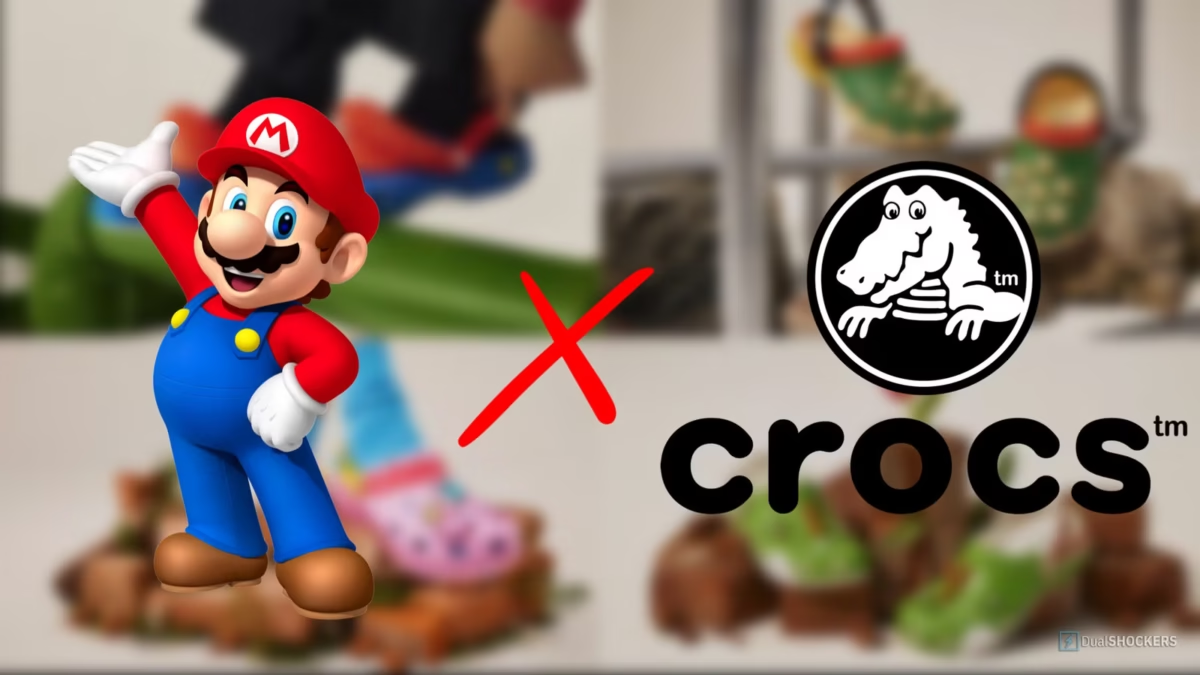
On June 2, 2026, the gaming industry was scheduled to look in one specific direction. Sony had carefully positioned its major State of Play showcase to dominate the early summer news cycle, aiming to set the narrative for the coming year of PlayStation software. Then, just hours before the broadcast, Nintendo executed a masterclass in passive disruption. The company announced a Super Mario footwear collection in collaboration with Crocs, scheduled for a July 15 release. The sheer absurdity of the crossover immediately hijacked social media algorithms, fracturing the attention economy right when Sony needed it most.
The contrast in corporate effort here is staggering. Sony spends millions of dollars coordinating developer schedules, cutting high-fidelity trailers, and securing exclusive reveal rights to justify its hardware ecosystem. Nintendo, conversely, uploaded a promotional image of foam clogs covered in plastic Italian plumbers. The fact that the latter generated nearly equal immediate social velocity reveals a structural advantage Nintendo holds over its rivals. The Kyoto publisher is no longer just competing in the console space; it is operating a pervasive lifestyle brand where merchandise announcements carry the cultural weight of software reveals.
The Margin Math of Foam Footwear
To understand the business incentive behind the July 15 launch, we have to look at the unit economics of licensing. Developing a modern AAA video game requires hundreds of millions of dollars and a half-decade of risk. Partnering with an established apparel manufacturer requires a fraction of that investment while yielding massive royalty margins. We saw this exact model validated with the previous Animal Crossing x Crocs collaboration. That line sold out rapidly, turning a cozy life simulator into wearable branding. The Mario collection applies that same low-risk, high-reward formula to Nintendo’s most recognizable asset.
This strategy creates a continuous revenue bridge between major game releases. In years where the first-party software lineup looks light, physical merchandise fills the void in the balance sheet. It also acts as a billboard. When a consumer wears a pair of Mario clogs, they are paying for the privilege of marketing Nintendo IP to everyone they walk past. Related: Sony’s $900 PS5 Pro Is a Dangerous Bet on Technical Elitism. While PlayStation tries to convince consumers to spend nearly a thousand dollars on premium hardware upgrades, Nintendo is perfectly content selling $60 to $80 plastic shoes to a massive, eager audience. Related: Super Mario Galaxy Movie Digital Delay: Why Nintendo is Squeezing Fans.
Why Does Nintendo Drop News During Sony Events?
The timing of the June 2 announcement appears far too precise to be an accident. Dropping a highly memeable product on the exact day of a competitor’s major showcase suggests a calculated strategy to split the audience’s attention. A State of Play demands 40 minutes of focused viewership to absorb release dates, gameplay mechanics, and technical specs. A pair of bright red Mario Crocs requires a single second of visual contact to process, laugh at, and retweet. In the modern attention economy, friction always loses to immediacy.
Sony is currently fighting an uphill battle to communicate the value of its upcoming catalog. Related: Why Sony Relying on Halo and Onimusha Exposes a First-Party Crisis for PlayStation. When your direct competitor is struggling to generate organic enthusiasm for its core software, the most effective counter-maneuver is not to announce a better game. The most effective counter-maneuver is to remind the public that your intellectual property is so beloved that people will eagerly buy footwear shaped like it. The Crocs announcement serves as a flex of raw IP dominance, deployed at the exact hour it would cause the most distraction.
The Consumer Reality of Hideous Fashion
The public reaction to the collaboration highlights exactly why Nintendo partnered with this specific brand.
That friction between hideous and amazing is the engine of modern internet marketing. Safe, standard apparel does not generate engagement. A shoe that looks slightly absurd demands commentary, and commentary drives pre-orders. The official Nintendo Store leans directly into this bizarre confidence, urging buyers to “Take your look to the next level.” They know exactly what they are selling. They are not selling high fashion; they are selling participation in a cultural joke that happens to be incredibly comfortable.
There is a genuine risk that Nintendo dilutes its mascot by attaching him to every conceivable physical product. Related: The Yoshi Curse: Why Nintendo Has Failed Its Mascot for 30 Years. When a company prioritizes licensing over careful curation, the prestige of the character can suffer. However, the financial data consistently points away from that concern. The market has shown repeatedly that nostalgia scales across almost any physical medium, provided the execution is competent.
While industry analysts spend the week parsing resolution metrics and frame rates from Sony’s June presentation, a massive segment of the gaming public is simply checking their bank accounts ahead of a shoe drop. The contrast lays bare the differing realities of the two companies. Sony has to build technological marvels to command attention. Nintendo just has to point to the July 15 release date and open the digital storefront.



Comments