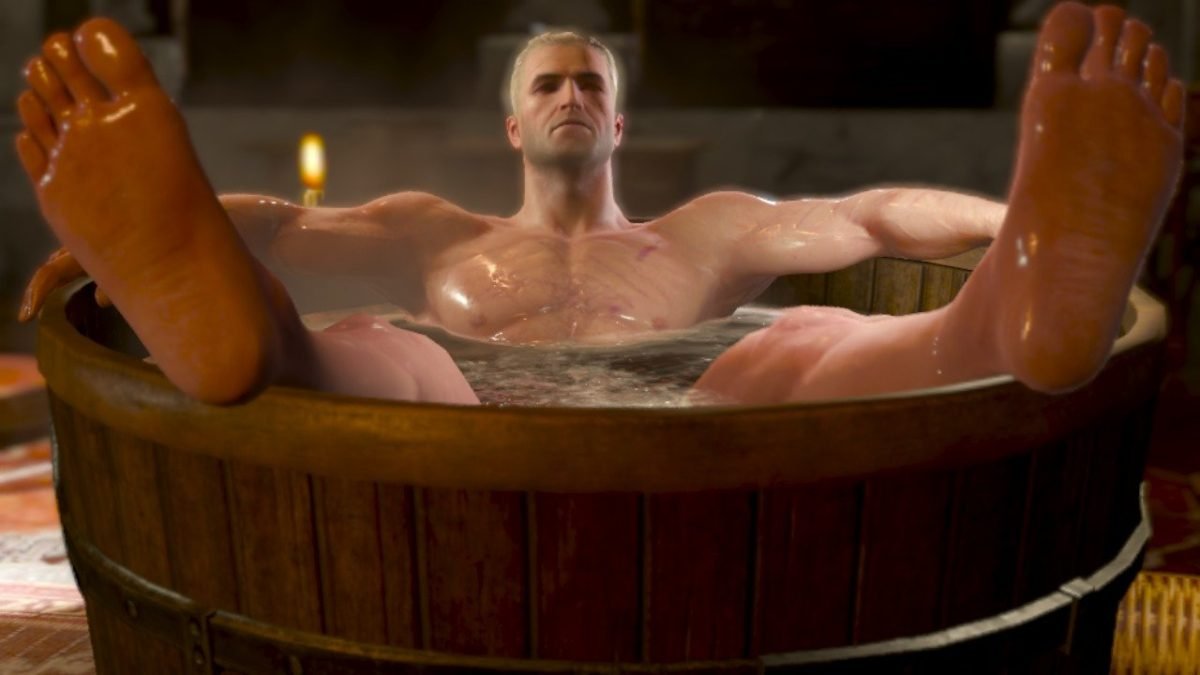
Eleven years after its initial launch in 2015, The Witcher 3: Wild Hunt remains a dominant force in the gaming conversation. In a surprising development, the official CD Projekt Red YouTube website announced a return to the Continent with a brand-new expansion pack titled Songs of the Past. This announcement comes alongside a massive milestone revealing that the RPG masterpiece has officially crossed 65 million copies sold worldwide. This staggering figure places the title eighth on the list of best-selling video games of all time, sitting just behind Terraria, which has recorded approximately 70 million sales.
To contextually frame this announcement, one must look back at the competitive arena of 2015. The Witcher 3: Wild Hunt claimed the Game of the Year trophy at The Game Awards during a year packed with historic releases. It faced stiff competition from Kojima Productions and Konami with Metal Gear Solid V: The Phantom Pain, Bethesda Game Studios with Fallout 4, FromSoftware with Bloodborne, Rocksteady Studios with Batman: Arkham Knight, and Crystal Dynamics with Rise of the Tomb Raider. Despite this crowded field of heavy hitters, the adventures of Geralt of Rivia emerged as a cultural phenomenon that has maintained commercial momentum for over a decade.
The upcoming expansion, Songs of the Past, represents the first major piece of post-launch content for the title since the release of the highly acclaimed Blood and Wine expansion in 2016. While CD Projekt Red has kept specific plot points and mechanics tightly under wraps, this project represents a massive departure from standard industry practices. Releasing paid content for a single-player game more than ten years after its release is almost entirely unprecedented in the modern AAA space, raising significant questions about the studio’s broader production pipeline and long-term franchise strategy.
The Analysis
The decision to develop Songs of the Past is deeply tied to the commercial realities of modern game development. When a single title generates 65 million unit sales, it ceases to be a mere product and becomes an active platform. CD Projekt Red is sitting on an active player base that spans multiple console generations, especially after the free next-gen update. By introducing a new expansion, the studio can re-engage this massive audience without the astronomical overhead costs associated with building a new game engine or asset library from scratch.
There are several financial and logistical reasons why this move makes sense for the publisher:
- Asset Reusability and Cost Efficiency: Developing a new expansion within the existing REDengine framework allows the studio to bypass the multi-year pre-production phase. They can reuse geographical assets, character models, and combat systems, keeping the production budget fractionally small compared to a brand-new game.
- Mitigating the Development Gap: With the next major entry, The Witcher 4, still deep in development and years away, the studio needs to keep the intellectual property active in the public consciousness. A high-profile DLC serves as an excellent marketing vehicle to maintain brand relevance.
- Low Barrier to Entry: The base game of The Witcher 3: Wild Hunt is frequently discounted, and the Game of the Year Edition, which bundles Hearts of Stone and Blood and Wine, remains highly affordable. Offering the new expansion for a rumored $9.99 ensures that millions of existing owners can jump back in with minimal financial friction.
In addition, the decision to return to the REDengine for this DLC, while the studio has publicly announced a transition to Unreal Engine 5 for future projects, suggests a split in engineering focus that could stretch internal resources thin. It also remains unclear whether Songs of the Past will be integrated directly into the existing Game of the Year Edition or if it will require an entirely separate purchase for historical players.
Is Songs of the Past the Right Move for CD Projekt Red?
Releasing a brand-new expansion for an eleven-year-old single-player RPG is a highly calculated risk that addresses the studio’s pipeline gap. It is a smart tactical maneuver to maintain cash flow and player engagement during an era where AAA development cycles have ballooned to six or seven years. Rather than letting the franchise sit dormant while waiting for the next main-line entry, CD Projekt Red is capitalizing on an established audience that has proven its willingness to spend money on high-quality narrative content.
This approach contrasts sharply with other industry giants. While players continue to discover new details in massive open-world titles, as we explored in our analysis of Red Dead Redemption 2 details players are still discovering, Rockstar Games has resisted the urge to release single-player story expansions, choosing instead to focus entirely on multiplayer monetization. CD Projekt Red is taking the opposite path, betting on the enduring appeal of single-player storytelling to drive revenue. This is a refreshing stance in an industry that often feels obsessed with live-service models and recurring microtransactions.
The Jay Respawns Position
Let us be perfectly clear: this is a necessary defensive strategy rather than a move born out of pure artistic inspiration. CD Projekt Red needs a safe commercial win. The studio spent years rebuilding its reputation after a highly publicized and troubled launch of its other major intellectual property. By returning to the comforting, universally beloved arms of Geralt of Rivia, the developers are retreating to the safest harbor they possess. It is a smart business decision, but it also highlights a growing industry crisis where publishers are terrified of moving forward without the safety net of nostalgia.
We should also examine the pricing structure of this release. Selling a new, substantial expansion for $9.99 in an era where publishers routinely charge $20 for cosmetic character skins is a highly consumer-friendly move. It respects the player’s wallet while acknowledging that the base game has already repaid its development costs many times over. If Songs of the Past can deliver even half of the narrative depth found in Blood and Wine, it will instantly become one of the best value propositions in modern gaming, setting a standard that other publishers will likely ignore but players will certainly appreciate.
At its core, this release will serve as a bridge. It allows CD Projekt Red to test narrative concepts and character dynamics that will likely form the foundation of The Witcher 4. By using Songs of the Past to set up the next chapter of the franchise, they are converting a legacy product into an active marketing tool for the future. It is a masterclass in IP management, showing that when you build a game as exceptionally polished as The Witcher 3, the commercial runway can extend far beyond a single decade.
The Continent is calling once again, and with 65 million potential players waiting at the gates, CD Projekt Red is poised to prove that great single-player games never truly die. Related: SEGA Mega Drive Returns with a Massive Nostalgia Punch.






Comments