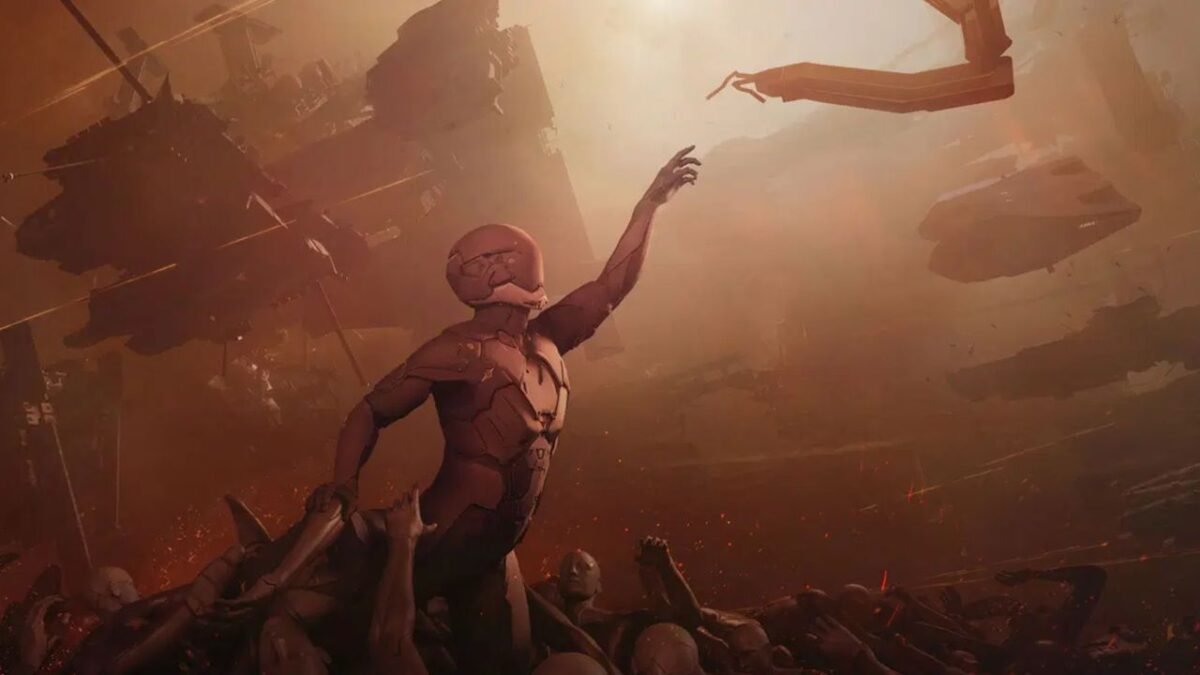
The official EVE Online community announced a vision of boundless player freedom for their upcoming survival project on July 7, 2026. CCP Games is building EVE Frontier as a dark sci-fi MMO heavily reliant on player-driven systems and mod tools. But when asked how the studio plans to handle players injecting absurd, meme-heavy elements into their grim universe, the developers offered a terrifyingly simple answer: everything is canon. This is not a creative triumph. It is a total surrender. When a studio claims that any player-created absurdity automatically fits into the lore, they are actively devaluing the universe they spent years building.
The developers explained their stance clearly, as reported by PC Gamer. “It’s an easy thing to do when you build the answer to the question in the lore of the game,” they stated. This sounds profound in a press release, but it translates to a complete lack of editorial control. EVE Online built its massive reputation on ruthless corporate espionage, staggering fleet battles, and a cold, unforgiving void. Players invest thousands of hours into a galaxy that takes itself completely seriously. If EVE Frontier allows players to fly around in giant neon hotdogs and calls it canon, the stakes vanish instantly.
How Do You Reconcile Your Lore In Game Reviews?
You cannot reconcile a fractured world, and critics will penalize the game heavily for it. When reviewers evaluate a narrative experience, they look for consistency. If the underlying mechanics allow the tone to shift wildly from grimdark survival to cartoonish farce based entirely on which mods a server is running, the game has no core identity. A dark sci-fi setting requires tension, and tension requires deep immersion. You cannot maintain immersion when the developer preemptively excuses every immersion-breaking mod as a canonical event. Reviewers will struggle to connect with a story that refuses to take a definitive shape, leading to disjointed scores and confused buyer recommendations.
To observe how careful thematic design actually works, we can analyze a completely different genre. Take Logic & Lore, a deceptively deep two-player deduction game. In that experience, players work with mice and dragons to realign the heavens and deduce the correct order of hidden cards. Every single mechanic serves the fantasy. What might seem silly on paper works flawlessly in practice, where a skeptical first impression turns into a thoughtful look at how deeply the theme integrates with the rules. The creators of Logic & Lore built a cohesive world and forced the gameplay to respect it. EVE Frontier, by contrast, is outsourcing its world-building to the whims of the internet and hoping the resulting chaos somehow forms a narrative.
The MMO genre is littered with games that lost their visual and narrative identity in the pursuit of player expression. Giving players mod tools is generally a positive step for longevity, often extending a game’s lifespan by years. However, integrating those mods directly into the official lore is a fatal misstep for a franchise that relies on severe consequences. The entire economy of EVE Online functions because loss is painful and the setting is grounded. If a player loses a valuable ship to a fleet of heavily modded, aesthetically ridiculous vessels, the loss feels cheap and manufactured. The gravity of the EVE universe relies on everyone agreeing to play within the same grim reality. When a developer explicitly sanctions goofy mods as canon, they signal to the dedicated player base that their serious investment is no longer respected.
The practical reality of these mod tools points to a massive moderation problem CCP wants to avoid. While the studio has not released the exact specifications of what players can alter, their acknowledgment that things might get “way too goofy” confirms they anticipate radical visual and mechanical departures from the base game. If a mod allows players to alter ship geometries or weapon effects into something unrecognizable, the tactical readability of the game breaks down. MMO player-versus-player combat relies on instant visual identification. If you cannot tell what class of ship is approaching because it has been modded into a low-resolution meme, the competitive integrity collapses alongside the lore. The developers claim that building the answer into the lore makes it easy for them. It only makes it easy for the studio. It makes it immensely frustrating for the player trying to take the universe seriously.
The financial incentive behind this decision points directly to cost-cutting. Moderating a sprawling multiplayer universe requires dedicated staff, clear guidelines, and constant enforcement. By adopting an “everything is canon” philosophy, CCP Games avoids the expense of policing their own modding community. If a custom asset technically fits the lore because the lore accepts everything, the studio never has to spend resources deciding what belongs on a server and what violates the aesthetic rules. It is a brilliant way to slash overhead costs, but it passes the burden of curation directly onto the players who just wanted a cohesive sci-fi experience. The studio is prioritizing cheap content generation over narrative integrity.
Sandbox purists within the MMO community argue that player freedom is the primary goal of any multiplayer universe. They suggest that if the community wants a goofy universe, the developer should not stand in their way. True sandboxes, the argument goes, are defined entirely by the players. This perspective ignores the core appeal of the franchise. Players flock to EVE because the developers built a harsh, uncaring galaxy. True freedom in a game requires a consistent set of physical and narrative laws to push against. When you remove the boundaries of the universe and declare that any modded monstrosity is officially canon, you remove the friction that makes the sandbox interesting. You are no longer surviving in a dark sci-fi world; you are just hanging out in a chaotic chat room with spaceships.
This tension between developer vision and community control happens across the industry. We see similar friction when Stardew Valley’s success traps its creator in endless update cycles, forcing a game to stretch beyond its original scope to satisfy player demands instead of maintaining a curated vision. Or consider how balance and design changes impact competitive titles, where the Slay the Spire 2 June Neowsletter exposes design flaws simply by listening too closely to what a vocal fraction of the community wants. EVE Frontier is preemptively giving up the fight before the servers even go live. By declaring that all mods are canon, CCP Games is absolving themselves of the difficult task of curating a consistent multiplayer experience.
Accepting every absurd creation as canonical fact is a cowardly approach to narrative design. Instead of setting strict visual guidelines for official servers, CCP is throwing their hands up and pretending it was all part of the plan. A universe where everything matters requires curation. If CCP refuses to draw a line between their dark sci-fi vision and internet absurdity, players will simply find another galaxy to conquer.
Featured image via pcgamer.com


Comments