Eric Barone cannot escape his own creation. The continued development of his next project is currently locked in a tug of war with his past. Developer ConcernedApe has spent years working on his follow-up title, but as reported by Screen Rant, he is actively juggling both the new game and the relentless demands of his farming simulator audience. Community additions and content drops like Cottoncloud Town are stepping in to keep players busy until the new release arrives. The primary announcement video highlights this ongoing dual focus. This split attention is not a sustainable business strategy. It is the direct consequence of building an open-ended country-life RPG that the player base refuses to abandon.
The source material provides absolutely no release date for the upcoming chocolate shop game. There is no launch window, no early access roadmap, and no definitive timeline for when the juggling act will end. This silence is a calculated boundary set by a developer who understands that assigning a date creates an artificial finish line. By refusing to commit to a calendar year, Barone maintains creative control and avoids the toxic crunch cycles that define modern studio development. The new project will arrive exactly when it is ready, and not a single day sooner.
The installation base for this farming simulator spans nearly every piece of hardware currently on the market. Earning a Metascore of 89 is a significant achievement, but maintaining an Overwhelmingly Positive rating on Steam over several years requires relentless optimization. The reality of supporting PC, PlayStation, Xbox, Switch, and Mobile platforms simultaneously is that the workload never truly vanishes. Each platform has its own certification processes, unique bug reports, and specific hardware quirks. When players invest heavily in portable gaming, they often find themselves paying the handheld PC accessory tax just to squeeze better battery life out of their virtual farms. The sheer scale of this multi-platform ecosystem means the developer is essentially managing a mid-sized studio workload entirely alone.
The reason players cling so tightly to this specific property becomes obvious when comparing it to the franchise it replaced. For decades, players looking for virtual agriculture had one primary option. But when evaluating the modern market, players note a distinct difference in quality. A Medium article accurately noted that “The characters are much more in depth than some Harvest Moon titles”. The older franchise relied on rigid daily schedules and flat character arcs. Barone introduced actual stakes, complex relationships, and layered game systems that gave the town a pulse. Players are not just waiting for the next game; they are actively living in the current one. This depth is what allows community additions and expansions like Cottoncloud Town to thrive.
When Is the Next Stardew Valley Update Coming Out?
The answer is tied directly to how much time the developer can steal away from his next project. Search traffic around this specific question remains massive, highlighting a community that expects continuous development from a single creator. Players are not asking if the game is finished. They are demanding to know what comes next. A user in the Steam community explained this hunger perfectly, writing, “It’s simple yet incredibly deep and layer mechanisms.” That layered design means every new update cascades through the entire economy, changing how players approach crop rotation, artisan goods, and dungeon diving. The audience knows that any new patch will squeeze another fifty hours of playtime out of their saves.
The strongest argument against this dual development approach is that it dilutes both products. Critics suggest that splitting time between maintaining a massive legacy hit and building a new game will inevitably result in delays and burnout. They argue that a solo developer should make a clean break, finalize the farming title, and direct all creative energy forward. Software development is a zero-sum game regarding time. Every hour spent tweaking drop rates or adjusting crop yields is an hour not spent programming new mechanics for the upcoming release.
However, this perspective ignores the financial reality of user retention. Keeping the current player base engaged with content like Cottoncloud Town ensures a built-in audience for the next release. If a player is still logging in to check their ancient fruit wine barrels today, they are practically guaranteed to purchase the follow-up title on day one. A player in a Facebook group simply stated, “It’s a flawless game.” You do not abandon a product that holds a Metascore of 89 and an Overwhelmingly Positive rating on Steam while it continues to generate revenue across five different platforms. You maintain it.
Other independent titles frequently try to pivot away from their roots to capture new trends, much like how Cassette Beasts 2002 abandons its retro identity to find a different audience. Barone does not need to pivot. The original formula is so potent that it requires no reinvention, only expansion. The open-ended nature of the country-life RPG genre means there is no final boss to defeat or definitive end state to reach. Players simply wake up, check the weather, and decide what part of the economy they want to manipulate that day. One IGN review captured this exact sentiment, stating, “Stardew Valley is not only the best farming game I’ve played, it is one of my favorite games of all time.”
The ongoing development saga between the farm and the chocolate shop reveals a harsh truth about independent game creation. Total success removes the option of a clean exit. The community will consume whatever content arrives to fill the gap, but they will never stop asking for more from the original source. Eric Barone built an agricultural trap so compelling that millions of players refuse to leave, ensuring his work on the original farm will never truly be finished. Related: Factory Town 2 Rejects the Punishing Math of Modern Automation Games.
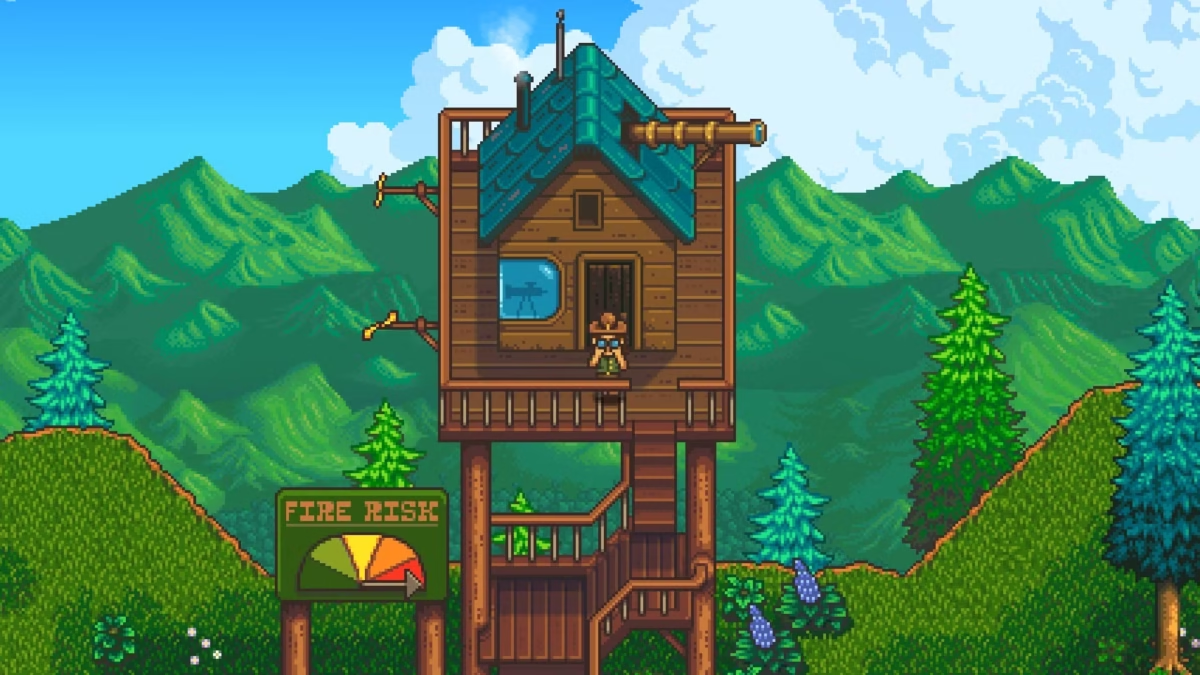
Featured image via store.steampowered.com






Comments