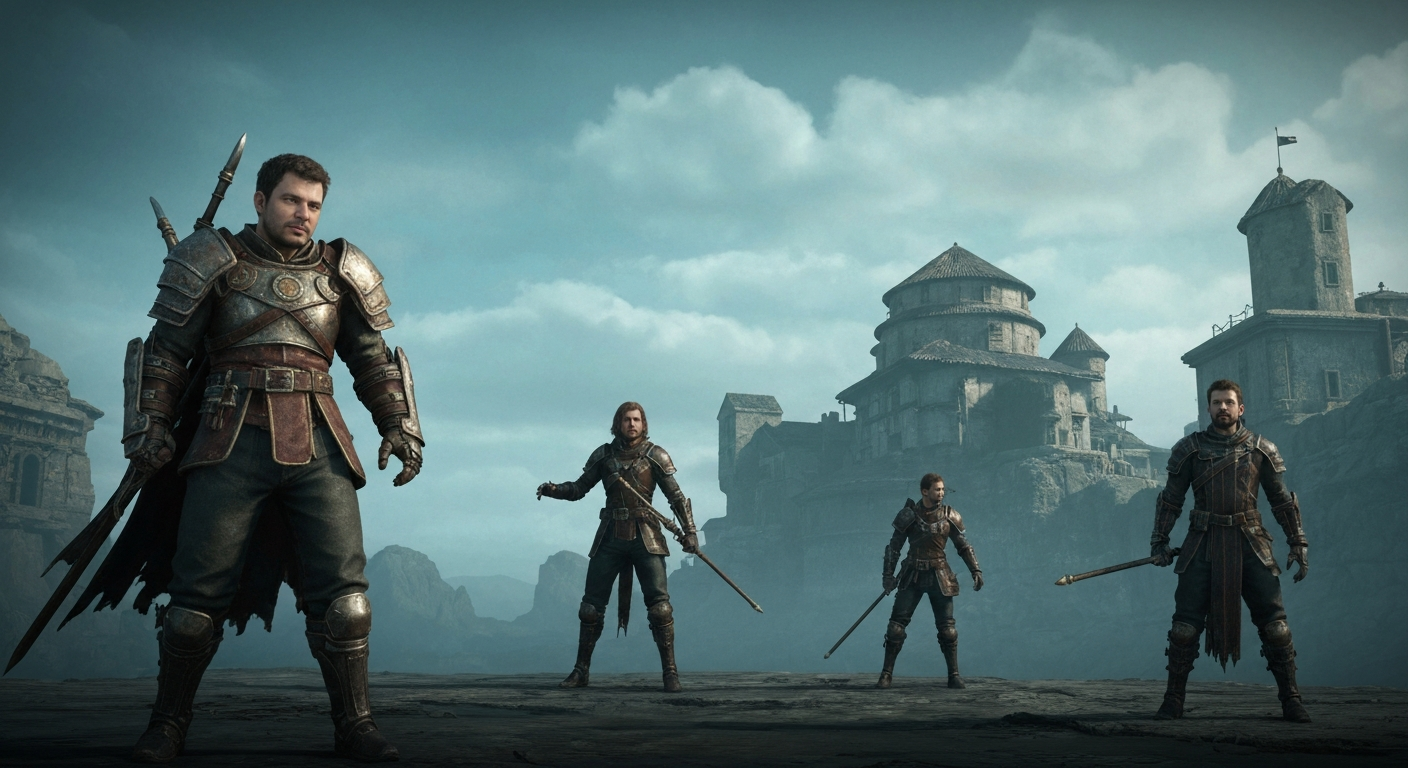
The closure of Spiders Studio marks the end of an era for European RPG development and signals a dangerous collapse of the industry middle class. This shutdown proves that even successful niche hits like GreedFall cannot protect a developer from the brutal economic realities of modern publishing cycles.
The Deep Dive: The Rise and Fall of the Euro-RPG Powerhouse
For over a decade, Spiders carved out a unique space in the market. They specialized in what fans affectionately called Eurojank. These were games with massive ambition and limited budgets. They offered deep roleplaying systems that rivaled BioWare. They provided world-building that felt fresh and culturally distinct. The studio reached its zenith with GreedFall. That title sold over two million copies. It proved that players were hungry for traditional RPGs. It showed that gamers wanted choices that mattered. It offered an alternative to the microtransaction-filled live service models of the time.
The success of GreedFall led to the acquisition of Spiders by Nacon. This move was supposed to provide stability. It was meant to give the team the resources they needed to move from AA to AAA status. However, the transition proved fatal. The development of Steelrising was an ambitious attempt at the soulslike genre. It received decent reviews but failed to set the sales charts on fire. The technical demands of modern hardware began to outpace the studio’s production capacity. Costs rose while the margin for error shrank. The recent Early Access launch of GreedFall 2: The Dying World was the final straw. The game faced criticism for its radical changes to combat. It suffered from technical instability. Internal reports suggested a breakdown in communication between leadership and staff. Labor strikes in late 2024 highlighted a deep rift within the company. The closure is not just a loss of a brand. It is the dissolution of a specific creative philosophy. The industry has lost a developer that was willing to take risks on original intellectual property.
Technical Breakdown: The Burden of Proprietary Tech and Scaling Issues
Spiders utilized a proprietary engine known as the Silk Engine. This engine was a heavily modified version of Sony’s PhyreEngine. It allowed the studio to create beautiful environments on a fraction of the budget used by Ubisoft or EA. However, proprietary tech is a double-edged sword in the current era. Maintaining a custom engine requires a dedicated team of engineers. It makes onboarding new talent difficult. Most developers are now trained in Unreal Engine 5. When Spiders tried to scale up for GreedFall 2, the Silk Engine became a bottleneck. The transition to more complex systemic gameplay and larger open zones put immense pressure on the rendering pipeline.
Distribution logistics also played a role in this collapse. Physical retail is dying for AA games. Digital storefronts are crowded with thousands of new releases every month. A studio like Spiders relies on discoverability. They need high-profile marketing to stand out. Nacon struggled to provide the necessary visibility for their later titles. The hardware requirements for their newer games also limited their audience. Steelrising struggled on the Xbox Series S. It pushed the aging Silk Engine to its breaking point. The move to current-gen exclusivity was a gamble that did not pay off. Without the install base of the previous generation, the sales floor dropped significantly. The technical debt of maintaining an in-house engine while trying to meet 4K 60FPS standards eventually became unsustainable.
Industry Impact: A Vacuum in the RPG Market
The closure of Spiders sends a chilling message to Sony, Microsoft, and Nintendo. It demonstrates that the middle tier of game development is currently a death trap. Sony has pivoted almost entirely to blockbuster spectacles with budgets exceeding 200 million dollars. Microsoft has acquired numerous mid-sized studios but struggles to manage their output. The loss of Spiders leaves a massive hole in the RPG landscape. They were the primary competitors to Larian Studios and Obsidian Entertainment in the mid-budget space. Without Spiders, players have fewer options for narrative-heavy experiences that do not require a five-year wait between installments.
This closure will likely lead to even more consolidation. Smaller developers will be terrified to remain independent. They will seek the safety of large conglomerates. This stifles innovation. It leads to a homogenization of game design. We are entering an era where games are either tiny indie projects or massive corporate products. The “Double-A” space provided the experimental ground for new mechanics. Spiders experimented with colonial themes and clockwork aesthetics. Those ideas are now at risk of being lost. Competitors will look at the failure of GreedFall 2 as a reason to avoid Early Access for narrative games. This will change how RPGs are funded and tested in the future.
Editor’s Take: The Death of the Gritty Underdog
To the Noir gaming audience, Spiders represented something special. They built worlds that felt lived-in and decayed. Their games were often dark and cynical. They focused on political intrigue and the moral gray areas of human nature. They were the spiritual successors to the early days of CD Projekt Red. Losing this studio feels like losing a piece of the industry’s soul. We often complain about the lack of “medium-sized” games. We miss the days of the PS2 era when studios could release a flawed but fascinating game every two years. Spiders was the last vestige of that era.
The verdict is clear. The current economic model for AA development is broken. If a studio can release a multi-million seller like GreedFall and still face closure five years later, the system is failing. Publishers like Nacon are demanding AAA results on AA budgets. Developers are being crushed by the weight of rising player expectations. We have reached a point where “good” is no longer enough to survive. A game must be a viral sensation or a masterpiece to stay afloat. This is a tragedy for the fans. It is a tragedy for the 150 employees who lost their jobs. The closure of Spiders is a grim omen for 2025. It suggests that more “cult classic” developers are on the chopping block. We are witnessing the thinning of the herd. The industry will be much quieter and much more boring without the ambitious flaws of Spiders Studio. Rest in peace to a developer that always swung for the fences, even when the odds were stacked against them.






Comments