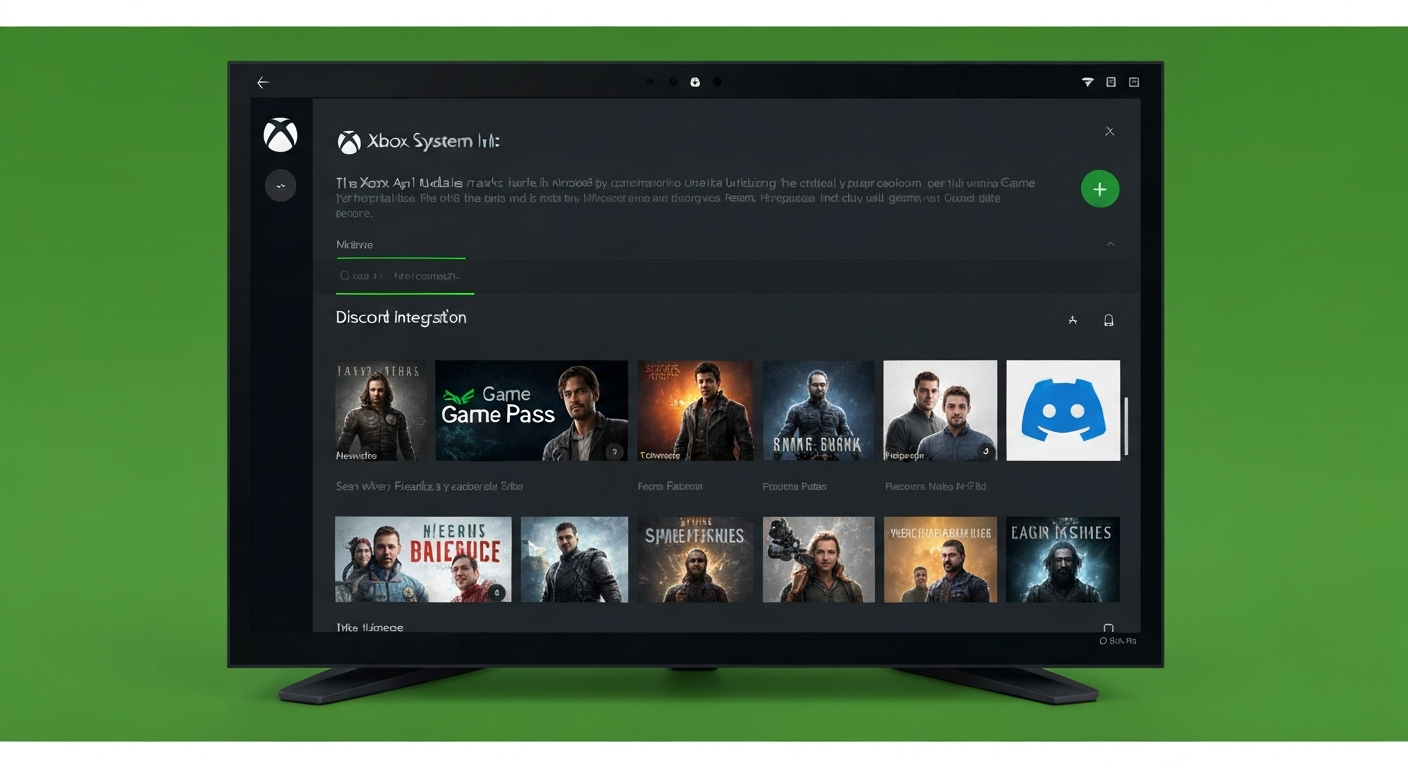
The Xbox April Update marks a pivotal shift in Microsoft strategy by prioritizing ecosystem cohesion over individual hardware features. This update streamlines the user experience to ensure that Game Pass remains the central nervous system of the entire gaming platform.
The Deep Dive: Efficiency Meets Ecosystem Lock-In
The latest Xbox system update is not a visual overhaul. It is a refinement of the digital pipes that connect your hardware to the cloud. Microsoft has introduced a new Game Pass hub that consolidates everything into a single navigable space. This is a strategic move to reduce friction. Friction is the silent killer of subscription services. If a user has to click five times to find a new release they will likely stop looking. Microsoft wants to eliminate those extra clicks. They want the dashboard to feel like a premium streaming service rather than a file management system.
The update also brings significant improvements to Discord integration. Users can now see when their friends are in a voice channel directly from the console interface. This sounds minor. It is actually a massive blow to the traditional concept of “platform exclusive” social circles. By bridging the gap between PC and console social layers Microsoft is making the Xbox console a more attractive secondary device for PC gamers. You no longer have to choose between your PC friends and your big screen experience. The social barrier has been dismantled. This creates a sense of ubiquity that Sony has yet to fully replicate with its own Discord integration.
However there is a downside to this constant refinement. The Xbox dashboard is becoming increasingly crowded. Every new “hub” and “shortcut” takes up valuable screen real estate. The user interface now feels like a digital billboard for Microsoft services. While the efficiency is high the personality of the console is low. It feels corporate. It feels utilitarian. For the “Noir” audience that values immersion and a clean aesthetic the dashboard is becoming a loud marketplace. You are always being sold something. Even when you already own the subscription you are being sold the “next” thing to download.
Technical Breakdown: Bandwidth, Storage, and the Velocity Architecture
The technical core of the April update focuses on data management and peripheral performance. One of the most critical changes involves OneDrive integration. Microsoft has updated how game captures are handled. Previously the console would struggle with large 4K clips when uploading to the cloud. Now the system provides clearer prompts regarding storage limits. It also offers more automated tools for clearing local cache. This is vital because the Xbox Series X and S rely on the Velocity Architecture. This architecture requires a specific amount of free space on the internal NVMe SSD to function as virtual memory. When your internal drive is clogged with 100GB of “Call of Duty” clips the console performance can actually stutter. This update forces the user to be more disciplined with their storage.
We also see a controller firmware update buried in the patch notes. This update addresses specific input latency issues on the Xbox Wireless Controller. Microsoft is using improved polling rates to ensure that Bluetooth connections remain stable in high-interference environments. If you live in an apartment with twenty different Wi-Fi signals your controller can sometimes drop inputs. This firmware patch hardens the signal. It is a subtle change that most casual players will not notice. Hardcore competitive players will feel the difference in response times. It shows that Microsoft is still committed to the “Pro” gaming market even as they chase the casual subscription audience.
The update also introduces new installation restrictions. This is a masterclass in enterprise-level software design applied to a consumer device. Parents or system administrators can now lock down the ability to install apps or games based on specific age ratings or passkeys. Technically this is an extension of the Windows 11 kernel that runs beneath the Xbox OS. It allows the console to act more like a managed device. This is a signal that Microsoft views the Xbox as a hardware “endpoint” in a larger network rather than just a toy.
Industry Impact: The War of the Interfaces
The console wars used to be fought with teraflops and exclusive titles. The war is now being fought in the User Experience (UX) department. Sony currently leads in hardware sales. However the PlayStation 5 interface is often criticized for being rigid. It is difficult to find folders. It is difficult to manage cloud saves. Microsoft is leaning into its experience as a software company to win the “utility” war. By making the Xbox easier to use as a daily media hub they are increasing player retention.
Nintendo remains in its own bubble with a minimalist UI that does very little. This leaves a massive opening for Microsoft to become the “Default” platform for multi-platform gamers. If a game is available on both PS5 and Xbox the April update makes a strong case for playing on Xbox. The social features are better. The cloud integration is more seamless. The download management is more intelligent. Microsoft is betting that in the long run convenience will beat exclusivity. They are turning the Xbox into a “Service on a Box.” This puts immense pressure on Sony to modernize their OS or risk looking like a legacy platform from a decade ago.
Editor’s Take: The Ghost in the Machine
I have covered this industry for fifteen years. I have seen the transition from disc-based consoles to the digital-first era. The April update feels like the final nail in the coffin for the “Classic” console experience. The Xbox is no longer a destination. It is a gateway. There is a cold, clinical efficiency to how Microsoft is managing this platform. It reminds me of a Noir detective walking through a rain-slicked city of neon signs. Every sign is an ad. Every alleyway leads to a different subscription tier.
Is it better for the gamer? Yes. The technical improvements to OneDrive and controller latency are objectively good. The Game Pass hub makes finding content easier than ever. But something is being lost. The sense of “owning” a console is being replaced by the sense of “renting” an experience. The Xbox is becoming a ghost. It is everywhere. It is on your phone. It is on your PC. It is on your TV. The hardware box under your television is just the most expensive way to access that ghost.
My verdict is clear. This update is a technical success but a soulful failure. It solidifies Microsoft’s position as the king of gaming utility. It also proves that they have completely moved past the idea of the console as a unique piece of art. If you value efficiency and the “All-You-Can-Eat” model of gaming this update is exactly what you wanted. If you miss the days when a console felt like a specialized machine for a specific hobby you might find the April update a bit too corporate for comfort. The Xbox is now a Windows machine for the living room. It is fast. It is reliable. It is also completely devoid of mystery.




Comments