
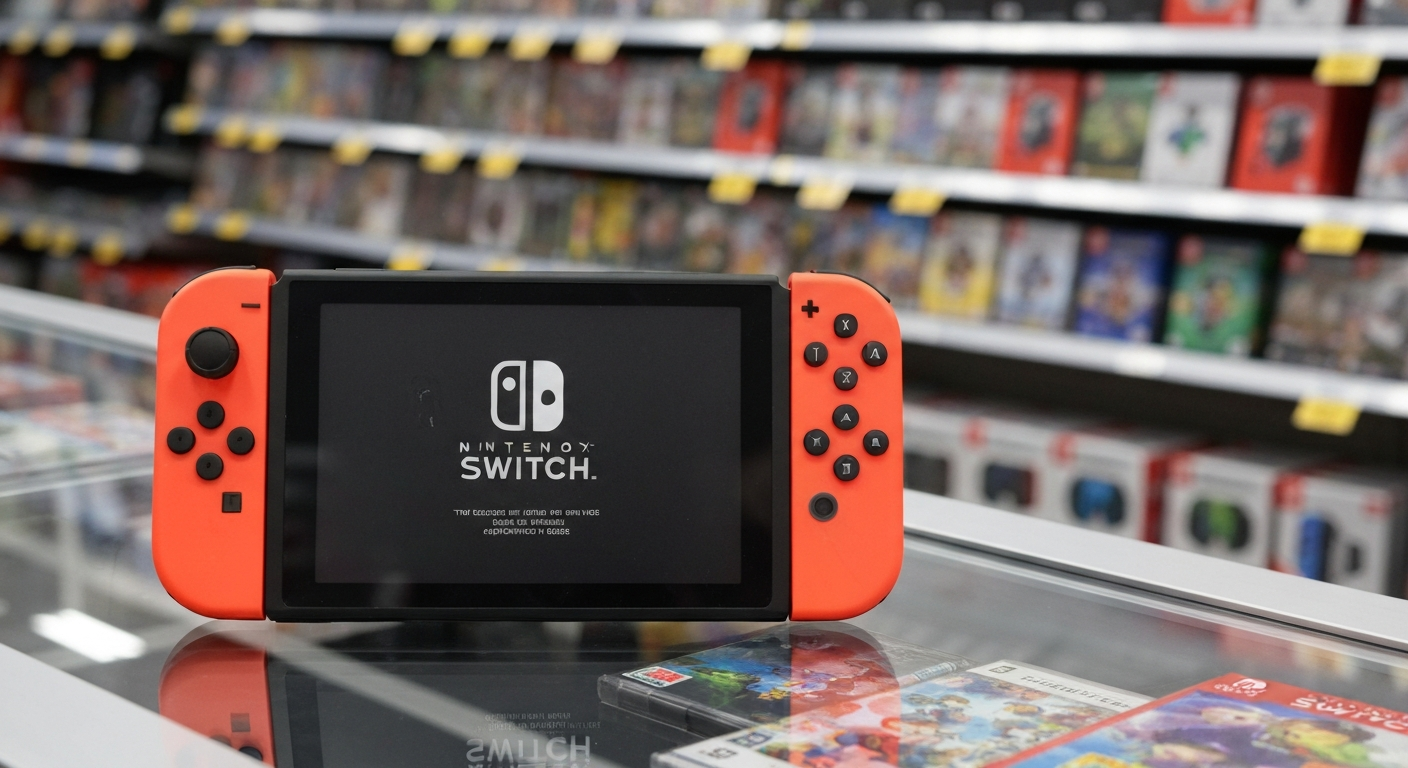
The air in the electronics aisle at Walmart smells like plastic and desperation. For years, Nintendo has maintained an iron grip on its pricing architecture, treating its first-party titles like digital gold that never loses its luster. But something shifted this week. Reports from across the United States indicate that Walmart has initiated a massive, in-store clearance of Nintendo Switch physical media, dropping prices on heavy hitters like The Legend of Zelda: Breath of the Wild, Super Mario Odyssey, and Splatoon 3 to as low as twenty-five dollars. This is not a coordinated holiday promotion from the top down. This is a localized purge. It is a tactical retreat from the physical shelf space that has defined the Nintendo Switch era since 2017. When a retail giant like Walmart decides to liquidate inventory at a fifty percent loss against the MSRP, they are not just being generous to the consumer. They are clearing the floor for the inevitable arrival of the Switch 2 hardware.
The Deep Dive: The Logistics of a Shelf Space Massacre
In the high-stakes world of retail distribution, shelf space is the most valuable currency a company owns. Every square inch of a Walmart glass case must justify its existence through high turnover and profit margins. For nearly a decade, the Nintendo Switch has been the king of that real estate. However, the data suggests that the momentum is stalling. We are seeing a classic case of inventory churn where the cost of holding old stock outweighs the potential profit of a full-price sale. By dropping Metroid Dread and Super Mario RPG to thirty dollars, Walmart is signaling to the market that these units are now considered stagnant assets. This move mirrors the behavior we saw in late 2016 just before the original Wii U stock was vanished into the night to make room for the red and neon blue boxes that would change the industry.
The Performance & Experience Autopsy: Hardware at its Limit
From a technical perspective, the Nintendo Switch and its aging Nvidia Tegra X1 processor have reached a point of diminishing returns. While the Switch OLED provided a beautiful screen upgrade, the internal guts are screaming for a refresh. Players are starting to feel the friction. The resolution scaling in titles like Xenoblade Chronicles 3 or the frame-rate stutters in Pokémon Scarlet have become impossible to ignore. This clearance sale is a recognition of that technical ceiling. As developers shift their focus to the next-generation architecture, the current library of Switch games begins to look less like a premium product and more like legacy software. For the gamer, this is a golden opportunity to fill out a physical collection, but it comes with the somber realization that we are playing on borrowed time. The physical cartridges we buy today at Walmart are the final monuments to a hardware cycle that has been pushed beyond its natural life expectancy.
The Economic Landscape: Revenue Optimization and the Digital Pivot
My years in revenue management tell me that this clearance event is a calculated risk. Retailers like Walmart use these deep discounts to drive foot traffic, hoping that the gamer who walks in for a twenty-five dollar copy of Kirby and the Forgotten Land will also pick up a high-margin peripheral or a Nintendo Switch Online subscription card. Furthermore, the industry is moving aggressively toward a digital-first distribution model. Physical media carries the heavy burden of manufacturing, shipping, and storage costs. By liquidating these physical units, Walmart is reducing its exposure to the costs of physical inventory management. According to a GamesIndustry.biz Report, hardware demand is naturally cooling, which forces retailers to be more aggressive with their windowing strategies. They need to squeeze every last drop of value out of the Switch brand before the successor renders current stock obsolete in the eyes of the casual consumer.
Industry Impact: The Ripple Effect on Sony and Microsoft
The seismic shift at Walmart does not happen in a vacuum. Both Sony and Microsoft are watching these inventory liquidations with keen interest. When Nintendo inventory moves at these prices, it sucks the oxygen out of the room for mid-tier releases on the PlayStation 5 and Xbox Series X. It is difficult to justify a seventy-dollar purchase on a new third-party title when the Switch aisle is offering legendary, high-polish experiences for a fraction of the cost. This creates a temporary price vacuum that can hurt the sales of smaller studios. However, for Nintendo, this is a masterclass in brand dominance. They are ensuring that even as their hardware ages, their software continues to occupy the minds and wallets of the public. This aggressive pricing strategy is a preemptive strike, ensuring that the Nintendo ecosystem remains the primary focus for families and budget-conscious gamers before the next generation resets the price floor to seventy dollars once again.
Market Counterpoint: Is This Just a Holiday Fluke?
There are those who will argue that this is simply a standard end-of-year clearance or a result of overstocking during the previous holiday cycle. The corporate apologists might suggest that Walmart is just over-leveraged on Nintendo products and needs to balance the books before the fiscal year ends. They point to the fact that Nintendo itself has not officially dropped the MSRP on these titles through the eShop. However, this perspective ignores the reality of retail logistics. Retailers do not slash prices by fifty percent on evergreen titles unless there is a directive or a looming product replacement that makes current inventory a liability. As reported by Bloomberg Business News, a successor is on the horizon. To believe this is just a lucky break for gamers is to ignore the cold, hard numbers that drive big-box retail. This is a clearance in the truest sense of the word. It is the clearing of the old world to make way for the new.
The Jay Respawns Take: A Noir Verdict on the End of an Era
I have spent fifteen years watching these cycles play out. The neon lights of the electronics department always seem a little dimmer when the clearance stickers start appearing. There is a specific kind of melancholy that comes with seeing a masterpiece like The Legend of Zelda: Tears of the Kingdom tossed into a discount bin next to budget third-party titles. It is a reminder that in the eyes of corporate giants like Walmart, these games are not art; they are just SKUs that need to move. For us, the gamers, it is a moment of cynical triumph. We get the games we love for the prices they should have been years ago, but we pay for it with the knowledge that our current hardware is officially being put out to pasture. It is a bittersweet reality. We are the beneficiaries of a retail war, scavenging the remains of a legendary generation.
Do not let the corporate PR fool you. This isn’t a gift. It is a strategy. Nintendo has extracted every cent of premium value they could from the Switch over the last seven years. Now, they are letting the retailers do the dirty work of purging the remaining plastic so they can start the cycle all over again with a new, more expensive console. If you see these deals at your local Walmart, take them. Buy the physical copies while they still exist. In five years, we will likely be looking back at this as the last great era of physical media before the digital-only future consumes us entirely. For more details on the technical trajectory of what comes next, check out the latest IGN Switch 2 Info. The Switch is dead. Long live the Switch.
Keep your eyes on the shelves and your receipts in the drawer; the next generation is closer than they are letting on.


Comments