
Introduction: The Maturation of the Portable Paradigm
The global interactive entertainment industry has reached a defining inflection point in the spring of 2026. What was once considered an experimental hardware niche, pioneered by early handheld prototypes and fundamentally legitimized by the release of the original Valve Steam Deck in 2022, has matured into the central battleground for the future of the medium. The handheld PC gaming category is no longer an auxiliary market consisting of secondary, compromised devices. It now represents the primary growth vector for hardware manufacturers, silicon designers, and software ecosystem providers worldwide. This transition marks the absolute end of the traditional living room console monopoly and ushers in a highly volatile era of platform-agnostic, portable, and immensely versatile computing hardware.
This profound industry shift is driven by a complex convergence of high-efficiency mobile processors, advanced neural processing units designed specifically for artificial intelligence upscaling, and robust operating systems that have been completely overhauled for mobile interfaces. The hardware landscape in 2026 is defined by devices that successfully pack the performance of mid-range desktop computers into ergonomic form factors weighing less than two pounds. Furthermore, the strategic priorities of legacy console giants have entirely pivoted.
The industry is currently witnessing a massive realignment as major technology companies realize that their future lies in software accessibility across all screens rather than proprietary plastic boxes enclosed in isolated walled gardens. Microsoft, for example, is accelerating this transition, a dynamic deeply analyzed in the report.
Understanding the handheld PC market in 2026 requires an exhaustive analysis of macroeconomic financial trajectories, silicon architectures, operating system ecosystems, and the specific flagship devices currently dominating retail shelves. This comprehensive guide serves as the definitive analysis of the category, detailing the economic realities, technological breakthroughs, and consumer hardware that define mobile computing in the present day. Every facet of the industry, from the constraints of semiconductor manufacturing to the intricate software overlays that bridge the gap between desktop functionality and console convenience, will be systematically examined.
Part I: The Macroeconomics of the Global Gaming Sector
The financial realities of the handheld gaming sector reflect a broader, systemic transformation within the global digital media economy. To understand the localized explosion of portable gaming, one must first examine the massive scale of the broader industry. The global gaming market is an economic juggernaut, expected to accelerate at a compound annual growth rate of 9 percent and reach a staggering total valuation of $117.6 billion by 2030. This growth is heavily fragmented across casual and professional gaming sectors, but it is deeply anchored by the stability of the PC platform.
The total global PC gaming market is projected to expand from $76.7 billion in 2024 to approximately $152 billion by 2032, representing a steady compound annual growth rate of approximately 8 to 9 percent. While the first quarter of 2025 saw a temporary decline in PC revenues from $41.5 billion to $37.3 billion, the underlying foundation remains highly resilient. Currently, the PC sector accounts for roughly 23 percent of the total gaming revenue mix worldwide. Within this massive ecosystem, mobile and handheld gaming represents the most aggressive growth vertical. Analysts project the global mobile and handheld gaming market size to hit $15.0 billion in 2026, with aggressive forecasts predicting a surge to $34.7 billion by 2033. This represents a projected compound annual growth rate of 12.7 percent from 2026 to 2033, which notably outpaces the historical market growth of 12.0 percent recorded between 2020 and 2025.
A critical driver of this economic expansion is the fundamental shift in software monetization strategies. The scale of software distribution is difficult to comprehend. In 2025 alone, an estimated 95,000 mobile games were downloaded per minute globally, while PC and console titles saw 3,800 downloads per minute. However, the economic structure relies heavily on recurring digital spending rather than initial purchases. Microtransactions have become the structural foundation of the PC ecosystem. Recent evaluations show that microtransactions accounted for 48 percent of all PC revenue, totaling $20.6 billion, while traditional premium game sales represented only 29 percent at $12.5 billion. Because handheld PCs operate as open computing platforms, users are not restricted to a single digital storefront. This open economy allows players to aggregate vast libraries from multiple retailers, creating immense value for the consumer while increasing the overall volume of digital transactions.
Furthermore, demographic shifts are dictating hardware preferences. Recent consumer surveys highlight a fascinating intergenerational divide. Generation Alpha and Millennials share similar preferences for primary platforms like proprietary living room consoles, largely because Millennials are perpetuating the gaming cycle they experienced in their youth across to their children. Conversely, Generation Z shows a significantly stronger inclination toward PC gaming. As Generation Z enters peak earning years, their preference for the open, versatile nature of the PC platform is directly driving the demand for handheld computers that merge PC flexibility with mobile convenience.
Part II: Handheld Hardware Shipments and Market Dynamics
The economic viability of the handheld PC category is ultimately proven by hardware shipment volumes and the aggressive contest for market share among original equipment manufacturers. The shipment trajectory highlights a pattern of explosive initial demand followed by a necessary period of market stabilization and consolidation.
From 2022 through 2024, the handheld PC market shipped approximately 6 million units globally. The chronological breakdown of these shipments reveals the rapid evolution of the space. In 2022, the market saw 1.62 million units shipped, a figure that was entirely dominated by Valve’s Steam Deck, giving the company a virtual 100 percent monopoly in the early days of the modern category. This shipment volume rose dramatically to 2.87 million units in 2023 as major competitors like ASUS and Lenovo entered the space with Windows alternatives. Following this surge, the market experienced a precipitous drop, falling to 1.48 million units in 2024. However, industry projections for the 2025 and 2026 fiscal years anticipate a stabilized, sustainable run rate of 2.3 million units annually.
Market share among hardware manufacturers is highly contested but currently led by a distinct upper echelon of brands. Valve Corporation maintains its leadership position, though its dominance has naturally diluted as major traditional PC manufacturers leverage their massive supply chains.
| Manufacturer | Estimated Market Share (%) | Flagship Product Lines |
| Valve Corporation | 24.5% | Steam Deck OLED, Steam Deck LCD |
| ASUS | 19.7% | ROG Ally, ROG Ally X |
| Lenovo | 16.5% | Legion Go 2, Legion Go S |
| AYANEO | 14.4% | Premium Niche Windows Models |
| Shenzhen GPD Technology | 8.5% | GPD Win Mini, GPD Win 4 |
Table 1: Global Handheld PC Hardware Market Share Estimates.
Valve’s market share dropped from its absolute monopoly to representing roughly 50 percent of 2023 shipments, and approximately 48 percent of 2024 shipments. Today, Valve holds a 24.5 percent overall share, closely followed by ASUS at 19.7 percent and Lenovo at 16.5 percent. Crucially, Windows-based devices now account for more than half of the total market share. This indicates a strong, sustained consumer preference for absolute software compatibility and platform versatility over the optimized but heavily restricted environments found in isolated operating systems.
The RAM Shortage and Hardware Inflation
A critical financial insight for the 2026 hardware market is the severe price inflation affecting all premium handheld devices. The global technology supply chain is currently experiencing unprecedented strain due to the explosive growth of artificial intelligence infrastructure. Enterprise data centers are aggressively acquiring all available semiconductor manufacturing capacity and high-speed memory modules. This resource scarcity has created a highly volatile pricing environment for consumer electronics.
The global Random Access Memory shortage has directly and painfully impacted the manufacturing cost of handheld PCs. Memory requirements for modern gaming have escalated dramatically in a very short period. As graphics engines become more complex, they require massive amounts of fast memory to stream high-resolution textures. Because handheld APUs share a single pool of memory between the central processor and the graphics processor, standard memory limits are no longer viable. The industry consensus now recognizes that, pushing manufacturers to adopt 24GB or 32GB configurations as the new baseline for premium performance.
This increased component requirement, combined with severe supply chain bottlenecks, has caused retail prices for flagship devices to skyrocket. Consumers are feeling this impact immediately at the point of sale. For instance, the newly released Lenovo Legion Go 2 was originally anticipated to retail for roughly $1,450 to $1,500. Due to memory costs and premium screen sourcing, it has launched at a staggering price point of $1,900 to $2,000, representing a $650 increase over initial baseline expectations. This economic reality forces consumers to make difficult, highly scrutinized choices between raw performance and financial viability. The era of the heavily subsidized, highly capable budget handheld is currently paused, replaced by a market where high-end mobile computing demands a premium workstation price.
Part III: Operating Systems and The Universal Ecosystem
Hardware specifications represent only half of the equation in the mobile computing landscape. The operating system layer dictates the true user experience, managing battery efficiency, interface navigation, and baseline software compatibility. The philosophical divide in 2026 lies clearly between the highly optimized but restricted environment of SteamOS and the immensely versatile but historically cumbersome environment of Windows 11.
The Enduring Appeal and Limitations of SteamOS
Valve’s SteamOS, built upon a stable Linux foundation, revolutionized handheld gaming by providing a seamless, console-like interface for PC software. The operating system utilizes a sophisticated compatibility layer known as Proton, which translates Windows application programming interfaces into Linux-readable instructions in real time. This technical marvel allows a vast percentage of the historical PC library to function seamlessly without any developer intervention or manual tweaking.
The primary advantage of SteamOS is its supreme efficiency. By exercising strict control over both the hardware and the software stack, Valve achieves exceptional power management. System-wide frame rate limiters, granular thermal design power controls, and near-instantaneous sleep-and-resume functionality set the absolute gold standard for portable user interfaces. Furthermore, Valve’s rigorous verification program provides consumers with an immediate, color-coded understanding of which titles will function flawlessly out of the box, drastically reducing consumer friction.
However, SteamOS carries significant, sometimes insurmountable limitations. The Linux architecture fundamentally conflicts with kernel-level anti-cheat software utilized by the world’s most popular multiplayer titles. Consequently, massive live-service ecosystems such as Fortnite, Call of Duty, and major sports franchises remain entirely unplayable on SteamOS devices. This hard software barrier has driven a substantial portion of the consumer base toward Windows alternatives, setting the stage for Microsoft’s aggressive interventions in the operating system space.
Windows 11 and the Arrival of Xbox Mode
For years, running Windows 11 on handhelds was heavily criticized by both reviewers and consumers. The operating system was fundamentally designed for a keyboard and mouse, making desktop navigation on a 7-inch touchscreen with analog sticks a deeply frustrating endeavor. Manufacturers like ASUS and Lenovo attempted to solve this friction by creating proprietary software shells, such as Armoury Crate SE and Legion Space. These solutions were well-intentioned but often disjointed, prone to crashing, and felt like superficial bandages over a deep architectural problem.
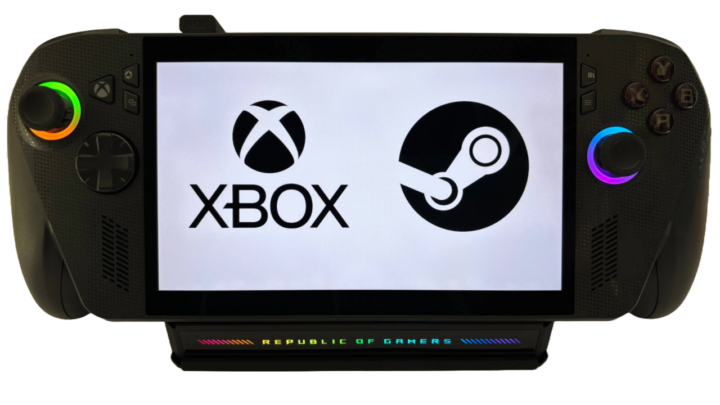
The landscape changed permanently with the introduction of Xbox Mode in the spring of 2026. Recognizing that portable gaming is the new frontier for user acquisition, Microsoft rolled out a comprehensive update designed to make a reality. Xbox Mode transforms the standard Windows 11 shell into a fully controller-optimized interface that intentionally mirrors the Xbox Series X dashboard.
This update is not merely cosmetic. Xbox Mode serves as a highly functional, aggregated game library that centralizes titles from Xbox Game Pass, Steam, Epic Games, and other third-party storefronts into a single, unified, full-screen experience. Users can seamlessly jump back and forth between the immersive, distraction-free Xbox Mode and the standard Windows 11 desktop, preserving the underlying openness of the PC platform while providing the streamlined usability of a traditional console.
The strategic implications of this software patch are immense. Microsoft is actively transitioning away from selling isolated hardware boxes. As explored in the analysis, Microsoft is building a hardware-agnostic ecosystem. By creating a unified user interface that seamlessly spans physical consoles, desktop PCs, and mobile handhelds, they ensure that the Xbox environment exists everywhere. This software strategy heavily mitigates the financial risks associated with manufacturing high-end silicon and shifts the primary business model entirely toward software services, ecosystem lock-in, and recurring subscription revenues.
Part IV: The Silicon Plateau and the Upscaling Revolution
As the physical form factor of handheld PCs dictates strict thermal limits and absolute battery constraints, traditional brute-force hardware scaling has reached a hard physical barrier. The industry refers to this phenomenon as a hardware trap, detailed extensively in the industry brief. Manufacturers cannot simply pump more electrical wattage into a portable device without melting the chassis or draining the battery in twenty minutes. Consequently, the engineering focus has completely shifted from raw computational power to artificial intelligence and highly sophisticated image upscaling algorithms.
Neural Processing Units and Auto Super Resolution
The most significant technological advancement in the 2026 handheld market is the mandatory integration of the Neural Processing Unit. Historically utilized for basic background tasks like video call blurring or simple machine learning sorting algorithms, the NPU has been aggressively repurposed for rendering high-fidelity gaming graphics on power-constrained devices.
Microsoft’s Automatic Super Resolution technology is the vanguard of this movement. Available initially in preview for Copilot+ PCs and specialized devices like the ROG Ally X, Auto SR fundamentally alters the performance equation. Traditionally, software upscaling algorithms ran entirely on the Graphics Processing Unit. While this improved frame rates by rendering games at lower resolutions, the upscaling math still consumed a portion of the GPU’s compute cycles. Models were often limited to a minuscule 1 to 2 millisecond window to avoid impacting the frame time, severely constraining their size and visual quality.
Auto SR bypasses this limitation by offloading the mathematical heavy lifting of image reconstruction directly to the NPU. This architectural shift allows the game engine to render internally at a very low resolution, typically 720p or 800p, while the NPU uses advanced artificial intelligence models to upscale the image to a much higher output. When docked to an external monitor, Auto SR is capable of generating 1440p-like detail while maintaining smooth framerates, effectively giving players both detailed visuals and high performance without the traditional compromises. Because this process frees the GPU from upscaling duties, players receive massive performance boosts without paying a severe penalty in battery life or inducing thermal throttling.
The AI Upscaling Wars: FSR 4 and XeSS 3
Beyond Microsoft’s operating system-level integration, primary chip manufacturers AMD and Intel are engaged in a fierce, highly competitive battle over proprietary upscaling technologies.
AMD has aggressively rolled out FidelityFX Super Resolution 4, a fully AI-driven update designed to maximize efficiency and image clarity on its latest Radeon architectures. Co-developed alongside Sony to support advanced console architectures like the PlayStation 5 Pro under the codename Project Amethyst, the algorithm behind FSR 4 relies heavily on machine learning to accurately reconstruct images and generate artificial frames between natively rendered ones. It is widely considered a massive leap over previous spatial upscaling techniques, effectively eliminating the shimmering, ghosting, and temporal instability artifacts that plagued earlier handheld visuals. Games such as Frostpunk 2, Call of Duty: Black Ops 7, and Clair Obscur: Expedition 33 feature native integration of this technology, showcasing its rapid adoption by major software developers.
Conversely, Intel is pushing its sophisticated XeSS 3.0 technology, deeply integrated into its newer Lunar Lake and Panther Lake mobile processors. Intel’s approach includes advanced multi-frame generation capabilities that have shown remarkable stability at low wattages. Independent benchmarks in 2026 demonstrate that XeSS 3.0 provides exceptional image clarity, frequently outperforming AMD’s solutions in preserving fine texture details even when the base rendering resolution is aggressively reduced to preserve battery life. The presence of these AI upscalers means that modern, highly demanding software can run on a strict 30-watt portable power budget, achieving performance metrics that previously required heavy desktop graphics cards drawing hundreds of watts.
Part V: The Flagship Handheld Devices of 2026
The hardware landscape is currently dominated by a select group of premium devices. Each manufacturer has chosen a distinct path regarding processor architecture, display technology, and ergonomic design philosophy. The following profiles provide an exhaustive analysis of the market’s leading handheld computers.
ASUS ROG Ally X: The Premier Windows Experience
The ASUS ROG Ally X stands as the definitive standard for Windows-based portable gaming in 2026. Retailing at approximately $999, it occupies the premium mainstream tier, carefully balancing high-end specifications with a price point that remains accessible to dedicated PC enthusiasts.
The Ally X is powered by the highly efficient AMD Ryzen Z2 Extreme processor. This chip architecture provides incredibly smooth frame rates across the most demanding software titles. Recognizing the severe memory bottlenecks that plagued the previous generation, ASUS equipped the Ally X with an aggressive 24GB of LPDDR5X RAM and a baseline 1TB solid-state drive. This expanded memory pool is vital for modern computing, allowing the device to allocate sufficient memory to the integrated GPU without starving the primary Windows operating system of necessary background resources.
The device features a 7-inch display operating at a 1080p resolution. While some vocal critics argue against the lack of an OLED panel, the 1080p target is a distinct strategic advantage. It allows the Z2 Extreme to hit consistent 60 frames per second in major titles with minimal settings compromises, whereas higher resolution screens struggle significantly under identical workloads, ultimately resulting in a choppier user experience. The physical design has been universally lauded for featuring the most comfortable ergonomic grips in the entire category, accommodating extended play sessions without inducing hand cramping or fatigue.
Crucially, the Ally X features an enormous 80-watt-hour battery. This massive capacity effectively doubles the longevity of previous iterations, offering two to three hours of uninterrupted gameplay in intense AAA software, and stretching up to six hours when emulating lightweight retro titles. Furthermore, it is the premier platform for Microsoft’s Auto SR technology, utilizing its built-in NPU to upscale games flawlessly when docked to an external monitor or television, solidifying its position as the ultimate hybrid device.
Lenovo Legion Go 2: The Ultra-Premium Behemoth
The Lenovo Legion Go 2 represents the absolute extreme end of portable computing. It is a device built with zero compromises, aimed squarely at users who view their handheld not just as a gaming machine, but as a complete replacement for a traditional desktop workstation.
The most defining characteristic of the Legion Go 2 in 2026 is its astronomical price tag. As previously noted, the device currently retails between $1,900 and $2,000. This positions the Go 2 well outside the mainstream consumer market, making it an exclusive luxury item for power users. To justify this extreme cost, Lenovo has outfitted the machine with 32GB of RAM, completely eliminating any memory bottleneck and allowing for heavy productivity multitasking alongside top-tier gaming performance.
The centerpiece of the device is a stunning 8.8-inch OLED display running at a high resolution of 1920 by 1200 pixels. This massive, vibrant screen provides an unparalleled visual experience in the portable space, offering perfect black levels and infinite contrast. The device also retains the signature removable controllers of its predecessor, allowing the massive screen to be propped up on an integrated kickstand for comfortable tabletop play. However, the high resolution is a double-edged sword. While older titles look breathtaking on the 8.8-inch OLED canvas, modern heavy-duty games require significant FSR upscaling and settings reductions to run smoothly at 1200p. The machine requires careful, deliberate user management of power limits and graphical sliders to achieve optimal performance.
Lenovo Legion Go S: The Hybrid Challenger
Recognizing the prohibitive cost of their flagship model, Lenovo also released the highly strategic Legion Go S. This device takes a radically different approach by attempting to replicate the seamless, frictionless experience of Valve’s hardware within the Lenovo ecosystem.
Priced highly competitively at $649 to $829, the Legion Go S is essentially the first major third-party hardware to natively run SteamOS rather than Windows. It utilizes an 8-inch IPS display with a 120Hz refresh rate and crucial Variable Refresh Rate support, which is vital for masking frame drops during intense gameplay. Powered by the older but highly capable AMD Ryzen Z1 Extreme processor and backed by 32GB of RAM, the Go S significantly outperforms the original Steam Deck in raw computational tasks while maintaining the exact same user interface conveniences and power efficiency features. For consumers seeking the absolute simplicity of SteamOS but desiring more modern graphical capabilities and a larger screen, the Legion Go S is widely considered the smartest purchase in the mid-tier category.
MSI Claw 8 AI+: Intel’s Mobile Redemption
After a highly criticized and poorly received entry into the market with the early iterations of the Claw, MSI has achieved a remarkable turnaround with the MSI Claw 8 AI+. Retailing for $1,049, this machine proves that Intel silicon can compete aggressively in the ultra-mobile sector, challenging AMD’s historical dominance.
Powered by the Intel Core Ultra 7 258V processor operating on the highly efficient Lunar Lake architecture, the Claw 8 AI+ prioritizes supreme battery efficiency and sustained performance. It utilizes Intel Arc 140V integrated graphics, which interface perfectly with Intel’s proprietary XeSS 3.0 upscaling technology. Hardware reviewers note that enabling XeSS on this device provides exceptional frame pacing and visual fidelity, effectively masking the performance limitations inherent to a portable 30-watt thermal envelope.
The device features a bright 8-inch IPS touch screen operating at 120Hz, 32GB of RAM, a 1TB solid-state drive, and advanced Wi-Fi 7 networking capabilities. It is powered by an 80-watt-hour battery, directly rivaling the ROG Ally X for the longest uninterrupted play sessions in the industry. Additionally, the Claw 8 AI+ is universally praised for containing the highest-quality internal speakers ever integrated into a handheld PC, providing deep acoustic resonance that eliminates the necessity for external headphones. While MSI’s proprietary Center M software overlay requires further refinement and lacks the polish of ASUS’s Armoury Crate, the raw hardware represents a massive leap forward for Intel-based gaming.
Valve Steam Deck OLED: The Gold Standard Awaits a Successor
Despite the massive influx of vastly more powerful machines from global hardware giants, the Valve Steam Deck OLED remains the spiritual core of the handheld market. Priced between $549 and $649, it represents the most accessible, reliable entry point for high-fidelity portable gaming.
The Steam Deck relies on an aging custom AMD APU that lacks the raw computational overhead of the Z2 Extreme or Lunar Lake architectures. It compensates for this hardware deficit through masterful, unparalleled software optimization. Because software developers can target a single, unified hardware profile rather than an endless sea of configurations, games often run with greater stability and fewer stutters on the Deck than on theoretically more powerful Windows counterparts. The 7.4-inch HDR OLED display, operating at an 800p resolution and a 90Hz refresh rate, perfectly masks lower render resolutions with infinite contrast ratios and brilliant, hyper-saturated color.
The primary issue facing Valve in 2026 is supply chain execution and public anticipation. The entry-level LCD variants have been officially discontinued, and the OLED models frequently sell out, creating severe availability bottlenecks across global retail markets. Consequently, consumers are heavily anticipating the arrival of the Steam Deck 2. However, official statements from Valve indicate that while development is actively underway, the company refuses to rush incremental upgrades to retail shelves. Valve’s engineering philosophy dictates that a true successor will not launch until there is a massive generational leap in performance that does not compromise battery life or thermal comfort. They are utilizing lessons learned from past hardware launches, such as the Steam Machine and Steam Controller, to refine their approach. Consequently, industry analysts project that a legitimate Steam Deck 2 remains distant, likely arriving no earlier than late 2027. In the interim, Valve maintains its massive market relevance through perfect software curation and an unmatched, console-quality user experience.
| Device Model | APU Architecture | RAM Configuration | Base Price | Key Differentiator |
| ROG Ally X | Ryzen Z2 Extreme | 24GB LPDDR5X | $999 | Best Windows experience, Auto SR NPU |
| Legion Go 2 | Ryzen Z2 Extreme | 32GB LPDDR5X | $1900+ | 8.8-inch OLED, Desktop replacement |
| Legion Go S | Ryzen Z1 Extreme | 32GB LPDDR5X | $649 | SteamOS native, VRR display |
| MSI Claw 8 AI+ | Intel Ultra 7 258V | 32GB LPDDR5X | $1049 | Lunar Lake efficiency, superior audio |
| Steam Deck OLED | Custom AMD APU | 16GB LPDDR5 | $549 | Unmatched optimization, HDR OLED |
Table 2: 2026 Flagship Handheld PC Specifications and Pricing Comparison.
Part VI: The Peripheral Ecosystem: eGPUs, Smart Docks, and Custom Mods
The true, transformative power of the 2026 handheld PC lies in its absolute modularity. These devices are not permanently constrained to mobile play. Through high-bandwidth connections, they serve as the central processing core for elaborate desktop and living room setups. The peripheral ecosystem has evolved rapidly to support this hybrid computing lifestyle.
Smart Docking Solutions and Living Room Integration
To seamlessly facilitate the transition from mobile play to the living room television, manufacturers have released incredibly sophisticated docking hubs. The ASUS ROG Bulwark Dock exemplifies the pinnacle of this trend. Operating as a comprehensive 7-in-1 hub, it features a massive array of inputs, but its crown jewel is an HDMI 2.1 port capable of outputting brilliant 4K resolution at 144Hz, or an astonishing 8K resolution at 30Hz.
Crucially, the Bulwark Dock supports Variable Refresh Rate technology, eliminating screen tearing on external displays, and fully supports High Dynamic Range HDR10 formats. The dock provides 100 watts of power delivery via USB-C, ensuring the handheld remains fully charged during heavy operational loads, and offers 10Gbps data transfer speeds for external solid-state drives.
With the deep integration of Microsoft’s new operating system updates, the docking experience is virtually flawless. When a device like the Ally X is placed in the dock, the built-in screen automatically turns off, and modern smart televisions from Samsung, LG, and Vizio automatically switch into Auto Low Latency Mode or Game Mode to reduce input lag. Furthermore, paring a wireless controller automatically disables the handheld’s physical buttons to prevent input conflicts, providing a true console experience.
The Rise of the Portable eGPU
For users who require absolute maximum graphical fidelity when stationed at a desk, External Graphics Processing Units have transitioned from bulky, unreliable metal enclosures to sleek, hyper-portable accelerators. Devices like the OneXGPU 2 and the GPD G1 connect to handheld PCs via high-bandwidth USB4 or specialized OCuLink ports, instantly injecting desktop-class graphical power into a mobile chassis.
The apex of this modular technology is the ASUS ROG XG Mobile 2025. This proprietary eGPU enclosure can be configured with incredibly powerful silicon, including the mobile RTX 5070 Ti or the flagship RTX 5090. By attaching the XG Mobile to an ROG Ally X via its proprietary connector, the user entirely bypasses the handheld’s internal thermal constraints. The device is instantly transformed into a machine capable of driving full 4K resolutions with path-traced lighting enabled in the most demanding titles on the market, such as Cyberpunk 2077 and DOOM The Dark Ages. This modular approach ensures that a handheld PC can function perfectly on an airplane using its internal battery during the day, and operate as a supreme, uncompromised desktop rendering workstation at night.
Hardware Modification and Legacy Integration
The open, unrestricted nature of PC computing encourages a vibrant enthusiast community dedicated to physical hardware modification and the preservation of legacy input methods. A prime example of this ingenuity is the recent resurgence of the discontinued Steam Controller. By utilizing custom 3D-printed mounting clips, enthusiasts have successfully mated modern smartphones and handheld PC screens directly to the complex, touch-sensitive chassis of the classic gamepad.
This innovation creates a uniquely balanced remote play machine that excels at deep, menu-heavy strategy games typically unplayable on standard analog sticks. Because the mount balances the weight of the smartphone perfectly over the center of the controller, it eliminates the wrist fatigue associated with top-heavy clips. Readers can explore the technical execution of this brilliant hardware hack in the detailed report. Such community-driven resourcefulness highlights the immense flexibility of the portable PC platform compared to rigidly locked consumer electronics.
Part VII: The Nintendo Switch 2 Shadow and Industry Ripple Effects
No comprehensive analysis of portable gaming in 2026 is complete without directly addressing the immense gravitational pull of Nintendo. Set to release its highly anticipated Switch 2 hardware in May 2026, Nintendo represents the ultimate, undeniable competitor in the handheld space. The company commands a dominant market position not through raw silicon power or cutting-edge AI upscaling, but through an impenetrable, highly lucrative fortress of proprietary software and generational brand loyalty.
Competing on Entirely Different Metrics
The raw performance gap between a $1,000 ROG Ally X and the upcoming Switch 2 is vast. PC handhelds possess significantly higher computational ceilings, massively faster memory bandwidth, and vastly superior artificial intelligence integration. However, attempting to compare these devices purely on teraflops or hardware benchmarks is a fundamental misreading of the market dynamics.
Nintendo competes on widespread price accessibility, extreme brand loyalty, and irreplaceable first-party exclusivity. Games like Yoshi and the Mysterious Book, launching alongside the console on May 21, 2026, ensure instantaneous hardware adoption by millions of consumers who do not care about frame pacing, texture resolution, or upscaling algorithms. The Switch 2 library is further bolstered by enhanced third-party ports, such as the Tales of Arise Beyond the Dawn Edition, and creative indie titles like Outbound. The strategy relies entirely on massive sales volume and highly optimized software that maximizes older, cheaper architectural designs to keep production costs minimal. The original Switch sold a staggering 155 million units over its lifespan, dwarfing the combined sales of all PC handhelds by orders of magnitude.
| Game Title | Release Date | Platform | Publisher Focus |
| Outbound | May 14, 2026 | Switch / Switch 2 | Independent |
| Yoshi and the Mysterious Book | May 21, 2026 | Switch 2 Exclusive | Nintendo First-Party |
| Tales of Arise Beyond the Dawn | May 22, 2026 | Switch 2 | Third-Party Enhanced |
| Bluey’s Quest for The Gold Pen | May 28, 2026 | Switch 2 | Casual/Family |
Table 3: Notable Nintendo Switch 2 May 2026 Launch Window Titles.
The Impact on the PC Ecosystem and the Mid-Tier Squeeze
The sheer, overwhelming sales volume of Nintendo hardware has profound ripple effects throughout the entire gaming industry, directly impacting the PC landscape. Because the Switch architecture often lags a full hardware generation behind PC standards, third-party developers are forced into an incredibly difficult financial position. They must constantly choose between pushing the absolute graphical limits of PC software, or scaling their game engines drastically back to ensure they can run on the significantly weaker Nintendo hardware in order to access its massive, lucrative install base.
This dynamic has created extreme financial and technical pressure on mid-tier development studios. The industry recently witnessed the collapse of beloved European studios, an event analyzed deeply in the report. Developers attempting to build ambitious software without the massive budgets of mega-corporations are finding it increasingly difficult to optimize for both the high-end PC handheld market and the restrictive Nintendo ecosystem simultaneously. The cost of building high-resolution assets for PC and highly compressed assets for Switch simply bankrupts smaller teams. Consequently, the commercial success of the Switch 2 directly influences the technical ambition of the software available on Steam and Windows, forcing a significant portion of the industry to adapt to lowest-common-denominator programming logic.
Conclusion: The Platform-Agnostic Future
The landscape of handheld PC gaming in 2026 represents a total architectural and philosophical victory for mobile computing. The convergence of high-efficiency silicon, advanced artificial intelligence upscaling, and robust, unified operating systems has permanently altered how consumers interact with digital media. The living room console is no longer the undisputed king of the industry; it has been rapidly supplanted by devices that offer equivalent experiences without geographical tethers.
Several undeniable, structural trends will define the immediate future of the industry moving forward. First, software optimization and AI algorithms will increasingly outpace raw hardware improvements. As the physical limitations of battery chemistry and silicon thermals enforce strict hardware plateaus, the battleground shifts entirely to the software layer. Technologies like Microsoft’s Auto SR, Intel’s XeSS 3.0, and AMD’s FSR 4 will dictate perceived performance far more than raw hardware specifications. The integration of Neural Processing Units into all future handheld devices is no longer a luxury; it is a mandatory requirement for maintaining competitive frame rates in a power-constrained environment.
Second, the premium pricing reality is firmly established. The era of the heavily subsidized, $400 entry-level PC handheld is rapidly fading. As modern software strictly demands a minimum of 24GB of high-speed memory, and as the global AI industry continues to monopolize semiconductor supply chains, the baseline cost for highly capable portable hardware will remain elevated. Devices like the ROG Ally X at $999 represent the new normal for serious enthusiasts, while $2,000 machines like the Legion Go 2 highlight the extreme, uncompromising cost of mobile luxury.
Finally, the eradication of the traditional console barrier is complete. Microsoft’s implementation of Xbox Mode on Windows 11 signifies the final, graceful surrender of the proprietary living room box. By seamlessly transforming any capable handheld PC into an Xbox interface, the industry is transitioning to a future where software platforms operate entirely agnostic of the physical hardware running them. The device in a user’s pocket is now simultaneously a mobile companion, a desktop workstation, and a primary home console.
Ultimately, the handheld PC is no longer a supplementary gadget used merely for travel. It is the central nervous system of the modern computing experience. Whether utilizing the seamless, highly curated environment of the Steam Deck, harnessing the incredible brute force of a modular eGPU setup, or enjoying the unified ecosystem of an Xbox-equipped Windows machine, the consumer now possesses unprecedented power and flexibility. The future of the industry is fundamentally pocket-sized, brilliantly upscaled, and deeply interconnected.
Works cited
- The Death Of The Box: Why Xbox Is Killing Its Hardware To Save Its Empire – Jay Respawns, accessed May 4, 2026, https://jayrespawns.com/the-death-of-the-box-why-xbox-is-killing-its-hardware-to-save-its-empire/
- Windows 11 Xbox Mode: The End of the Console Era – Jay Respawns, accessed May 4, 2026, https://jayrespawns.com/windows-11-xbox-mode-the-end-of-the-console-era/
- Gaming Market Growth Analysis – Size and Forecast 2026-2030 – Technavio, accessed May 4, 2026, https://www.technavio.com/report/gaming-market-size-industry-analysis
- PC Gaming Market Share and Usage Statistics 2026: Trends, Figures & Insights, accessed May 4, 2026, https://sqmagazine.co.uk/pc-gaming-market-share-and-usage-statistics/
5. Mobile and Handheld Gaming Market Size & Forecast, 2033 – Persistence Market Research, accessed May 4, 2026, https://www.persistencemarketresearch.com/market-research/mobile-and-handheld-gaming-market.asp Related: Can You Pass The Ultimate April Gaming News Challenge?.



Comments