
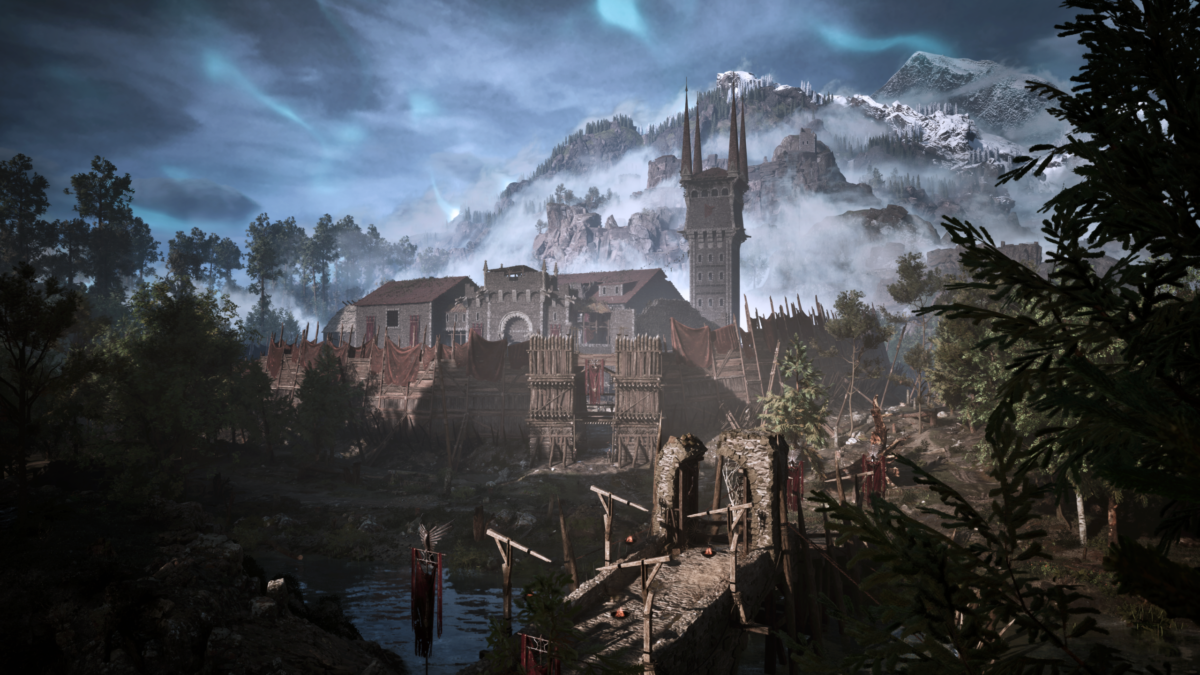
Modern role-playing games have trained players to view sleep as a fast-forward button. You walk into an inn, pay a negligible fee, click a prompt, and the screen fades to black. You wake up with full health, full magic, and ready to face the world. The newly released Gothic 1 Remake actively rejects this comfort. It treats sleep as a tightly restricted economic resource, and the resulting culture shock is tearing through the player base.
The complaints began flooding in immediately after the June 5, 2026 launch window. Players found themselves trapped inside a magical dome with zero money, no map, and hostile environments. On the official Steam community forums, a player named =MAG=JBBlack posted a desperate plea for help. They had accepted an early quest to find a secret recipe from a contact in the swamp. After losing their only torch by setting it down somewhere, they were stranded in pitch darkness. They had no money to rent a room and no way to see where they were going. They needed a bed just to advance the clock to daylight.
This is not a bug or a design oversight. It is a deliberate choice to make the penal colony feel like an actual prison. As reported by IGN in their survival guide, players must actively seek out an abandoned hut in the Old Camp just to secure a safe place to rest and store items. You are not handed the keys to a suite. You have to find a recently vacated shack, claim it, and scavenge for free food and a cooking pan just to keep your character alive.
Where Can You Sleep for Free in Old Camp?
If you are stuck inside the Old Camp walls without a single piece of ore to your name, your only option is the newly opened hut mentioned in early guides. The game does not place a glowing waypoint over the door. You have to explore the camp and claim the space yourself. If you have ventured outside the walls and into the swamp, the community has had to map out survival routes manually. Fellow players directed =MAG=JBBlack to four red cots located near Fortuno’s stand that can be used for free. Another usable cot sits out in the open near a digger on the outskirts of the swamp, and a hidden bed rests on a platform high in the trees.
Finding a bed is only half the battle. The actual mechanics of resting are punishing by modern standards. Reddit users quickly discovered the harsh math governing the system: “1 hour of sleep regenerates 12,5% of mana an HP. So you can fully regenerate only once a day.”
This specific mathematical limit breaks the fundamental loop most gamers rely on. You cannot fight a group of scavengers, crawl back to a bed, sleep for an hour, and return to the fight at full strength. If you take heavy damage, a quick nap will only return a fraction of your health. This limitation has caused widespread confusion, prompting Reddit users to ask, “Is anyone else having an issue where health doesn’t regenerate when sleeping?” They assume the game is broken. They cannot fathom that the developers intentionally capped daily healing to force players to consume food and potions.
The backlash to this friction has been severe. Content creators are struggling to adapt to a game that refuses to hold their hand. “Gothic 1 Remake is ROUGH!!” posted DreamcastGuy, echoing a sentiment shared by thousands of players who expected a modernized, smoothed-over experience. We saw a similar clash of expectations when we analyzed Why Mouseward Scrapping Soulslike Rules Is the Right Call. When a studio breaks away from industry-standard quality-of-life features, players often interpret the friction as bad design rather than a specific atmospheric choice.
GamesRadar’s review argues that the remake fails to explain its own rules, pointing to the protagonist’s bizarre lack of engagement with his surroundings as a flaw. As GamesRadar’s review put it, “The hero is so horribly incurious, too, that he only bothers to ask one NPC in the Old Camp where that bed is.”
That critique misses the core identity of the franchise. The nameless hero is incurious because he is a convict thrown into a lethal environment, not a tourist looking for a hostel. If the protagonist started grilling every hostile criminal in the Old Camp about local sleeping arrangements, he would likely be murdered. The silence and the lack of direction are the point. The developers are forcing you to feel the same vulnerability that your character feels.
Compare this approach to The Elder Scrolls V: Skyrim. In Bethesda’s massive hit, a room at the Bannered Mare costs a trivial 10 gold. If you do not want to pay, you can wander into any cleared bandit camp, click on a dirty bedroll, and instantly heal all your wounds without any daily limits. That design choice prioritizes player momentum over world-building. Gothic 1 Remake chooses the exact opposite path. By capping sleep regeneration at 12.5 percent per hour and limiting full recovery to once per day, the game turns every violent encounter into a serious economic calculation.
If you take a bad hit from a wolf outside the camp, you cannot just sleep it off. You have to find a pan, cook the raw meat you scavenged, and consume your limited supplies. The economy of survival remains intact because sleep is not a magic cure. The sheer panic of losing a torch in the dark and having to beg community members for the location of four red cots near Fortuno’s stand is an experience most modern games are too afraid to deliver. Alkimia Interactive appears determined to preserve the abrasive, unwelcoming nature of the original colony. If players want to survive the dome, they will have to learn to count their hours and scavenge their own beds.






Comments