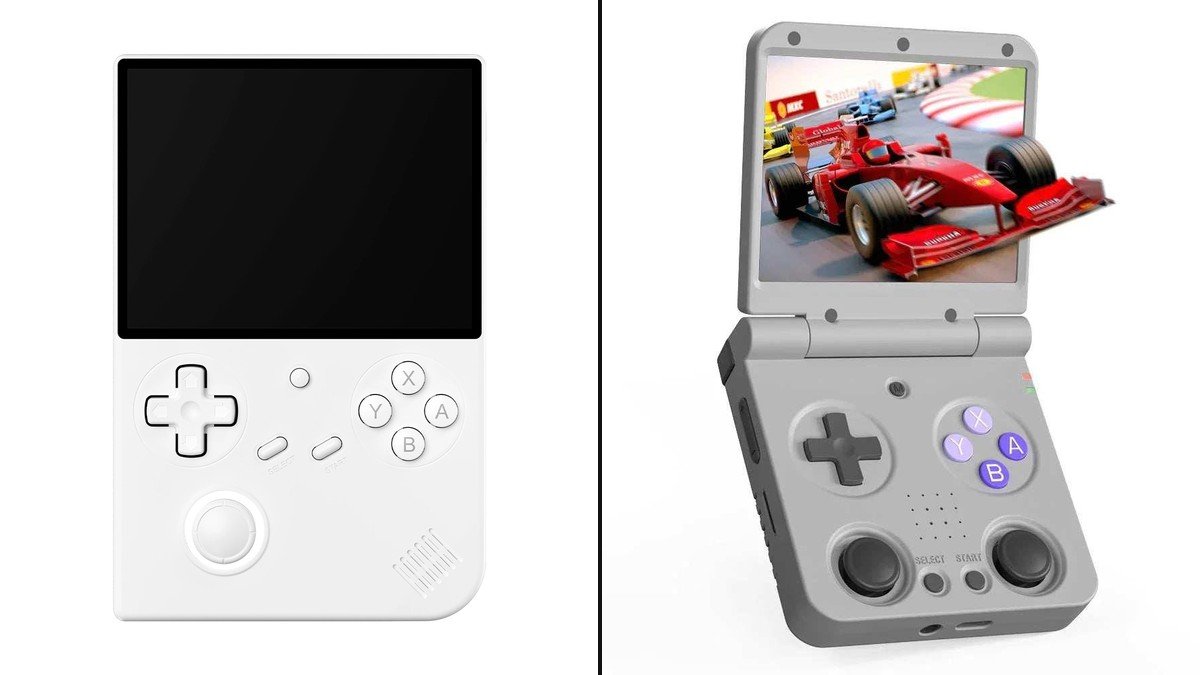
The choice between the Anbernic RG40XXV and the Miyoo Flip V2 in 2026 comes down to a single physical reality: you are choosing between a traditional horizontal layout and a folding clamshell. Both of these Linux-based handhelds target the exact same generation of games, cap out at the same emulation limits, and cost within $22 of each other. If you want to play Super Mario World or Ridge Racer on the go, both devices will get you there, but the way they feel in your hands and fit into your pockets could not be more different.
I have spent the last four weeks switching between these two devices as my primary daily drivers. During morning commutes and late-night sessions on the couch, the physical shape of the hardware dictated which games I played. The RG40XXV’s horizontal layout provides a spacious grip, preventing hand cramps during hour-long sessions. This makes it the superior option for settled home gaming. The Miyoo Flip V2, built in the spirit of the Game Boy Advance SP, folds down into a dense, protective square that slides into a front pocket without exposing its screen to keys or loose change. For context on how these fit into the wider market, you can read our guide to the best budget retro handheld 2026.
Design, Portability, and Form Factor
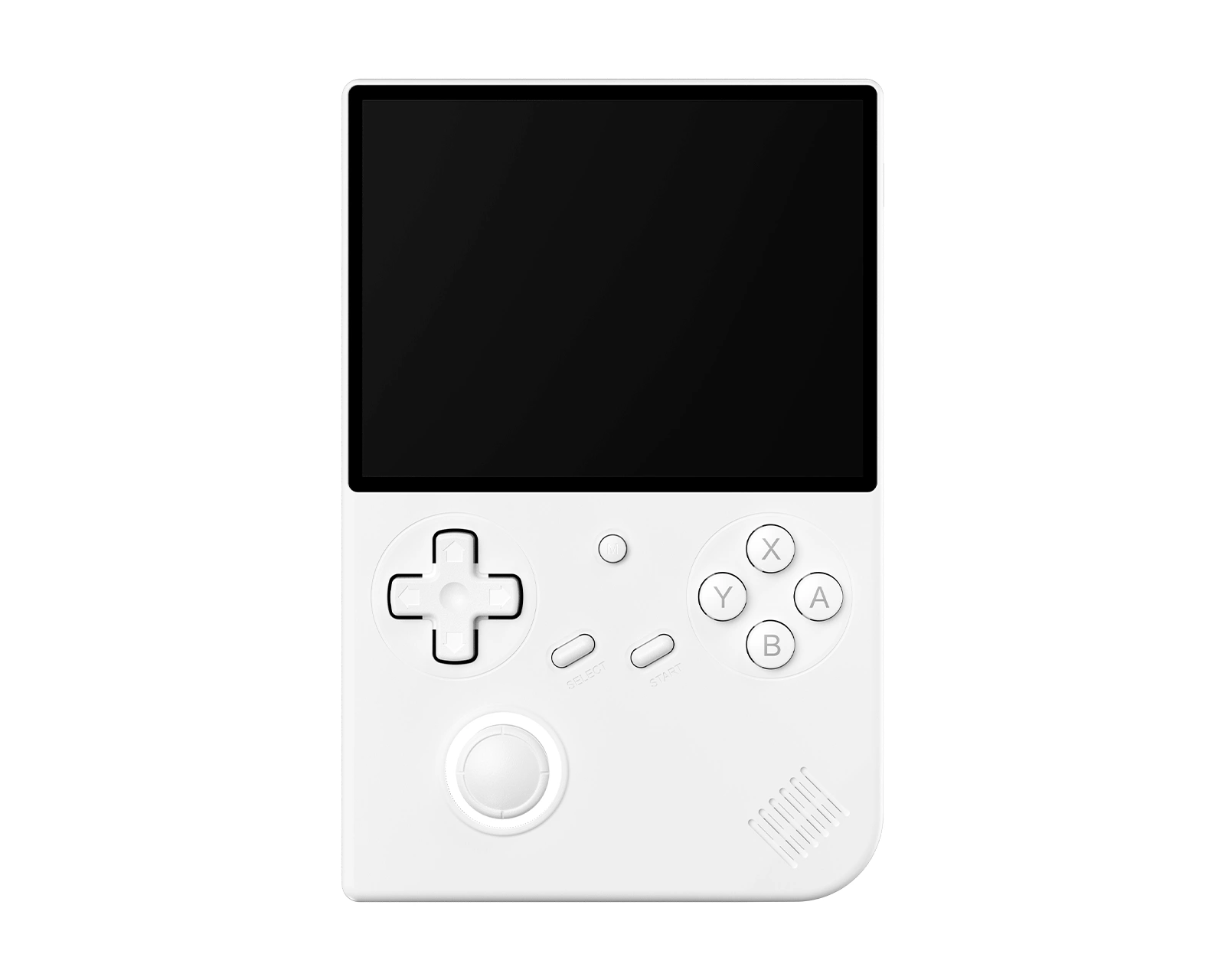
The Anbernic RG40XXV uses a classic horizontal form factor, measuring 139 x 92 x 22mm and weighing in at 216g. It feels substantial without feeling heavy, distributing its weight evenly across a wide footprint. The face buttons are responsive, the d-pad is clicky, and the single analog stick is surrounded by a customizable 16-million-color RGB ring. The horizontal design spaces hands naturally and reduces thumb strain during fast-paced action games.
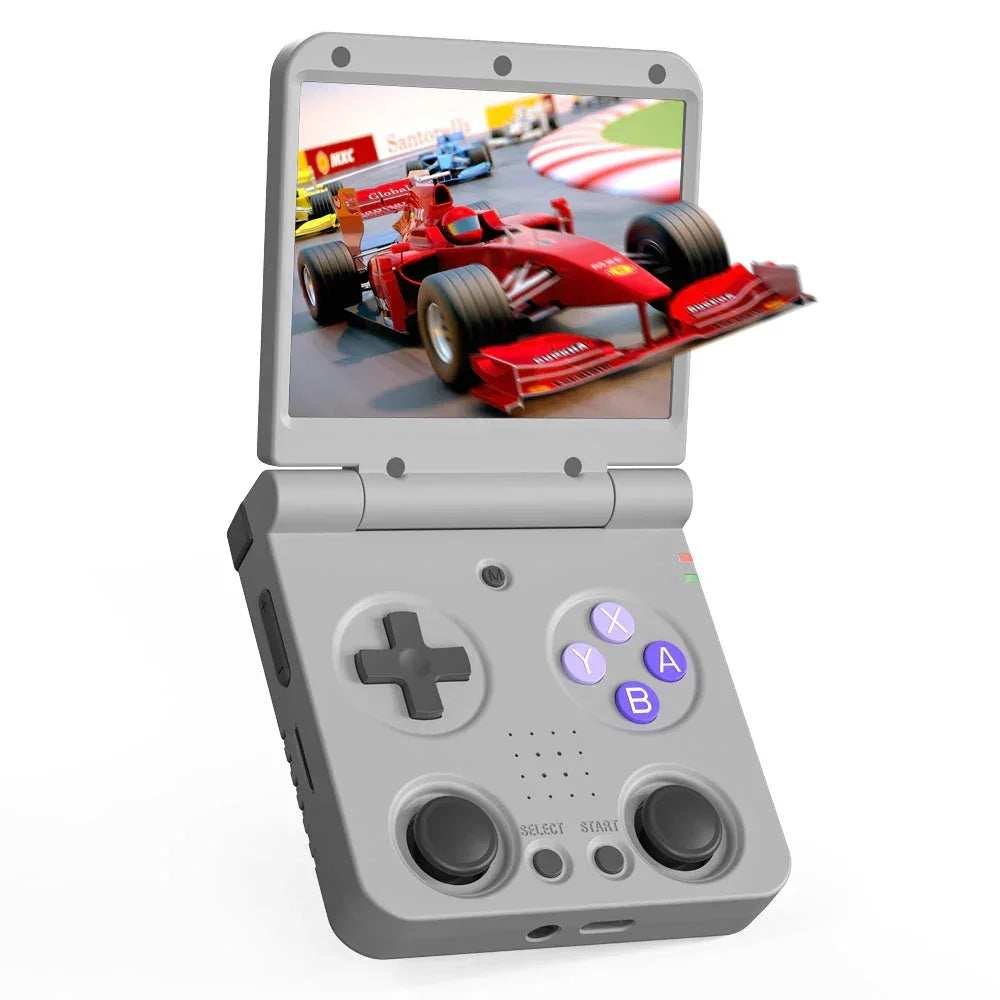
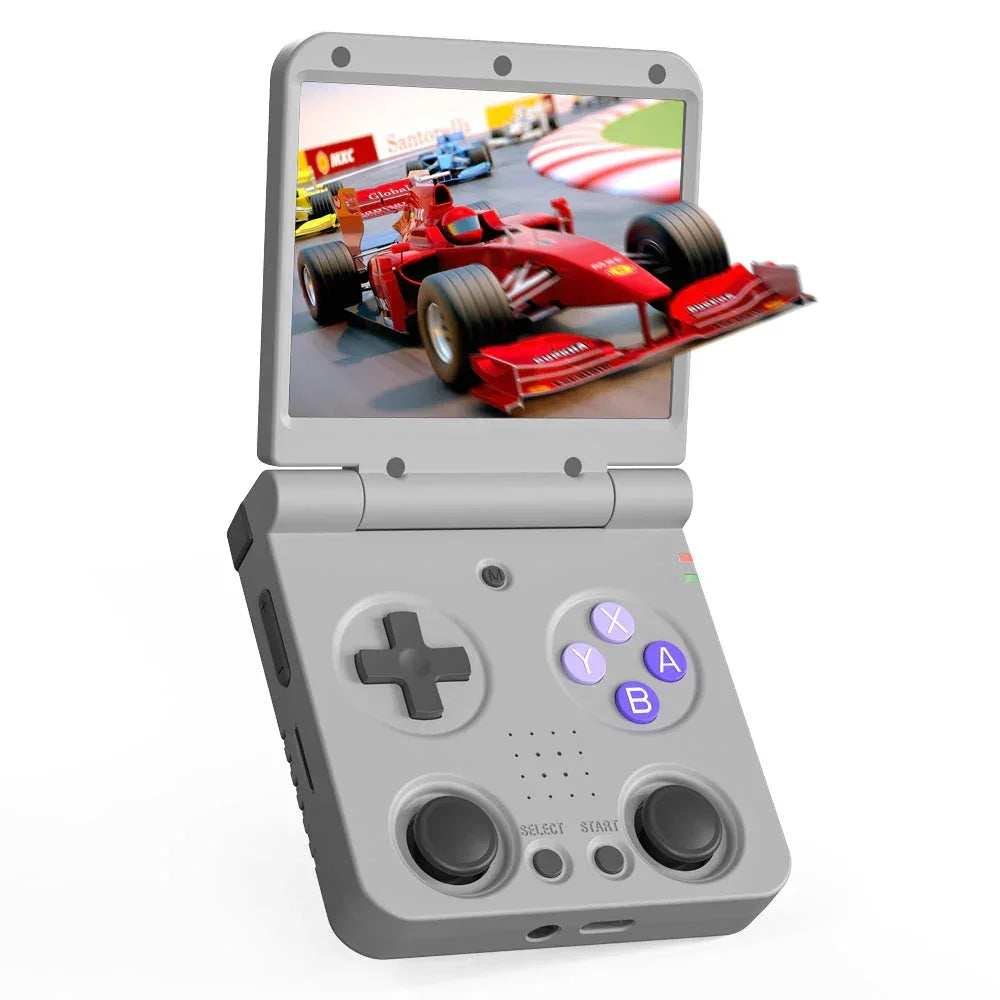
The Miyoo Flip V2 takes a completely different approach. It is a clamshell device that measures 83.8 x 81.3 x 25.4mm when folded, making it shorter and narrower than the Anbernic, though slightly thicker. It weighs 170g, which is 46g lighter than the RG40XXV. This weight reduction is immediately noticeable when carrying it around. The metal hinges feel sturdy out of the box; they let you prop the screen open at your preferred viewing angle.
Display Comparison: Size vs. Sharpness
The display is where these two devices diverge in visual presentation. The Anbernic RG40XXV features a 4.0-inch IPS screen with OCA full lamination. It runs at a 640×480 resolution, providing a pixel density of 200 PPI. Text in role-playing games is easier to read, and 3D environments feel more immersive. The colors are warm, and the viewing angles are excellent; it is a joy to use in dimly lit rooms.
The Miyoo Flip V2 uses a 3.5-inch IPS display, also at a 640×480 resolution. Because this resolution is packed into a physically smaller footprint, the pixel density jumps to 228 PPI. The Miyoo screen is therefore 14% sharper than the RG40XXV. Textures in PS1 games look incredibly crisp, and scanline shaders look remarkably authentic. Additionally, the default screen calibration on the Miyoo Flip V2 is poor out of the box, leaning heavily toward a cold, bluish tint, necessitating manual adjustment in the settings menu. For those who demand perfect display accuracy without software tweaks, an FPGA alternative like the one discussed in our Analogue Pocket 2026 FPGA review might be worth looking into.
Hardware Specifications Comparison
The internal components of these handhelds dictate their emulation performance limits. While both utilize budget-oriented ARM processors, the Miyoo carries a slightly more modern chipset. The following table details the exact specifications of both devices:
| Specification | Anbernic RG40XXV | Miyoo Flip V2 |
|---|---|---|
| Processor | H700 quad-core ARM Cortex-A53 @ 1.5GHz | RK3566 quad-core Cortex-A55 @ 1.8GHz |
| GPU | Dual-core G31 MP2 | Mali-G52 2EE |
| RAM | 1GB LPDDR4 | 1GB LPDDR4 |
| Storage | 64GB (expandable to 512GB via dual TF) | 64GB (dual SD card slots) |
| Display | 4.0-inch IPS, 640×480 (200 PPI) | 3.5-inch IPS, 640×480 (228 PPI) |
| Battery | 3200mAh (5V/1.5A charging) | 3000mAh (OTG support) |
| Weight | 216g | 170g |
| OS | Linux 64-bit | Linux (MinUI / SurwishOS) |
| Price | $67.99 | $89.99 regular / $69.99 on sale |
Performance and Emulation Realities
When it comes to 8-bit and 16-bit gaming, both devices perform identically. NES, SNES, Game Boy, Game Boy Color, and Game Boy Advance titles run flawlessly on both chipsets. Fast-forward features work without audio crackling, and latency is minimal. If your gaming library ends at the 32-bit era, the choice between these two should be based purely on physical comfort and screen size.
Moving up to 3D systems reveals the performance gap between the H700 and the RK3566. For PlayStation 1, both handhelds handle the library with ease, running games at native resolution or with mild 2x resolution hacks. N64 performance is excellent on the RG40XXV, but the Miyoo Flip V2 handles heavy titles like GoldenEye 007 slightly more reliably due to its faster CPU architecture. Handheld Gaming Community gave the Miyoo Flip V2 8.8/10, calling it “ideal for retro enthusiasts focused on NES through PS1 titles” which aligns perfectly with my testing.
Dreamcast is workable on both devices, but you will need to employ frameskipping on more demanding titles like Crazy Taxi. PSP emulation is where both devices hit their ceiling. The Miyoo Flip V2’s battery drops below 3 hours at this load when running PSP. If you want a device dedicated to high-end widescreen emulation, you should read our Odin 2 vs Retroid Pocket 5 comparison to see what premium Android hardware offers.
Battery Life and Power Draw
The Anbernic RG40XXV features a 3200mAh battery paired with a 1.5A USB-C charging circuit. This battery consistently delivers ~6 hours of continuous runtime when playing a mix of GBA and older games. The H700 processor’s lower power draw extends battery life. This makes it a reliable companion for long travel days when wall outlets are unavailable.
The Miyoo Flip V2 packs a 3000mAh battery. When playing older systems like GBA or NES, it manages a respectable 5 to 6 hours of runtime. However, if you push the device with demanding 3D systems like Dreamcast or PSP, the battery life drops below 3 hours. The RK3566 chip runs hotter and consumes more power under load, which is the price you pay for that extra bit of processing performance.
Build Quality and Daily Wear
Anbernic has built a reputation for solid, industrial-feeling plastic shells, and the RG40XXV is no exception. The seams are tight, the buttons do not rattle when you shake the device, and the d-pad does not register accidental diagonals. The RGB lighting around the single analog stick is a fun cosmetic touch, though it does not add any functional value beyond looking neat on a desk.
The Miyoo Flip V2 is more ambitious but suffers from the complexity of its form factor. The metal hinges provide a premium feel when opening the device. The recessed dual analog sticks are difficult to use comfortably, and the overall build feels more delicate than the monolithic block of the Anbernic. A retrohandhelds.gg commenter noted: “I totally hated this device on launch…but…the device has grown on me quite a bit” which highlights how the initial physical quirks can be overcome with familiarity.
Software and Custom Firmware
Software is often the deciding factor for retro handhelds. The RG40XXV runs Anbernic’s stock 64-bit Linux OS. It is functional, boots quickly, and comes pre-configured with RetroArch. While it is not the prettiest user interface, it gets out of your way and lets you launch games with minimal fuss. Third-party developers have also started supporting the H700 chip. They offer alternative operating systems that improve menu navigation and scrape game art more efficiently.
The Miyoo Flip V2 supports custom firmware options like MinUI and SurwishOS, but the software ecosystem is not as mature as many hoped. Another retrohandhelds.gg commenter wrote: “The lack of custom firmwares is a deception” pointing to the frustration users face when trying to customize their experience. Miyoo’s stock software can feel unpolished, and the lack of a unified, highly optimized community OS hurts the overall user experience in 2026.
The Verdict: Which Should You Buy?
These two handhelds serve different styles of play. The Anbernic RG40XXV is designed for comfort and screen size. It is the device you pick up when you want to sit on the couch for two hours and play a classic RPG on a gorgeous, spacious 4.0-inch display. It is durable, simple to use, and runs cool.
The Miyoo Flip V2 is built for maximum portability. It is the device you throw into your bag or pocket every morning, knowing the screen is protected by the clamshell design. You sacrifice hand comfort, battery life under load, and software polish to get that folding design.
If you value physical ergonomics and a 4.0-inch display, the Anbernic RG40XXV is the more practical daily driver at $67.99.

Comments