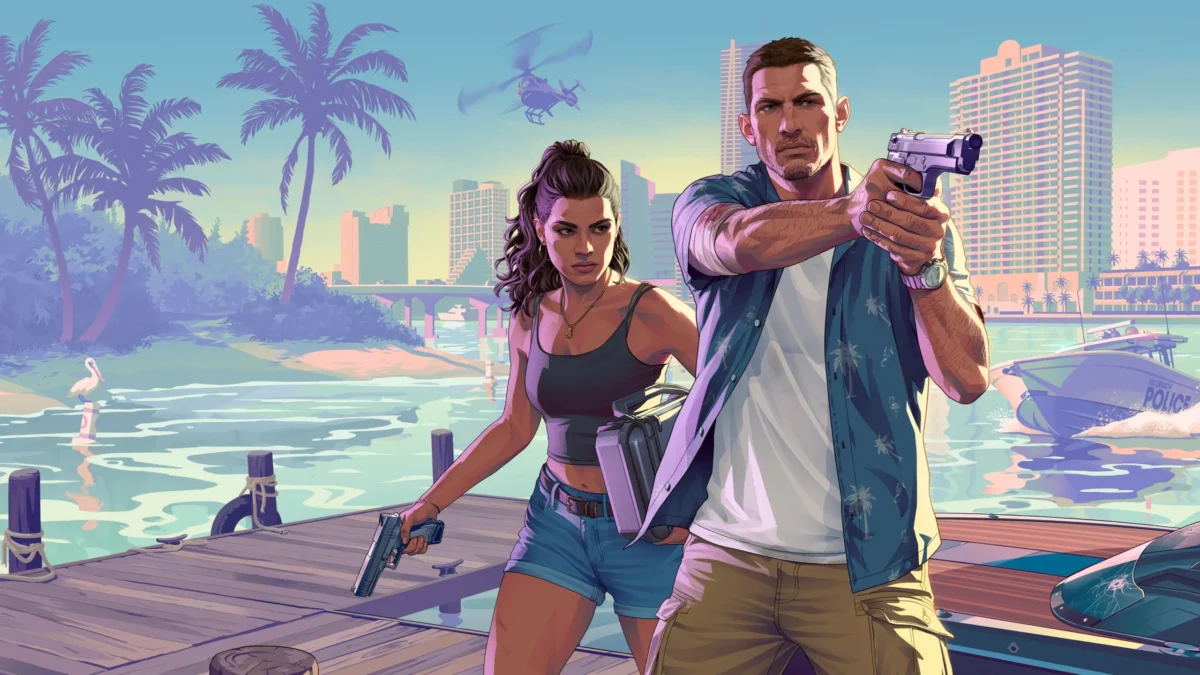
The video game industry has a fear problem, and it has a name and a specific date. When Rockstar Games circled November 19th for the launch of Grand Theft Auto VI, the rest of the publishing world collectively panicked. This is not a secret. Eric Chort, producer of Resonance: A Plague Tale Legacy at Asobo Studio, recently admitted exactly how publishers are reacting to the looming shadow of the open-world giant. In a recent interview, as reported by Eurogamer, Chort stated plainly that “all the studios in the world were thinking about it” and trying to adapt their schedules. The instinct is completely rational. Grand Theft Auto V sold over 220 million copies across three console generations. Any executive looking at that sales data will naturally want to move their product out of the blast radius.
But running from November 19th is creating a much more dangerous situation for the industry. By treating the holiday season as a restricted zone, publishers are creating a massive bottleneck in the preceding months. Players are already noticing the congestion. As one community member observed regarding the shifting release calendar, so many games are releasing in September and October this year that the sheer volume is becoming unmanageable for the average consumer. This is the hidden cost of avoiding Rockstar Games. Publishers are so afraid of getting crushed by a 220-million-unit franchise that they are actively choosing to cannibalize each other in a frantic autumn pileup.
The economics of this release congestion are brutal. When six major titles launch within a four-week window in September, they force players to make hard financial choices. A buyer who has a $140 monthly entertainment budget cannot purchase four different $70 games, regardless of their quality. By fleeing the November window, publishers are voluntarily dividing a smaller pool of money while leaving the most lucrative spending period of the year entirely to Take-Two Interactive. They are handing over the holiday shopping season without firing a single shot. This level of market surrender assumes that every single person who buys video games only cares about one specific title.
Is Avoiding Grand Theft Auto VI the Right Call?
The short answer is no, because the assumption that everyone is a guaranteed day-one buyer is mathematically flawed. While the cultural footprint of the franchise is massive, a vocal segment of the audience is actively searching for alternatives. Look at the public reaction to the release window shift. One player stated they will “avoid this game like the pest,” while another expressed frustration with the relentless focus on realism, pointing out they are “still waiting for Capcom to announce Mega Man Battle Network 7.” There is a distinct, measurable demographic of players who have zero interest in a sprawling crime simulator. They have money to spend in November, and right now, the industry is refusing to sell them anything.
Asobo Studio recognizes the gravity of the situation. Chort accurately noted that “GTA is like the ogre” that consumes marketing oxygen, player time, and media attention. For a narrative-heavy game like Resonance: A Plague Tale Legacy, competing for headspace against a billion-dollar marketing campaign is a steep climb. Yet, abandoning the month entirely leaves an open goal for smart counter-programming. Nintendo appears to understand this dynamic perfectly. Community discussions point toward Nintendo positioning The Legend of Zelda: Ocarina of Time as a potential holiday release. Since that classic title is not slated for the rumored hardware update, offering an evergreen nostalgia trip gives millions of console owners something to purchase while the rest of the industry hides.
Related: Nintendo Switch 2 vs Steam Deck OLED: Which Handheld Should You Buy in 2026?
Counter-programming works precisely because gaming is no longer a monolith. The audience that propelled the previous game to 220 million sales is vast, but it does not represent 100 percent of active hardware owners. Kids who primarily play Roblox, Minecraft, and Fortnite are not the target demographic for an M-rated Rockstar title, despite the inevitable teenage overlap. Families buying holiday gifts need family-friendly options. Fans of turn-based RPGs, cozy simulators, and tight linear action games will still want new experiences in late November. If every publisher delays their mid-budget and alternative titles to February or shoves them into the overcrowded October window, they are actively ignoring millions of willing customers.
This situation exposes a fundamental lack of confidence among major publishers. When executives look at the November 19th date, they only see the ogre. They fail to see the players standing behind it who are asking for different genres. The industry has trained itself to chase the exact same mainstream demographic, which makes the threat of a larger competitor seem apocalyptic. If a studio is building a game that relies on the exact same target audience as Rockstar, moving the release date is a necessary survival tactic. However, if a developer is creating a distinct, highly stylized, or niche product, running away only signals that they do not believe in their own audience.
We have seen this pattern before with other massive entertainment releases. When a major blockbuster dominates the cinema, smart independent distributors do not pull their films from theaters. They release tightly focused, alternative movies that appeal to the people who have no interest in explosions and superheroes. The video game industry needs to adopt this same maturity. If Chort is correct and the calendar is packed with “a lot of good games” this year, publishers need to trust the quality of their software. Forcing a dozen high-quality titles to fight to the death in early autumn just to keep the winter schedule clear is a poor business strategy.
Rockstar Games will claim a massive share of the consumer wallet on November 19th of this year. That is a fixed reality of the 2026 fiscal year. The remaining publishers must decide if they want to fight for the millions of dollars left on the table or if they prefer to bleed each other dry in September. Asobo Studio has chosen to push forward and make the best game possible, accepting the industry environment as it exists. Other developers would do well to follow that example rather than rearranging their entire financial year around one competitor. A healthy market requires constant variety, and leaving the holiday season empty hands Take-Two Interactive a monopoly they did not even have to earn.




Comments