
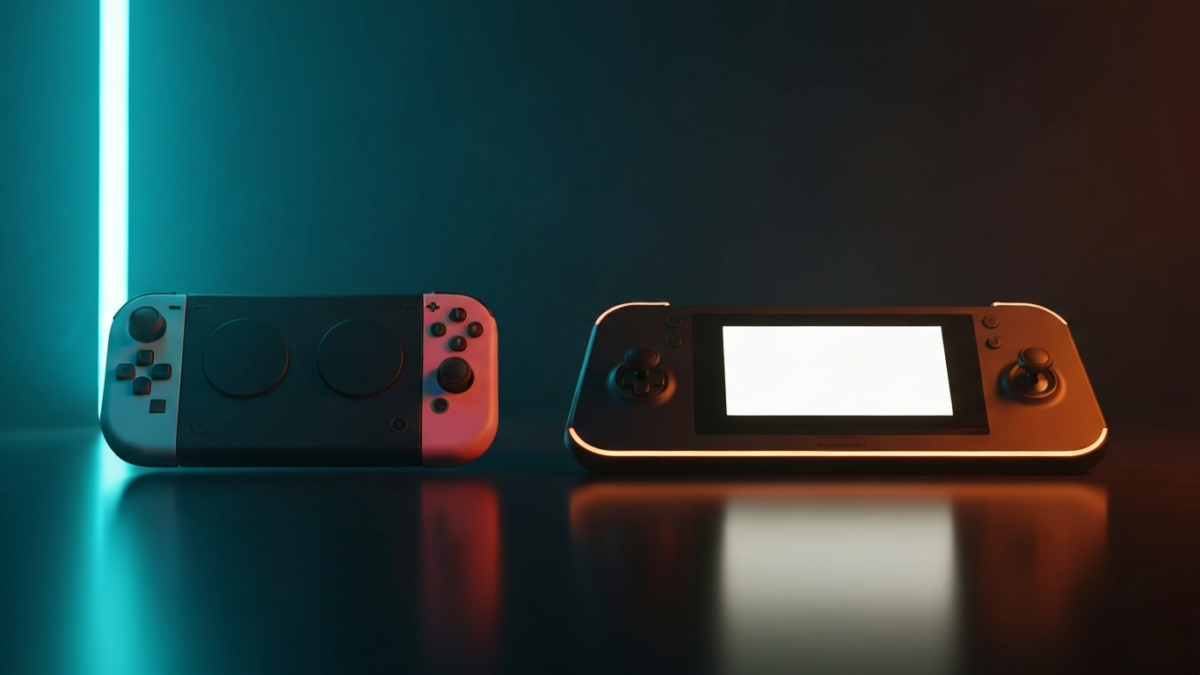
Nintendo is operating on a completely different scale than everyone else. Selling 19.86 million Switch 2 units globally in its first fiscal year ending March 31, 2026, the Japanese giant has proved yet again that it owns the mainstream handheld market. Valve isn’t trying to beat those numbers. Instead, the PC gaming heavyweight is perfectly content serving the enthusiast crowd with the Steam Deck OLED, a device that market research firm IDC estimates reached 4 million lifetime sales by early 2026. It is a classic David and Goliath matchup. Yet, both machines are utterly dominating their respective corners of the portable gaming world right now.
I have spent the last few months commuting, lounging, and playing on both of these devices daily. The decision of which one to buy has become incredibly complicated, mostly because the financial math has changed so drastically.
If you buy a new 512GB Steam Deck OLED today, it will cost you a hefty $789. Meanwhile, the Switch 2 is priced at a much friendlier $449.99, though you only have until September 1, 2026, before Nintendo bumps that price up to $499.99. Your choice comes down to a fundamental preference. Do you want the ease and structure of a dedicated console, or do you want the flexibility of a portable gaming PC?
Nintendo Switch 2: Specs, Display, and Exclusive Games
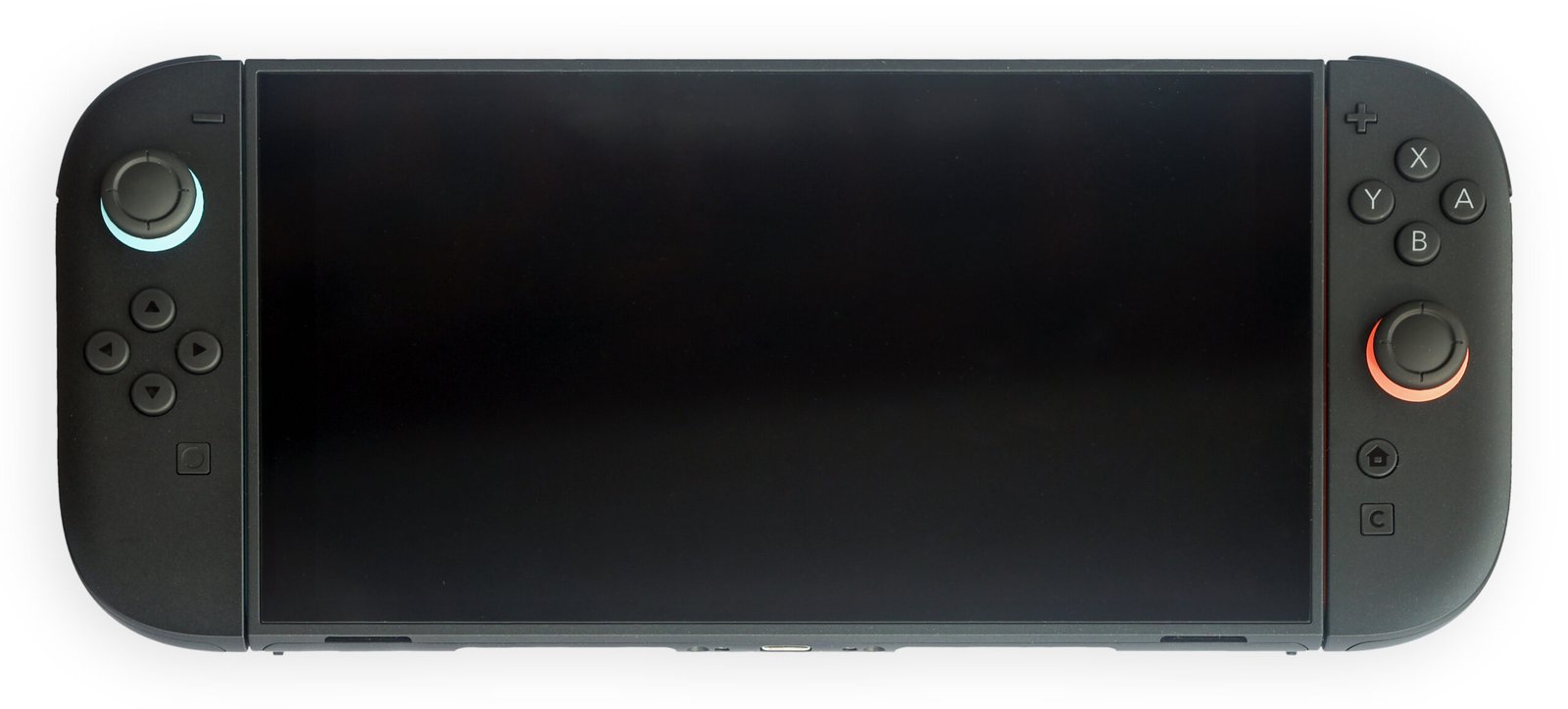
Nintendo finally addressed the hardware bottlenecks that plagued the original console. The first thing I noticed when picking up the Switch 2 was its spacious 7.9-inch, 120Hz LCD screen running at a native 1080p.
While it cannot match the perfect contrast of an OLED panel, it responds incredibly fast. The display boasts an 8.3ms refresh latency, which is 27% speedier than the 11.1ms you get on the 90Hz Steam Deck OLED. You feel this responsiveness the second you start scrolling through menus or dodging attacks in fast-paced action titles. It is also remarkably comfortable to hold. Weighing in at 542 grams with the Joy-Cons attached, the Switch 2 is a full 98 grams lighter than Valve’s 640-gram behemoth. Your wrists will notice the difference during extended play sessions.
Stick drift is also a thing of the past. Nintendo integrated Hall Effect electromagnetic sensors into the new Joy-Con 2 controllers, alongside a unique mouse-emulation mode designed for strategy games. The community reception has been highly positive. Writing in a Nintendo Switch subreddit thread, one owner noted they were “pleasantly surprised by how much of an improvement the Switch 2 joycons are,” pointing to the upgrade alongside the expanded onboard storage.
Games look spectacular because Nintendo is leaning heavily on Nvidia’s DLSS upscaling technology. Demanding titles like the Game of the Year nominee Donkey Kong Bananza run with impressive stability, while first-party blockbusters like Pokemon Pokopia, Hyrule Warriors: Age of Imprisonment, and Mario Kart World look remarkably clean in handheld mode. Docking the system changes the equation entirely. The internal hardware upscales the video output to a sharp 4K resolution on your television, representing a massive leap over the original Switch’s blurry 1080p limit.
Steam Deck OLED in 2026: Display, Price, and Game Library
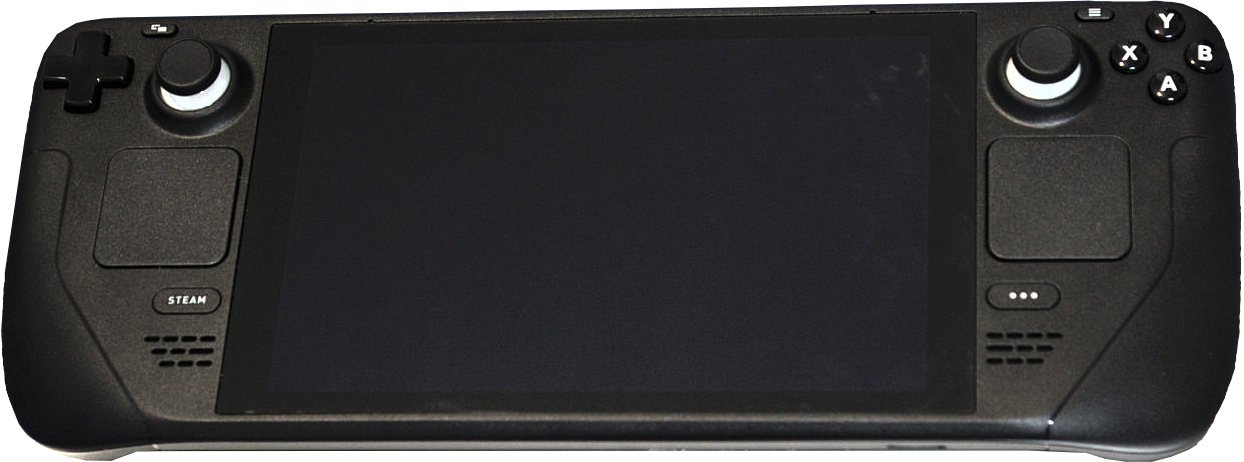
Valve designed the Steam Deck OLED as a premium handheld computer rather than a traditional console. The 7.4-inch screen might only have an 800p resolution, but the visual depth is spectacular because the self-lit pixels turn off completely to produce true, infinite contrast. Boot up a dark, moody game and the backlit LCD on the Switch 2 looks washed-out and grey by comparison. Under the hood, SteamOS coordinates a custom AMD Zen 2 and RDNA 2 APU, presenting your entire Steam library in a console-style interface that requires zero desktop tinkering.
Buying into this ecosystem became significantly harder on your wallet in May 2026. Valve raised the price of the OLED model by roughly 45 percent, meaning the 512GB version now costs $789, while the 1TB option reaches $949. If those figures sting, you can look for official refurbished units starting at $629. We covered the business decisions behind this change in our Steam Deck price hike context analysis.
At 640 grams, the Steam Deck OLED is 98g heavier than the Switch 2. That extra mass comes with a payoff.
While the Switch 2 is officially rated for 2 to 6.5 hours, Valve’s machine routinely leaves it in the dust. You will get 3.5 to 4 hours of battery life on the Steam Deck when running demanding 3D titles, compared to just 2 to 2.5 hours on the Switch 2. For lighter indie games, the Steam Deck easily runs for 5 to 7 hours, and simple 2D platformers can push its runtime past the 10-hour mark.
You also get immediate access to more than 19,000 Steam Verified or Playable titles. There is no need to buy your favorite games a second time. The one hard limit: none of Nintendo’s exclusive titles run on Steam Deck. If Mario Kart World or Donkey Kong Bananza is on your list, that decision is already made. To see how this Linux-based environment compares to other portable PCs, read our SteamOS vs Windows handheld OS deep dive.
Specifications Comparison
The direct hardware, pricing, and operating systems compare as follows for June 2026.
| Feature | Nintendo Switch 2 | Steam Deck OLED |
|---|---|---|
| Display | 7.9-inch LCD | 7.4-inch OLED |
| Resolution | 1080p handheld / 4K docked (via DLSS) | 800p native |
| Refresh Rate | 120Hz | 90Hz |
| Weight | 542g (with Joy-Cons) | 640g |
| Processor | Nvidia T239 (8-core Arm Cortex-A78AE CPU + 1536-core Ampere GPU) | AMD Zen 2 (4c/8t, up to 3.5GHz) + RDNA 2 GPU (8 CUs, up to 1.6GHz) |
| RAM | 12GB LPDDR5X | 16GB LPDDR5 |
| Storage | 256GB internal + microSD Express (up to 2TB) | 512GB or 1TB SSD + microSD |
| Dimensions | 272 x 116.1 x 13.9mm | 298 x 117 x 49mm |
| Battery Life | 2-6.5 hrs (2-2.5 hrs on AAA titles; up to 6.5 hrs on light games) | 3-12 hrs (3-4 hrs AAA, 5-7 hrs typical, 10+ hrs on light games) |
| Price | $449.99 (rising to $499.99 on Sept 1, 2026) | $789 (512GB) / $949 (1TB) / Refurbished from $629 |
| Operating System | Proprietary Nintendo OS | SteamOS (Linux-based) |
| Game Library | 400+ titles (year 1); Nintendo exclusives unavailable on any other platform; backward-compatible with 3,000+ original Switch games | 19,000+ Steam Verified or Playable games |
Nintendo Switch 2 vs Steam Deck OLED: Performance and Display Head-to-Head
Put these devices side-by-side and the engineering priorities diverge immediately. The Switch 2 prioritizes fluid, low-latency gameplay, pushing input response times down to roughly 8ms in fast-paced action games. Writing in a Facebook community group, one player remarked that games run “a lot smoother on switch 2” and feel “so much more playable,” even though they noted they wished for sharper graphical detail to spot flora in outdoor environments. But play in a dimly lit room and the Switch 2’s backlit screen immediately shows its limitations next to the self-lit pixels of the Steam Deck, which deliver stunning, vibrant images despite the lower 800p resolution.
How they achieve these visual results is entirely different. Nintendo relies on Nvidia DLSS to handle the heavy graphical upscaling on the fly, keeping the console light and power-efficient. Valve relies on raw, unassisted hardware power to run standard PC builds natively. You carry a heavier device, but you never have to wait months for a custom console port to launch.
Travel highlights the battery gap immediately. Independent testing confirms that the Steam Deck OLED comfortably outlasts the Switch 2 when running demanding 3D games. If you are on a three-hour flight, the Switch 2 will run out of power before you reach your destination, while the Steam Deck OLED will still have plenty of battery remaining.
Which Countries Buy the Nintendo Switch 2 vs Steam Deck OLED?
Regional sales trends reveal a lot about what different gaming cultures prioritize. Portability and compact design rule the market in East Asia and parts of Europe, which explains why the Switch 2 sold a massive 5.15 million units in Japan alone during its first fiscal year. Data from Famitsu and GfK shows Nintendo dominating retail charts across South Korea, France, and the UK through the first quarter of 2026. Measuring 272 x 116.1 x 13.9mm, the Switch 2 fits into a backpack far easier than the 298 x 117 x 49mm Steam Deck, making it the obvious choice for local multiplayer on the go.
Valve has built its strongest following in Germany, the United States, and the UK PC gaming scenes. These buyers care far more about open software, emulation, and steep Steam sale discounts. On the r/NintendoSwitch2 subreddit, one user summed up the divide perfectly: “The Switch is a handheld for console users. The SD is a handheld for PC users.” If you want to see how other handheld computers compare, take a look at our handheld PC buying guide.
Nintendo Switch 2 or Steam Deck OLED: Which Should You Buy in 2026?
Your choice depends on your budget and your current game collection. If you want a lightweight handheld for local multiplayer or want to play Donkey Kong Bananza and Mario Kart World on your daily commute, the Switch 2 is the obvious choice. At $449.99, it is the more affordable option, though that pricing window closes when the MSRP rises to $499.99 on September 1, 2026.
For anyone who already has a large library of PC games, the Steam Deck OLED offers better long-term value. While paying $789 for the 512GB model is a massive upfront cost, you avoid paying a console premium for games you already own. You can check the official Steam store to see if Valve has refurbished units in stock starting at $629. Related: This Tiny HDMI Stick Actually Packs 24,000 Retro Games.

Comments