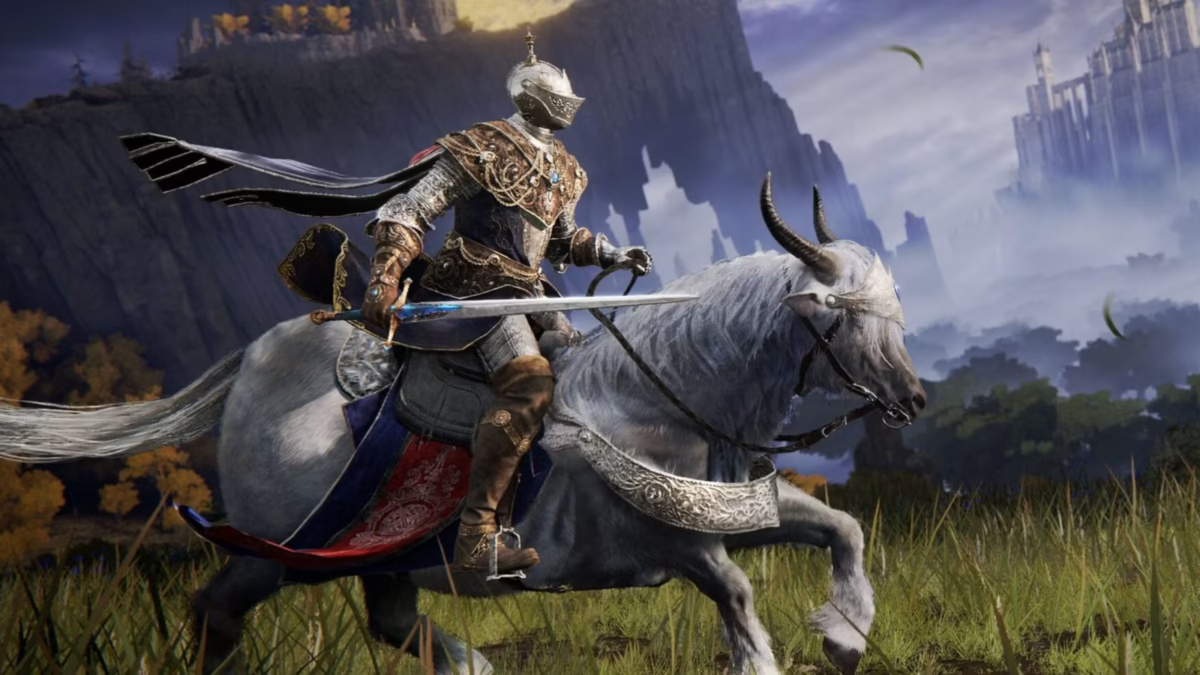
Bandai Namco wants you to believe that the pricing strategy for their latest massive expansion is a gift to the community. Do not fall for the marketing spin. The $40 price tag attached to Elden Ring‘s Shadow of the Erdtree DLC is a calculated penalty applied directly to the most loyal fans who bought the base game at launch. The situation sparked a massive debate on the official Elden Ring Steam community hub, as players realized the numbers did not add up, the media narrative surrounding this release suggests we should be grateful for the opportunity to hand over more cash for fresh content. However, looking closely at the storefront listings reveals a pricing structure that treats early adopters like second-class citizens to prop up new player acquisition.
The initial reaction from the broader audience understandably focused on the sheer volume of content coming to PS4, Xbox One, PS5, XBS, and PC. Strangely, while the reporting teases that we know exactly when to expect this drop, a firm release date remains absent from the primary storefront discussion, leaving players to guess the exact launch window. This silence suggests the publisher is trying to secure early financial commitments based on hype rather than a concrete delivery timeline. The expansion boasts an impressive 8.5/10 rating in early evaluations, with impressions praising the massive new areas and terrifying bosses that await returning players. One YouTube review noted that “The world design is phenomenal”, echoing a sentiment shared across the wider player base. In a dedicated Facebook group, one player simply stated that “it is absolutely amazing”. The quality of FromSoftware‘s development work is not up for debate here. The problem lies entirely in how Bandai Namco is choosing to sell these digital files to the very people who made the base game a cultural phenomenon.
The actual numbers expose the core of this aggressive strategy. If you are a brand new player buying the base game and the DLC together as a single digital package, the math works out exceptionally well. In that bundle, the new content costs just 20 euros. If you already own the base game and just want to add the DLC to your existing library, the standalone price jumps to a staggering 40 euros. You cannot purchase the discounted bundle if the base game is already registered to your account. Players who supported the Japanese studio on day one are being asked to pay double the price for the exact same digital goods. The financial incentive heavily favors latecomers while actively taxing the existing install base.
Is FromSoftware Punishing Early Adopters?
Yes, the current pricing structure directly penalizes anyone who bought the game prior to this expansion announcement. The community has quickly caught on to this glaring discrepancy. In the Steam discussion, one frustrated player pointed out the obvious flaw, stating, “The 40 euros price tag on dlc is a scam or a mistake”. They correctly identified that existing owners are being squeezed for no logical reason other than corporate revenue optimization. When a publisher blocks loyal customers from accessing the same 20-euro price point offered to brand-new buyers, they are sending a clear message about who they value. The day-one buyer is no longer the priority; they are simply a captive audience ready to be monetized.
We have seen this studio handle expansions differently in the past. When Dark Souls III received its massive additions, the pricing felt proportional to the original purchase, and the structured pass respected the early buyers who wanted to continue their journey. Now, the baseline cost of re-entering the Lands Between has doubled. A Reddit user perfectly captured the friction this creates, noting, “40$ is a full game price, still.” Expecting players to drop the equivalent of a smaller AA release just to access an expansion alters the value proposition entirely. The sheer scale of the new map does not change the fact that charging a premium to your veteran players while subsidizing new arrivals is a hostile business tactic.
The Quality Trap Masks the Real Cost
High review scores often provide cover for aggressive pricing models. Because the gameplay loop remains exceptional, many critics and players are willing to overlook the monetization happening right in front of them. Bandai Namco relies on this exact dynamic to push the price tag through without organized resistance. They know the demand is astronomical, and they are betting that the promise of fresh lore and intricate secrets will drown out any complaints about the 40-euro standalone cost.
Related: Rockstar Charging Console Players for GTA 5 Upgrades Is a Trap.
Just like other major publishers, they are testing the upper limits of what a dedicated fanbase will tolerate. If millions of players quietly accept paying double what a new buyer pays, this 40-euro baseline will become the new standard for every future expansion in the genre.
Defenders of this strategy point out that bundling older products with new releases at a heavy discount is a standard industry tactic to revive sales late in a console cycle. They argue that the 40-euro price is completely fair for the sheer amount of content provided, and the 20-euro bundle price is simply a marketing acquisition cost absorbed by the publisher to attract fresh blood. According to this logic, early adopters are paying the correct price, while new players are simply getting a temporary promotional discount to enter the ecosystem.
That defense falls apart the moment you look at the digital storefront restrictions. If this were truly just a promotional discount for new players, Bandai Namco could easily offer a loyalty discount to existing owners, bringing their upgrade cost down to match the bundle rate. Instead, the digital storefront system explicitly prevents existing owners from accessing the better deal. The publisher is not just discounting the game for strangers; they are actively walling off their most dedicated fans from the same financial courtesy. A standard practice does not automatically make a fair practice. When you lock your biggest supporters out of a 50 percent discount on digital goods, you are exploiting their loyalty to pad quarterly revenues.
Setting a Precedent for the Genre
This situation reaches far beyond a single high-profile release. If this pricing discrepancy succeeds without significant pushback, it signals to every major publisher that punishing early buyers carries zero financial risk. We are already seeing heavy monetization creep into single-player experiences across the board, testing how much consumers will swallow before walking away. Related: Sony’s Refusal to Port Single-Player Games to PC Is Pure Survival. When an expansion costs $40 standalone but is halved when bundled for a newcomer, the math tells the existing player to stop buying games at launch entirely. The logical response to this strategy is to wait years for the inevitable bundled edition, depriving studios of the early sales revenue they claim to desperately need to fund development.
The gaming media might frame this release as a friendly return to a beloved universe, but the raw numbers on the digital checkout page strip away that illusion immediately. Bandai Namco is banking on the sheer quality of the studio’s work to blind fans to a highly unequal pricing model that extracts maximum value from the most dedicated players. The day-one supporters who built this franchise into a commercial juggernaut deserve the same 20-euro access granted to someone buying it for the first time today. Until publishers stop treating early adopters as premium revenue streams to be taxed, buying any massive release at launch remains a calculated financial mistake. Related: The Adventures of Sir Kicksalot Mixes Minecraft Style With Brutal Combat.




Comments