
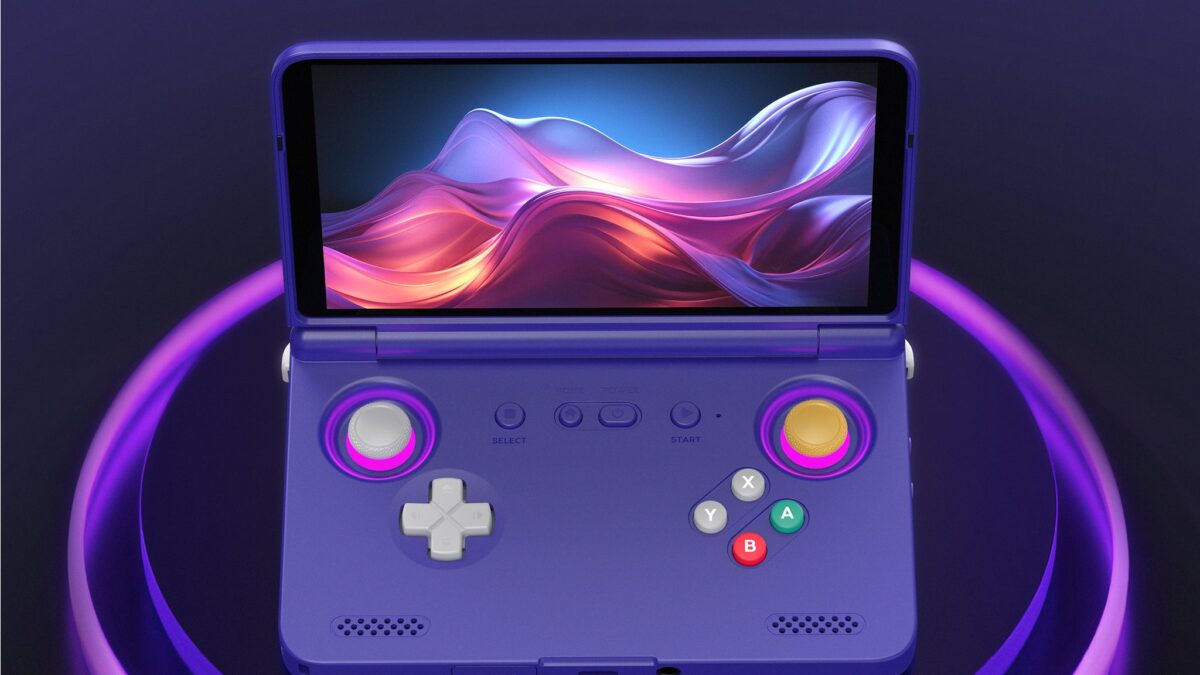
The $149 price gap between the $219 Retroid Pocket Flip 2 and the $69.99 Miyoo Flip V2 represents a complete architectural divide, not just a difference in build quality. Buyers must choose directly between a high-end Android machine capable of upscaling GameCube classics and a simple Linux pocket device built for 16-bit nostalgia.
The real issue is software friction, which matters far more than raw processing power. If you buy the Retroid, you must spend your first three hours configuring retroarch directories, mapping digital triggers, and managing Android background tasks. The Miyoo bypasses this entire headache by booting directly into a list of console categories within five seconds of sliding the power switch. However, if your budget is exactly $70 and you expect to play God of War on the PlayStation Portable at a stable 60 frames per second, you are going to be deeply disappointed by the Miyoo’s low-cost RK3566 processor, which struggles with anything beyond basic PlayStation 1 emulation.
Specifications Comparison

The raw numbers show two devices designed for entirely different workloads, with the Retroid offering modern smartphone-grade hardware and the Miyoo sticking to its RK3566 chip and 1GB RAM.
| Feature | Retroid Pocket Flip 2 | Miyoo Flip V2 |
|---|---|---|
| Price | $219 | $69.99 |
| Processor | Snapdragon 865 (1x A77 @ 2.8GHz, 3x A77 @ 2.4GHz, 4x A55 @ 1.8GHz) | RK3566 Quad-Core Cortex-A55 @ 1.8GHz |
| GPU | Adreno 650 | Mali-G52 |
| RAM | 12GB LPDDR4x | 1GB |
| Storage | 128GB UFS 3.1 + microSD slot | Dual microSD slots (64GB card included) |
| Display | 5.5-inch AMOLED, 1080p, 60fps | 3.5-inch IPS, 640×480, 4:3 aspect ratio |
| Battery | 5000mAh | 3000mAh (4-6 hours estimated) |
| Cooling | Active cooling fan | Passive |
| Joysticks | 3D Hall Effect sticks | Dual analog joysticks |
| Triggers | Hall Effect L2/R2 | Standard digital triggers |
| Weight | 300 grams | 170 grams |
| OS | Android 13 | Linux (Miyoo OS) |
| Connectivity | Wi-Fi 6, Bluetooth 5.1 | Wi-Fi 2.4/5GHz, Bluetooth 4.2 |
Where Retroid Dominates
The Retroid Pocket Flip 2 is exceptionally powerful in this form factor, largely because of its gorgeous 5.5-inch AMOLED screen. The 1080p panel offers deep blacks and vibrant colors that make modern indie games and upscaled retro titles look incredibly crisp. Beyond the display, the real draw here is performance headroom. The Snapdragon 865 processor and 12GB of LPDDR4x RAM give this machine the ability to run PlayStation 2, Nintendo GameCube, Wii, and Nintendo 3DS games at native or upscaled resolutions. It even handles lighter PC and Nintendo Switch emulation with ease, making it a highly versatile clamshell device.
The physical controls also receive a massive upgrade. Retroid implemented 3D Hall Effect joysticks and Hall Effect L2/R2 triggers, which eliminate analog drift and offer a smooth, linear pull that is perfect for driving games or modern shooters. Early testing found that the overall build quality feels premium, with a hinge mechanism that holds its angle well and a lightweight 300-gram chassis that does not fatigue your wrists during long play sessions. The inclusion of Android 13 means you have access to a mature ecosystem of emulators, cloud gaming services, and native Android titles, backed by official over-the-air firmware updates.
Where Miyoo Holds Ground
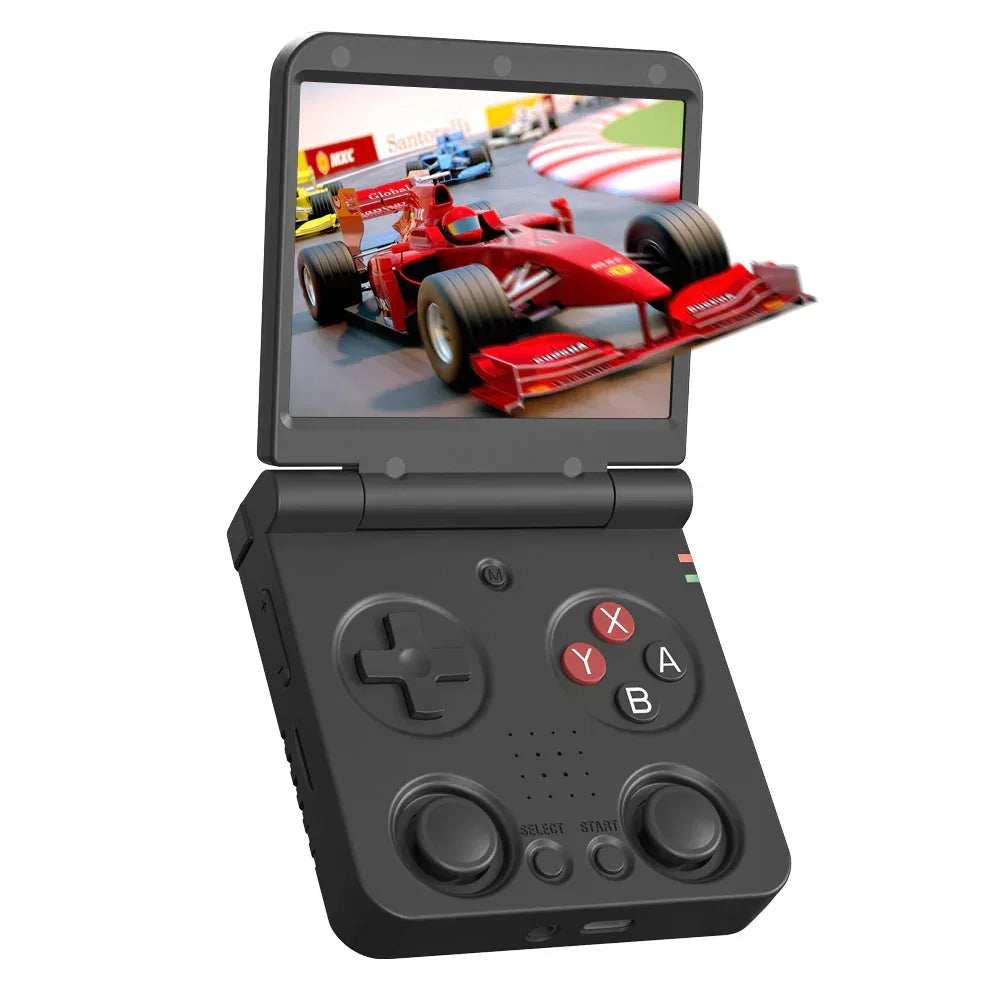
The Miyoo Flip V2 targets simplicity and ultra-portability. Running on an RK3566 processor with 1GB of RAM, this device is configured for instant play. The 3.5-inch IPS display features a 640×480 resolution with a native 4:3 aspect ratio, which is the perfect canvas for classic console gaming. Systems like the NES, SNES, Game Boy Advance, PlayStation 1, and Nintendo DS look incredibly authentic on this panel without any awkward stretching or black bars. It is a true pocket-sized companion that you can throw into a bag without worrying about scuffing a premium piece of tech.
The consensus among people who have used both devices is that the Miyoo Flip V2 is far easier to grab and go. Its physical buttons and classic D-pad have that mushy membrane feel that retro purists love. Miyoo includes a generous bundle in the box, shipping the device with a custom carrying case, a screen protector, and a USB card reader. The team behind the Miyoo Mini line has a solid track record of regular firmware updates, ensuring that the community-developed operating systems run flawlessly. The replacement of the fragile plastic hinge from the first-generation model with a robust metal hinge on the V2 also addresses previous durability concerns, though some users note the new hinge can feel a bit stiff out of the box.
What Does the Extra $149 Actually Buy?
When you spend $219 on the Retroid Pocket Flip 2 instead of $69.99 on the Miyoo Flip V2, you are not just buying minor performance gains, you are unlocking entire generations of gaming history. The Miyoo Flip V2 tops out at PlayStation 1 emulation. If you want to play titles like Wind Waker, Gran Turismo 4, or Super Mario Galaxy, the Miyoo simply cannot boot them. The extra cash buys you the Snapdragon 865 chip required to emulate the complex GameCube graphics engine at full speed.
The Contrarian View: Why the Retroid Might Be a Mistake
If you are someone who primarily plays Game Boy, Game Boy Color, Game Boy Advance, and Super Nintendo games, spending $219 on the Retroid Pocket Flip 2 is a massive waste of resources. These 8-bit and 16-bit systems do not benefit from a 1080p AMOLED screen, nor do they require 12GB of RAM or a cooling fan. In fact, playing a Game Boy Advance game on the Retroid’s 16:9 screen results in massive black pillars on the sides, wasting a large portion of the display area. The Miyoo Flip V2, with its native 4:3 display, actually offers a more authentic and comfortable viewing experience for these classic systems. For the simple task of playing Pokémon or Tetris on your daily commute, the Miyoo is lighter, cheaper, and far less stressful to lose or damage.
Thermals and Heat Management
Emulating demanding systems like the PlayStation 2 and GameCube puts a heavy load on any processor, and this is where the Retroid Pocket Flip 2’s active cooling fan becomes necessary. When running intensive titles, the fan spins up to keep the Snapdragon 865 from thermal throttling, allowing you to maintain steady frame rates during extended play sessions. The fan does introduce a mild hum, but it keeps the handheld comfortable to hold. On the flip side, the Miyoo Flip V2 uses silent passive cooling. Because the RK3566 chip is highly efficient and only runs low-power retro emulators, the device never gets uncomfortably warm, nor does it require any fan vents that could trap pocket lint.
Which One is Better for Beginners?
For someone completely new to the retro handheld hobby, the Miyoo Flip V2 is the far easier recommendation. It ships with more than 20 pre-installed emulators and a Linux-based operating system that works right out of the box. You turn it on, select a game from a simple list, and start playing. The Retroid Pocket Flip 2 runs Android 13, which offers incredible flexibility but requires a significant amount of initial setup. Beginners will have to navigate the Google Play Store, download individual emulators, map touch controls to physical buttons, and configure file paths for their game libraries. If you do not want to spend your first evening reading setup guides, the Miyoo is the clear choice.
The Clamshell Verdict
If you want a premium, do-it-all handheld that can handle modern indie games, high-end emulation up to the GameCube and PS2, and offers a gorgeous AMOLED screen, the Retroid Pocket Flip 2 is worth every penny of its $219 price tag. It is a highly capable device that can serve as your primary gaming machine on long trips, especially if you also want to look into other premium options like the Retroid Pocket 6 vs AYN Odin 3 comparison before making a final choice.
If you are looking for a simple, highly portable, and affordable device to enjoy classic 8-bit and 16-bit games without any complicated software configuration, the Miyoo Flip V2 is an absolute steal at $69.99. It delivers the nostalgic Game Boy Advance SP aesthetic with modern reliability and zero setup headache.
My personal recommendation goes to the Miyoo Flip V2 because its ultra-compact design, instant-on Linux interface, and tactile button layout make it the perfect, stress-free companion for quick gaming sessions on the go.

Comments