
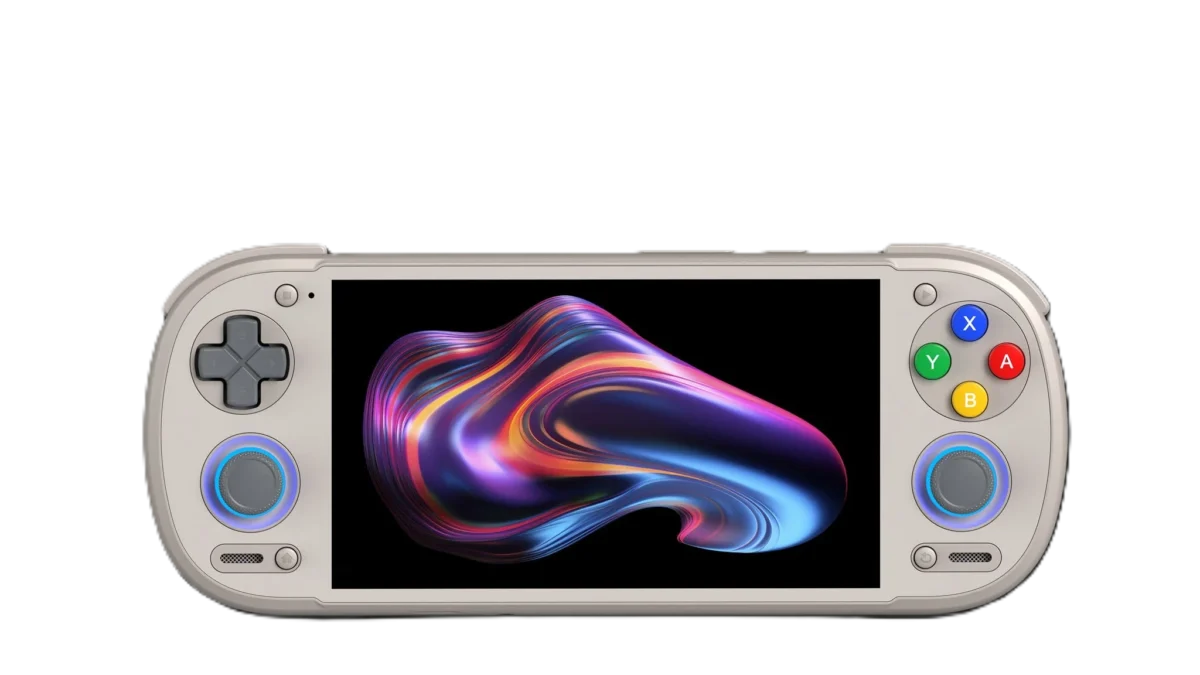
The choice between the Retroid Pocket 6 and the AYN Odin 3 comes down to a $110 price difference, and what that extra money buys you. At $229, the Retroid Pocket 6 offers compelling value. For $339, the base model AYN Odin 3 promises a premium Android handheld experience. It is about how that power translates into your daily use, your tolerance for minor frustrations, and your wallet’s capacity.
Design and Build: Pocketability vs. Presence
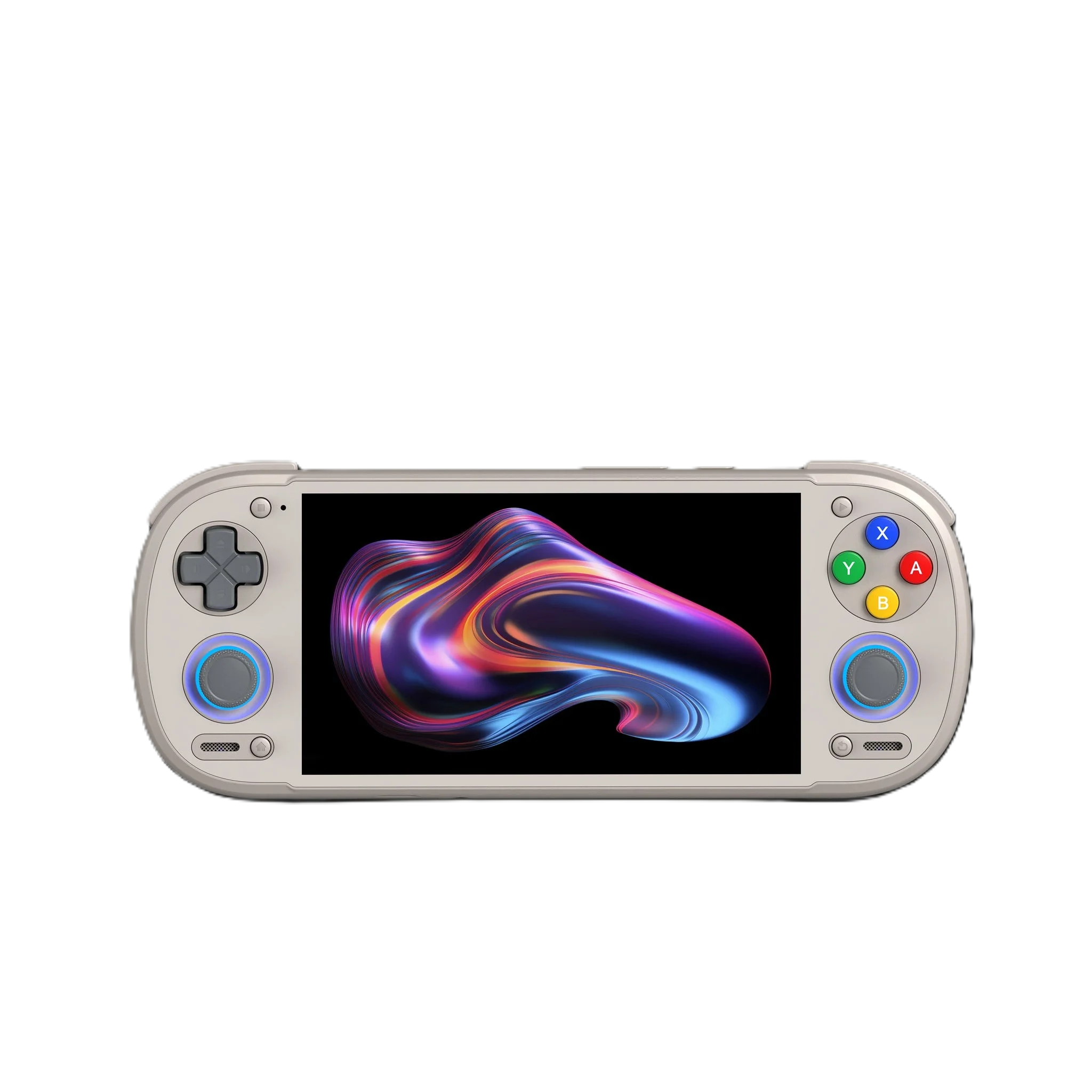
Hold the Retroid Pocket 6, and its 320g weight feels good in the hand. It is light, comfortable for extended sessions, and slips easily into most pockets. Its dimensions are 210.4 x 86.6 x 17.2mm, making it genuinely portable. However, Retro Dodo called its design ‘Undeniably Boring’, and I agree. The device looks generic, functional but uninspired. The off-centered USB-C port is a minor aesthetic and practical annoyance, especially when docking or charging.
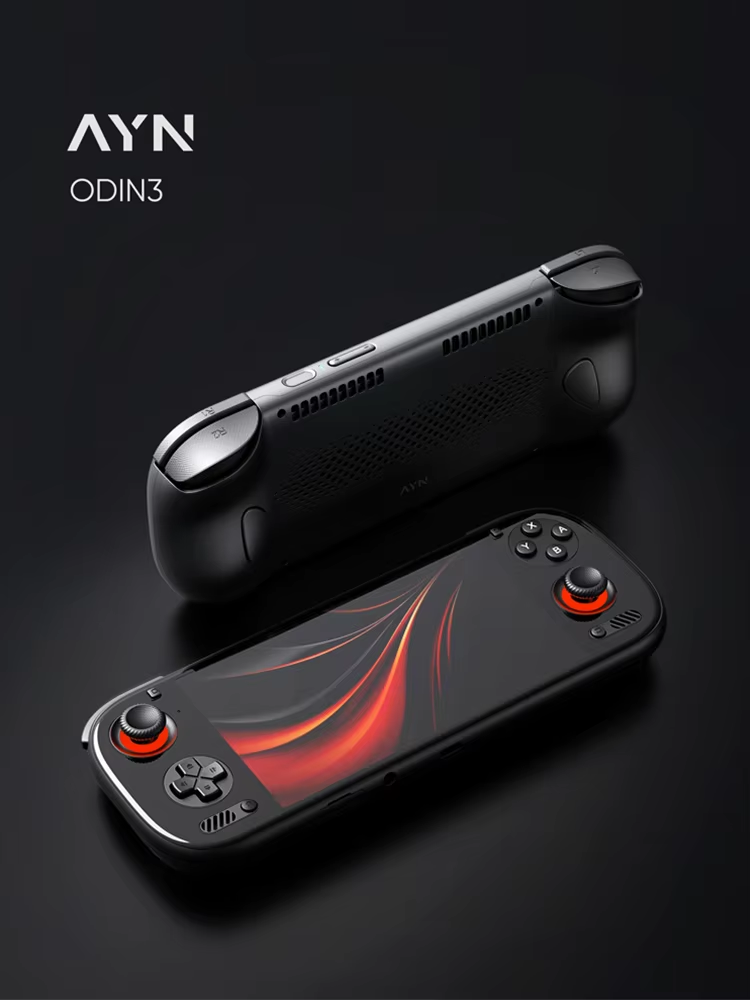
The AYN Odin 3, by contrast, commands more presence. It weighs 390g, a full 70g heavier than the RP6. This weight difference is noticeable, giving it a more substantial feel, though it is less ‘pocketable’ for some. The Odin 3’s glass front panel is a point of concern for durability; I worry about accidental drops. While it feels premium, that glass carries risks.
Display: Size is the Only Real Difference
Both handhelds feature excellent AMOLED displays. The Retroid Pocket 6 has a 5.5-inch screen, while the AYN Odin 3 steps up to 6 inches. Both panels run at 1920×1080 resolution and offer a smooth 120Hz refresh rate. Colors pop, blacks are deep, and text is crisp on both. For pure visual quality, you will be happy with either device.
The crucial difference here is size and aspect ratio implications. The RP6’s 16:9 display, while great for modern Android games and streaming, creates noticeable borders when playing older 4:3 aspect ratio retro games. The Odin 3’s 0.5-inch larger 6-inch panel offers a more immersive experience overall, though it also adheres to the 16:9 standard, meaning 4:3 content will still have borders.
Specifications Comparison
| Feature | Retroid Pocket 6 | AYN Odin 3 (Base/Pro/Max/Ultra) |
|---|---|---|
| Processor | Snapdragon 8 Gen 2, Adreno 740 GPU @ 680MHz | Qualcomm Dragonwing Q8 (Snapdragon 8 Elite class) |
| RAM / Storage | 8GB LPDDR5x / 128GB UFS 3.1 | 8GB/128GB UFS 3.1 | 12GB/256GB | 16GB/512GB | 24GB/1TB UFS 4.0 |
| Display | 5.5-inch AMOLED, 1920×1080, 120Hz | 6-inch AMOLED, 1920×1080, 120Hz |
| Battery | 6000mAh, 27W fast charging | 8000mAh, 60W fast charging |
| Operating System | Android 13 | Android 15 |
| Connectivity | Wi-Fi 7, Bluetooth 5.3 | (Specs comparable to RP6) |
| Weight | 320g | 390g |
| Dimensions | 210.4 x 86.6 x 17.2mm | (Slightly larger than RP6) |
| Price (Official) | $229 | $339 (Base) | $439 (Pro) | $489 (Max) |
Performance: Raw Power vs. Refined Efficiency
The AYN Odin 3 is the undisputed king of raw performance in this comparison. Its Qualcomm Dragonwing Q8 processor, an Elite-class Snapdragon 8 variant, is approximately 30% faster than the Snapdragon 8 Gen 2 in the Retroid Pocket 6 for both single-core and multi-core operations. This is not a subtle difference. In tests, the Odin 3 achieved a 3D Mark Wild Life Extreme score of 6541 with an impressive 97.9% stability rating. This means consistent, high performance under load.
The Retroid Pocket 6, with its Snapdragon 8 Gen 2 and Adreno 740 GPU clocked at 680MHz, is no slouch. It is a powerful chip, capable of handling most tasks you throw at it. The RP6 offers 8GB of LPDDR5x RAM and 128GB of UFS 3.1 storage. The Odin 3, in its various configurations, scales up to 24GB of RAM and 1TB of UFS 4.0 storage in the Ultra model, offering significantly more headroom for future applications and larger game libraries.
Emulation by System Tier
When it comes to emulation, both devices excel at older systems. For anything up to PlayStation 1, Nintendo 64, NES, SNES, and Game Boy Advance, both the Retroid Pocket 6 and the AYN Odin 3 provide a flawless experience. You can expect perfect frame rates and high fidelity on these platforms. The differences emerge when pushing into more demanding generations.
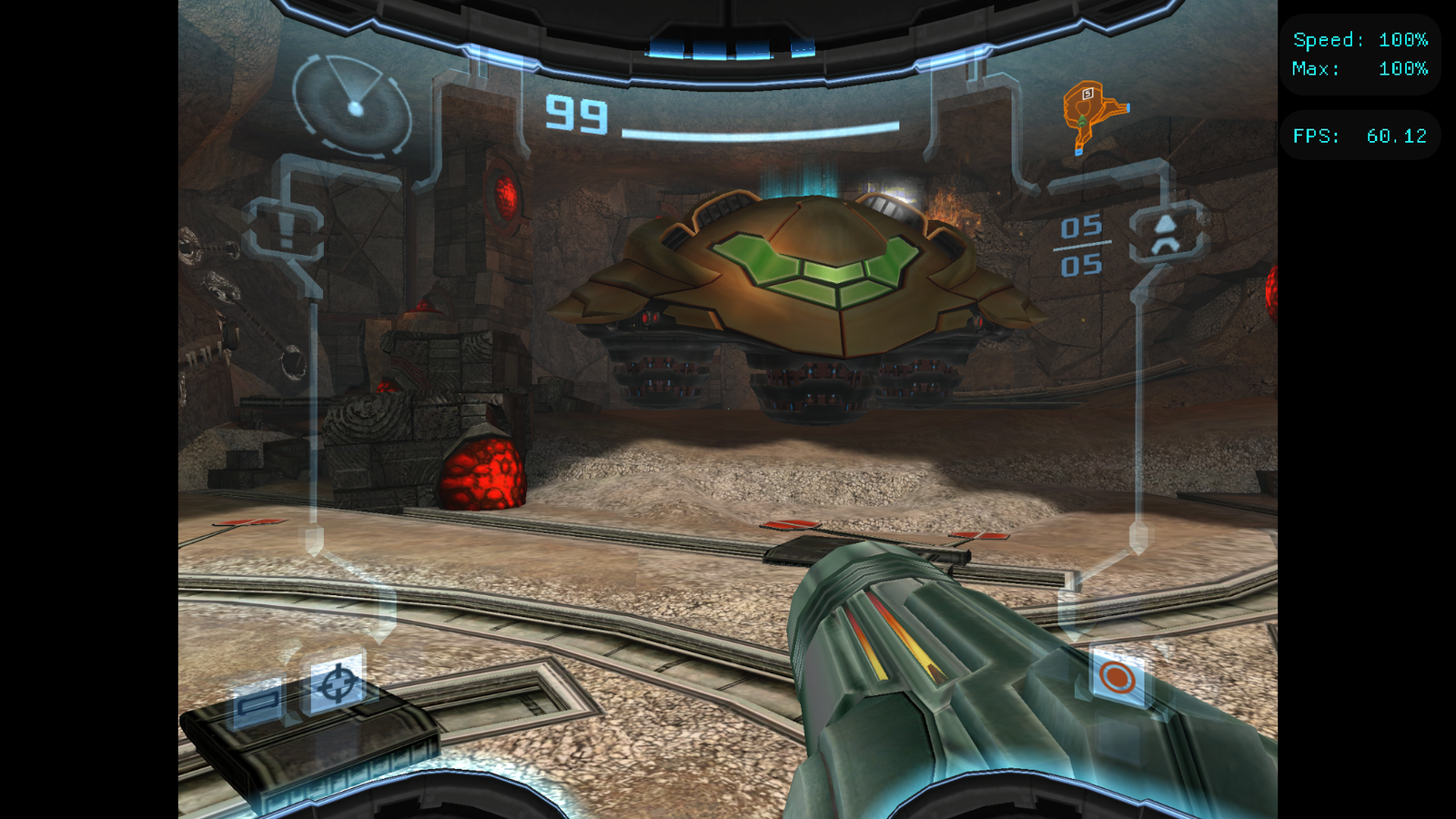
- PS2 and GameCube: This is where the Odin 3 truly pulls ahead. The Odin 3 handles PS2 and GameCube at 4x-6x native resolution without issue. The Retroid Pocket 6 can manage PS2 at 1.5x-2x native resolution and GameCube at 3x.
- Dreamcast and PSP: Both devices handle Dreamcast and PSP emulation beautifully. The RP6 easily pushes these systems to 4x native resolution, making them look fantastic on its 5.5-inch screen.
- Nintendo Switch and PS3: This is the bleeding edge of handheld emulation, and neither device is a perfect solution for every game. The Odin 3, with its faster SoC, leads in Switch emulation for a wider range of titles, and makes some PS3 titles run better than the RP6. However, it is crucial to temper expectations. You will not get perfect, full-speed emulation for every Switch or PS3 game on either device. The Retroid Pocket 6 had a slight advantage at launch, benefiting from Turnip GPU drivers being available for its Snapdragon 8 Gen 2 chip sooner than for the Odin 3’s Dragonwing Q8. This gave the RP6 an early edge in Switch emulation, but the Odin 3 has since caught up and surpassed it in most cases as driver support matured.
Battery Life and Charging: Endurance vs. Speed
Battery life is another area where the Odin 3 takes a significant lead. Its massive 8000mAh battery provides excellent longevity. The Odin 3 delivers 10+ hours of battery life when playing older systems or even PS2 emulation. For more demanding Switch emulation, it still delivers a respectable 4-6 hours. This means more playtime and less anxiety about finding an outlet.
The Retroid Pocket 6 features a 6000mAh battery. Retro Dodo’s testing aligns with my experience: 6-8 hours for light or retro gaming, around 4.5 hours for mixed use, and 2.5-3 hours for demanding titles. When it comes to recharging, the Odin 3 also wins with 60W fast charging, filling its larger battery quickly. The RP6 offers 27W fast charging, which takes approximately 90 minutes for a full charge.
Driver Maturity: An Early RP6 Advantage
At its launch, the Retroid Pocket 6 had a distinct advantage in Switch emulation due to the availability of Turnip GPU drivers for its Snapdragon 8 Gen 2 processor. These community-developed drivers often unlock significant performance improvements for emulators. The AYN Odin 3, launching with its newer Dragonwing Q8 chip, initially lacked this optimized driver support. However, as of June 2026, Turnip driver support for the Dragonwing Q8 has matured considerably. The Odin 3 now fully leverages its hardware, erasing the RP6’s early lead and allowing its superior processing power to shine through.
Drawbacks: No Device is Perfect
Every handheld has its quirks. For the Retroid Pocket 6, the ‘generic design’ is a consistent critique. It lacks visual flair. The off-centered USB-C port is a minor annoyance, impacting cable management or dock aesthetics. Its 16:9 display, while excellent, forces borders on 4:3 retro games, which can be distracting for purists.
The AYN Odin 3’s drawbacks are fewer but potentially more significant for some users. The glass front panel, while premium, raises durability concerns. A drop could be costly. Finally, its 70g heavier weight makes it less ideal for true pocketability compared to the RP6.
Price-to-Performance: Is the $110 Gap Worth It?
The core question for many buyers is whether the AYN Odin 3’s $110 price premium over the Retroid Pocket 6 is justified. The RP6 costs $229. The base Odin 3 is $339 from the official AYN store.
For PS2 and GameCube emulation at higher resolutions, the Odin 3’s ~30% CPU lead and greater GPU power make a tangible difference. If you plan to heavily emulate Switch games, the Odin 3 leads due to its faster SoC, though again, do not expect perfection.
If your primary goal is flawless Dreamcast, PSP, PS1, N64, and older retro systems, the Retroid Pocket 6 offers exceptional performance for $229. However, if you crave the absolute best Android handheld emulation experience available today, especially for PS2, GameCube, and the most demanding Switch titles, the Odin 3 delivers that top-tier performance.
Verdict
Choosing between these two excellent devices depends entirely on your priorities and budget.
- For the Budget-Conscious Player: The Retroid Pocket 6 is an outstanding value. For $229, you get a powerful, pocketable device capable of handling nearly everything up to Dreamcast and PSP at high resolutions, and even respectable PS2 and GameCube. Retro Dodo gave the RP6 8.4/10 and called it “Perfect Pocketable Power, But Undeniably Boring.” If you prioritize portability and cost-effectiveness, the RP6 is your pick. You can explore other budget alternatives here if you need even more savings.
- For the Performance Enthusiast: The AYN Odin 3 is the superior device. Its Dragonwing Q8 processor, larger 8000mAh battery, and 6-inch display provide a premium experience. RetroHandhelds.gg reviewer stated, “The Odin 3 is already one of my favorite handhelds of the year, and I’m not sure much will change that.” If you want the best Android emulation available, the Odin 3 is worth the investment. For a look at the previous-gen battle, check out our earlier comparison.
- For the Purist Seeking Authenticity: Neither device fully satisfies the desire for perfect hardware accuracy. For that, an FPGA alternative like the Analogue Pocket might be a better fit, but that is a different discussion entirely.
The Retroid Pocket 6, available at goretroid.com for $229, offers incredible performance for its price point. The AYN Odin 3, starting at $339 for the base model on ayntec.com, provides a more powerful, longer-lasting, and ultimately more premium experience for those willing to pay the difference. Related: Retroid Pocket Flip 2 vs Miyoo Flip V2 (2026 Comparison). Related: AYN Odin 2 Portal Might Be The Final Boss Of Handheld Emulation.

Comments