Nintendo shipped 23.68 million Switch 2 units worldwide as of June 30, 2026. That single figure tells you where the volume sits. While the bespoke console space belongs to one company, the PC handheld market has fractured into expensive, overlapping segments. The era of buying a cheap, high-performance x86 handheld on a whim is over. We have entered a phase where the software running on your device matters more than the silicon inside it, turning a hardware race into a optimization battle.
The real story of 2026 is how Valve is leveraging its operating system to dominate third-party hardware while Microsoft scrambles to make Windows 11 usable on an eight-inch screen. Rising component costs threaten to price average players out of the market entirely. That 23.68 million figure means Nintendo outsold the PlayStation 5 over that same post-launch window. On the open PC side of the fence, progress has slowed to a crawl.
Valve has made it clear that we will not see an annual Steam Deck refresh. The company says it will not ship a Steam Deck 2 until there is a generational leap in compute and efficiency. Reporting points to 2028 at the earliest for that device, with rumors suggesting a shift from a semi-custom APU toward an off-the-shelf chip. AMD is currently fielding the Ryzen Z2 and Z2 Extreme, but there is no successor generation with a public ship date. Hardware has plateaued.
Who Wins the Software War?
The battle has shifted entirely to software optimization.
Valve released SteamOS 3.8 in June 2026, introducing public builds up to 3.8.10 that brought initial Steam Machine support and improved third-party hardware compatibility. Subsequent beta builds added native gamepad support for the MSI Claw 8. SteamOS is now installable on the ROG Ally, Legion Go, and MSI Claw lines. This alters the math for anyone comparing SteamOS vs Windows on handhelds. Valve is decoupling its operating system from its own hardware to capture the entire ecosystem.
Valve operates on a unified rolling release schedule, pushing BIOS updates, controller firmware, and Proton compatibility layers in a single background download. Windows handhelds require users to juggle three separate update channels: Windows Update, manufacturer utilities like Asus Armoury Crate or Lenovo Legion Space, and AMD Software Adrenalin Edition for graphics drivers. When Asus pushed BIOS version 339 for the ROG Ally, it capped TDP limits and degraded performance for nearly two weeks before a hotfix rolled out. SteamOS bypasses this multi-layered mess by controlling the software stack from the kernel to the interface.
The performance delta between these operating systems is real.
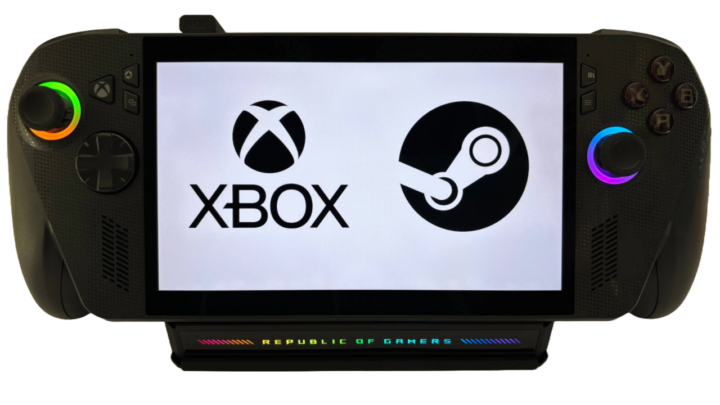
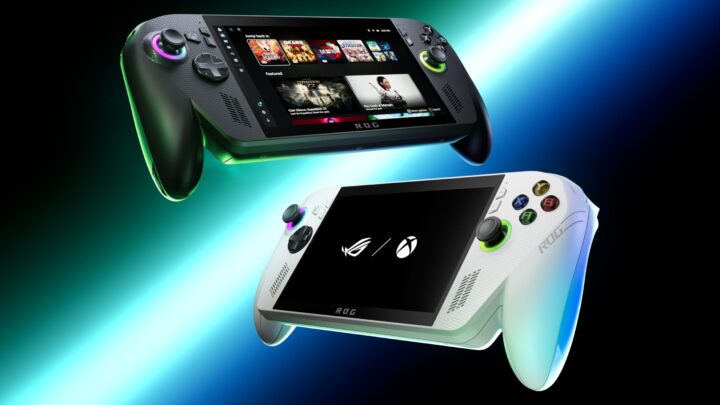
Swapping an Asus ROG Xbox Ally X to SteamOS raised frame rates by up to 30 percent in some titles while improving battery life by 20 to 40 percent. This was achieved with zero hardware modifications. Windows overhead remains the bottleneck limiting modern handheld performance. Running at a lower wattage under SteamOS means the fans work less and the device runs quieter. Microsoft is fighting back by rolling out a full-screen Windows handheld mode across Windows 11 devices, using the ROG Xbox Ally and Ally X (which launched October 16, 2025) as its lead platforms, but they are fighting an uphill battle against a lean, Linux-based competitor.
Windows offers compatibility with game launchers like Xbox Game Pass and Epic Games Store, but it exacts a heavy toll on battery life and frame pacing. SteamOS offers a console-like sleep and wake function and better battery efficiency, but it locks you out of games with aggressive, kernel-level anti-cheat software. If you are trying to make sense of these trade-offs, our handheld PC buying guide breaks down the compatibility list for every major system currently on shelves.
The Death of the Cheap Handheld
While software developers fight for control of the interface, hardware manufacturers are hitting a wall of pure economics.
The 2026 DRAM shortage, driven by AI datacenter demand, pushed consumer memory contract prices up by 89 percent quarter over quarter in Q1 2026 according to TrendForce. Because PC handhelds rely on fast, soldered LPDDR5X memory to feed their integrated graphics chips, they are vulnerable to this supply squeeze. Market analysts at IDC expect global PC shipments to fall 11.3 percent in 2026, yet the total market value is projected to rise about 1.6 percent because prices are climbing faster than shipment volumes are dropping.
In early 2025, upgrading a handheld configuration from 16GB to 24GB of LPDDR5X-7500 memory added $50 to the retail price. In 2026, that same 8GB jump adds $140 to the bill. This hurts APU-based handhelds, which must allocate up to 8GB of system RAM as dedicated VRAM for the graphics processor, leaving a standard 16GB system with only 8GB of usable system memory for the operating system and game files. This supply crunch shows up clearly on retail shelves.
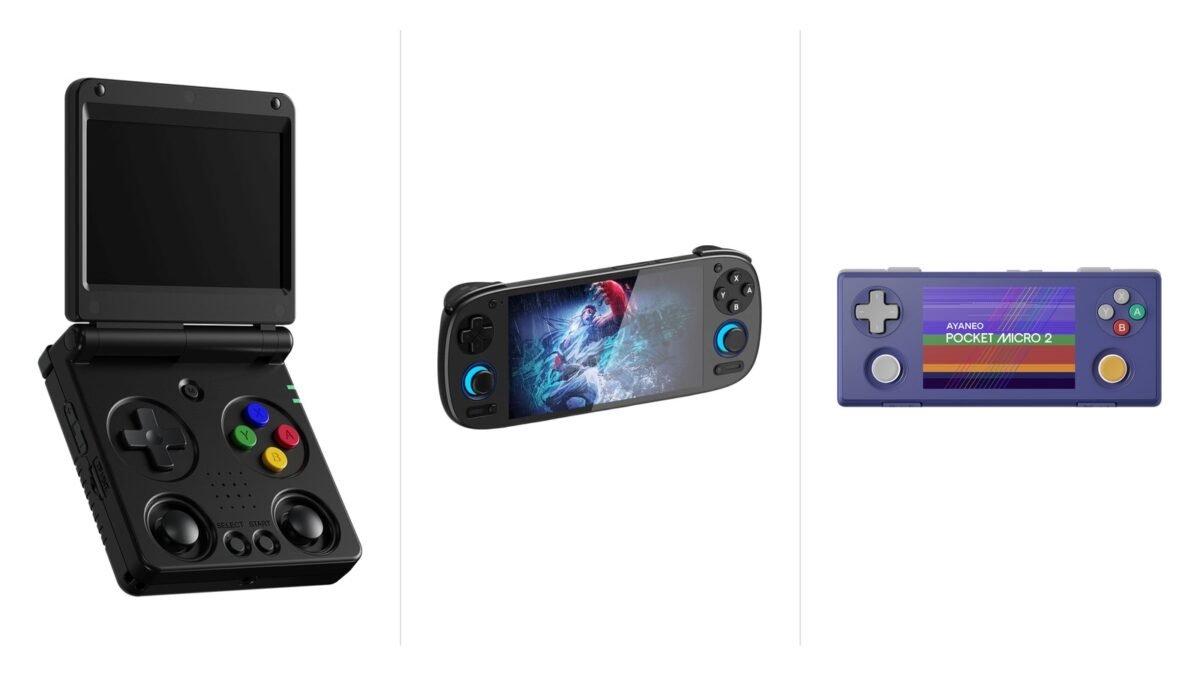
The Lenovo Legion Go 2 launched in June 2026 with a starting price of $1,199 for its base configuration, pushing even higher for the top-tier Ryzen Z2 Extreme model with 32GB of RAM and a 1TB SSD. This is a high premium for a handheld console. The price creep has also trickled down to the budget sector, where popular retro handhelds from manufacturers like Anbernic, Retroid, and AYANEO have abandoned their sub-100-dollar positions due to the same memory pricing pressure. Finding the best retro handheld picks now requires navigating older stock manufactured before the DRAM contract prices spiked.
Owners who used to swap handhelds annually are holding onto their first-generation Asus and Lenovo units. The performance bump of the Ryzen Z2 does not justify a four-figure price tag. The consensus among people running both older and newer devices is that first-generation Z1 Extreme systems run modern AAA games well enough, making the entry cost of the 2026 models difficult to justify.
The Current Hardware Outlook
To understand where the market is heading, we have to look at what is scheduled to ship versus what is still a distant promise. The table below outlines the near-term outlook for major handheld platforms.
| Device / Platform | Processor or OS | Status | The Catch |
|---|---|---|---|
| Steam Deck 2 | Unknown Next-Gen Chip / SteamOS | Reporting points to 2028 earliest | Valve is waiting for a true generational compute leap. |
| SteamOS on Third-Party | AMD Ryzen Z2 Class / SteamOS 3.8 | Shipping now as installable OS | No official retail ROG Ally or MSI Claw units with SteamOS pre-installed yet. |
| ROG Xbox Ally X | AMD Ryzen Z2 Extreme / Windows 11 | On sale since October 16, 2025 | Suffers from Windows background overhead and is priced premium. |
| Lenovo Legion Go 2 | AMD Ryzen Z2 / Windows or SteamOS | Shipping June 2026 | Extremely expensive, starting at $1,199. |
Buying a high-end gaming handheld right now is a mistake if your budget is capped below $800.
With contract prices for memory projected to remain volatile through 2027, any device purchased today carries an inflated premium that does not translate to raw frame-rate gains. If you primarily play competitive multiplayer games that require kernel-level anti-cheat, you will be forced to use Windows, which drains a standard 80-watt-hour battery in less than two hours under heavy load. Waiting for prices to stabilize or for Microsoft to ship an optimized, lightweight version of its OS is the logical move for budget-conscious players.
There are three specific scenarios where buying any handheld right now is a bad financial decision. First, if your home internet connection has an upload speed under 20 Mbps, you cannot rely on local game streaming to bypass the local hardware limitations, forcing you to run demanding games locally on an expensive APU that will struggle with 2027 releases. Second, if you demand a screen larger than 8 inches, the current crop of sub-8-inch displays will feel cramped, yet the only larger option is the heavy, 1.88-pound Legion Go 2, which costs a minimum of $1,199. Third, if you plan to play in outdoor environments where ambient light exceeds 500 nits, the glossy screens on standard models will render games unplayable without a costly matte screen protector that degrades image clarity.
Your path forward depends entirely on your tolerance for software tinkering and your budget. If you want a seamless experience where you press a button to resume your game instantly, buy a Steam Deck or install SteamOS 3.8 on an older, discounted ROG Ally. If you require compatibility with Game Pass, Epic, and various PC launchers, buy a Windows-based handheld like the Ally X, but prepare to spend time managing battery profiles and system updates. Do not buy a device based on the promise of future hardware revisions, because the silicon we have today is what we will be using for the next two years.
Personally, I am holding onto my original Steam Deck and refusing to pay the $1,199 starting price for the Lenovo Legion Go 2.


Comments