
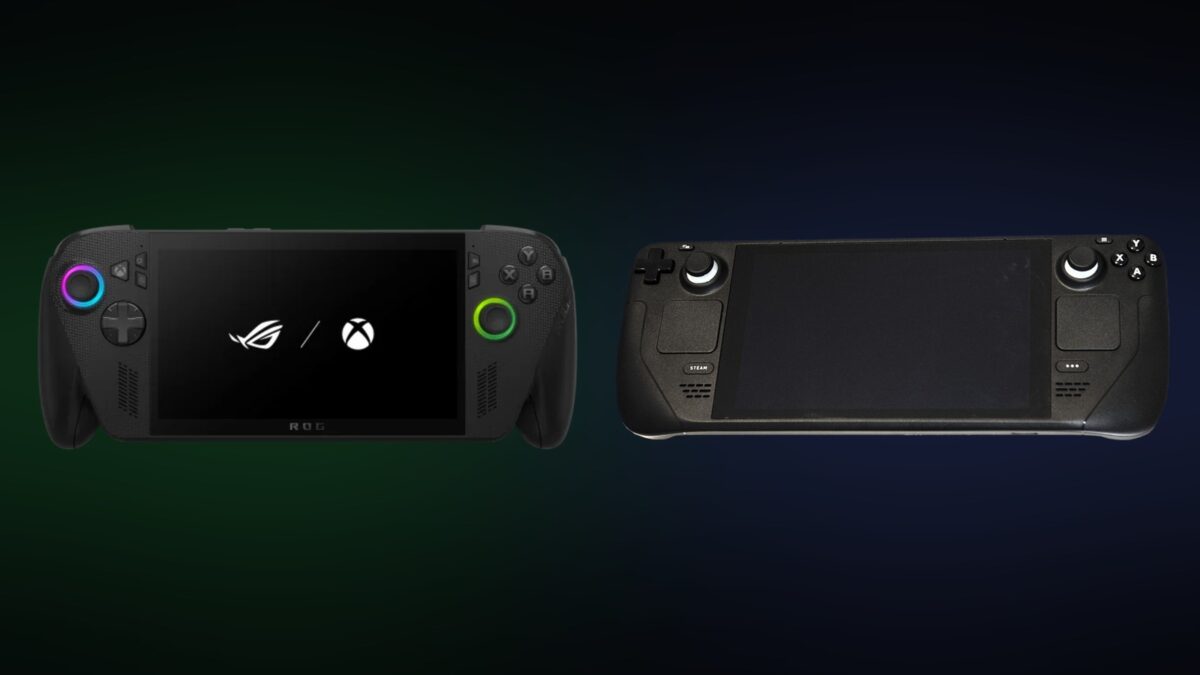
The price gap between the premium Windows handheld and Valve’s Linux portable has collapsed to just $51. When Valve raised the price of the 1TB Steam Deck OLED to $949 on May 27, 2026, it altered the math of the portable PC market. For years, choosing a Steam Deck was an easy financial default. Now that the ROG Xbox Ally X sits at $999.99, the financial barrier between these two platforms has evaporated.
The headline is the $51 difference, but the real story is how a sudden shift in manufacturing costs turned the Steam Deck from the cheap default into an expensive luxury. When Valve blamed rising component costs and global logistics for their price hike, they pushed their hardware directly into the path of high-end competitors. We are no longer comparing a cheap, streamlined console experience against a premium Windows PC. We are looking at two $1,000 machines. At this price tier, the hardware compromises of the Steam Deck are far harder to forgive.
How do the ROG Xbox Ally X and Steam Deck OLED specs compare?
Valve’s hardware platform was designed in 2023, whereas ASUS built the Ally X around newer silicon launched in October 2025.

| Specification | ROG Xbox Ally X | Steam Deck OLED |
|---|---|---|
| Processor | AMD Ryzen AI Z2 Extreme (8 Cores / 16 Threads, up to 5.0GHz) | 6nm AMD APU (Zen 2, 4 Cores / 8 Threads, 2.4-3.5GHz) |
| Graphics | AMD Radeon graphics, NPU up to 50 TOPS | 8 RDNA 2 CUs @ 1.6GHz (APU Power 4-15W) |
| Memory | 24GB LPDDR5X-8000 | 16GB LPDDR5 6400 MT/s |
| Storage | 1TB M.2 2280 SSD (User Replaceable) | 512GB or 1TB M.2 2230 SSD |
| Display | 7-inch IPS, 1920×1080, 120Hz, VRR, 500 nits | 7.4-inch HDR OLED, 1280×800, 90Hz, 1000 nits Peak |
| Battery | 80Wh | 50Wh |
| Weight | 715g | 640g |
| Operating System | Windows 11 with Xbox Full Screen Experience | SteamOS 3 |
ASUS holds a clear hardware advantage. By packing 24GB of LPDDR5X-8000 RAM into the Ally X, they resolved the memory bottlenecks that plague modern games when sharing memory between the CPU and GPU. The Steam Deck OLED remains locked to 16GB of slower LPDDR5 6400 MT/s memory.
The Ally X also uses a standard, full-length M.2 2280 SSD slot. Swapping in a bigger drive costs less than hunting for the short 2230 drives the Steam Deck OLED needs.
Physical inputs also differ in key areas. Independent testing by TechPowerUp found the Ally X face buttons to be rattlier and louder than the previous Ally X model, with the reviewer preferring the Steam Deck’s face buttons.
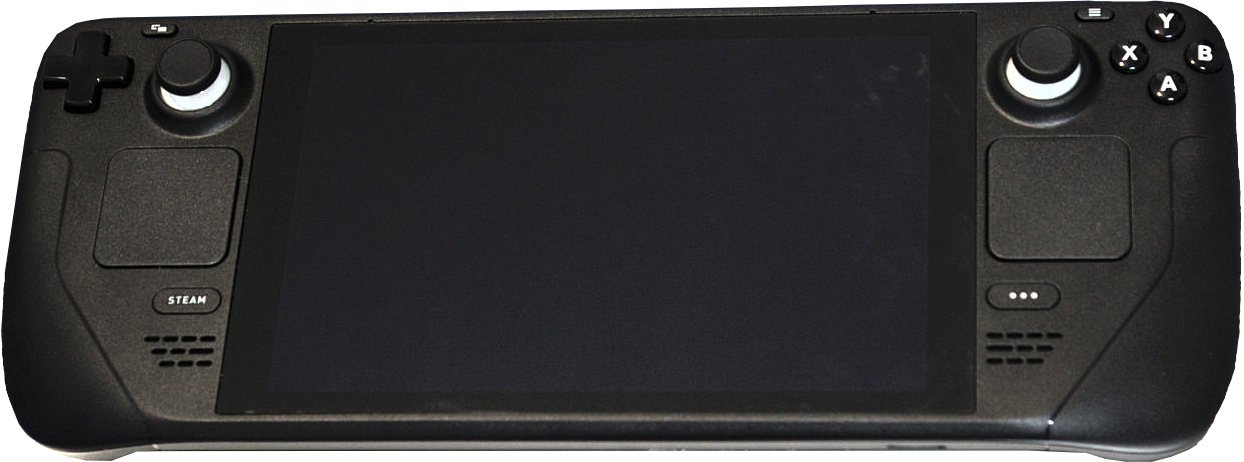
That same testing noted the Ally X d-pad is prone to mispresses in precision games like Tetris, where diagonals register on hard presses. The Steam Deck also has two trackpads for navigating complex interfaces, while the Ally X has none.
Is the ROG Xbox Ally X faster than the Steam Deck OLED?
The performance gap is wide, but it changes depending on how much power you feed the system. In high-power scenarios, the Ally X pulls well ahead.
Independent testing by Club386 revealed that the Ally X averaged 61fps in Cyberpunk 2077 at 25W at HD/HD+ resolutions, nearly doubling the performance of the Steam Deck OLED in that specific benchmark.
People who own both put the gap at 50% to 60% in demanding games at 1080p.
If you restrict both devices to a modest 15W power limit to save battery, the story changes. Owner-run testing at a matched 15W cap reveals that the Steam Deck OLED tops out around 44fps to 45fps, while the Ally X reaches approximately 53fps in the same game scenes.
Because Valve’s custom APU was designed to maximize efficiency specifically between 4W and 15W, it holds its own well at lower wattages. The moment you push past that 15W limit, however, the Steam Deck hits a hard ceiling, while the Ryzen AI Z2 Extreme chip inside the Ally X utilizes its extra CPU cores and faster memory to deliver smoother gameplay.
For a deeper look at how these operating systems handle performance scaling and resource allocation, read our SteamOS vs Windows handhelds breakdown.
Which handheld has better battery life and thermals?
You might expect the Ally X to die quickly given its power potential, but ASUS countered this by installing a larger 80Wh battery.
In battery testing conducted by Pure Xbox, the Ally X delivered 4 hours and 15 minutes of runtime in a light indie game at 1080p using its 13W Silent mode. Under heavy gaming loads, the results remain solid.
Playing Clair Obscur: Expedition 33 at a 17W Performance profile yielded 2 hours and 52 minutes of gameplay, while DOOM: The Dark Ages ran for 2 hours and 45 minutes. Even pushed to its maximum 30W Turbo mode, the Ally X managed to survive for a full 2 hours of AAA gaming.
The Steam Deck OLED relies on a smaller 50Wh battery. While its efficient 6nm APU and lower-resolution 800p screen allow it to stretch light indie games to long runtimes, Valve rates the device for 3 to 12 hours of total battery life depending on the load.
Physical capacity is difficult to beat with software optimization alone when comparing 80Wh against 50Wh.
Thermally, the Ally X handles its power profiles with poise, though there is a catch. At a sustained 25W gaming load, TechPowerUp measured the Ally X GPU at 66°C and the CPU at 68°C.
The 2024 ROG Ally X ran hotter, at 69°C and 71°C.
However, the cooling fans in the Ally X emit a higher-pitched hum that is louder and more distracting than the fans on the MSI Claw 8 when running at 20W and above.
To see how these thermal designs stack up against other modern Windows portables, you can read our ROG Ally X vs MSI Claw 8 AI+ comparison. You can also view the full thermal analysis on the TechPowerUp thermal review page.
How do SteamOS and Windows 11 compare in daily use?
Software decides this one more than silicon does. The Steam Deck OLED runs SteamOS, a console-like Linux distribution that offers quick sleep and resume functionality, automatic controller configurations, and a clean, unified interface. It is the easier device to recommend to beginners.
The catch is game support. Because SteamOS relies on Proton compatibility layers to run Windows games, any title with aggressive kernel-level anti-cheat software, such as Destiny 2 or Call of Duty, simply will not run on the Steam Deck.
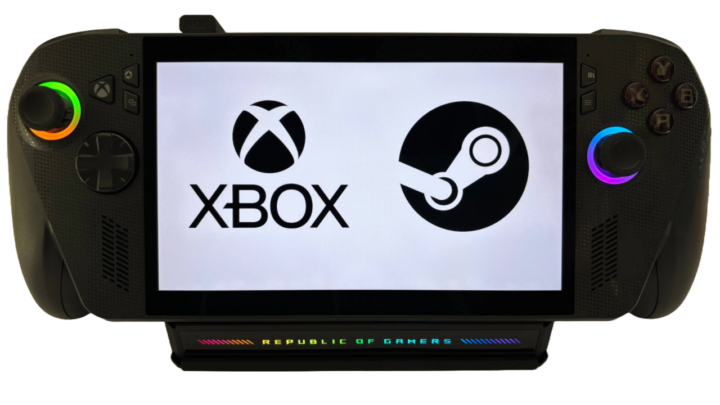
The Ally X runs Windows 11, which means it natively supports every major launcher, including the Xbox App, PC Game Pass, Epic Games Store, Battle.net, and EA Play. Anything that runs on a Windows PC runs here.
The trade-off is that Windows remains a desktop operating system crammed onto a 7-inch touchscreen. ASUS has mitigated this by integrating the Xbox Full Screen Experience, but the daily experience still involves Windows updates, driver installations, and occasional software quirks.
According to a report by The Verge, while sleep and resume functionality on the Ally X has improved since launch, users still report occasional bugs where controls fail to respond after waking the device, or the physical Xbox and ASUS hardware buttons stop working entirely.
If you want the hardware power of the Ally X but despise Windows, there is a middle ground. A growing segment of the community has taken to wiping Windows and installing Bazzite, a custom Linux distribution that mimics the SteamOS interface on third-party hardware.
It is not an officially supported configuration, but it highlights the flexibility of the platform. For a broader look at where this software battle is heading, check out our piece on the future of handheld gaming as an OS war.
The impact of Valve’s pricing shift
On May 27, 2026, Valve raised the price of the 512GB Steam Deck OLED from $549 to $789, and hiked the 1TB model from $649 to $949. That $300 jump on the 1TB model is what killed the Deck’s value argument. For a detailed breakdown of why this occurred, you can read our analysis of the Steam Deck price increase.
Shortages came first. In February 2026, Tom’s Hardware reported that Steam Deck OLED stock had completely run out across Europe, Canada, the United States, and Japan due to critical shortages of RAM and SSD components.
When stock slowly returned at these much higher prices, it left many prospective buyers feeling alienated. Paying nearly $1,000 for a device running a 2023-era APU and 16GB of RAM feels steep when the Ally X offers 24GB of RAM, a faster processor, and a 120Hz VRR screen for just $51 more. The Microsoft Store listed the Ally X out of stock in early October 2026, so stock varies by retailer.
Waiting for a Steam Deck 2 is not a quick fix either. A leak by hardware insider KeplerL2, reported via TechPowerUp, points to a 2028 release for the Steam Deck 2, unconfirmed by Valve.
The same report says DRAM and NAND shortages could push it later, and that Valve may drop semi-custom APUs for off-the-shelf AMD silicon. If this timeline holds true, the current Steam Deck OLED will have to remain competitive for another two years at its current $949 price point.
Who should buy the ROG Xbox Ally X?
Say you mostly play Game Pass on the couch and want to run titles natively without streaming. In that scenario, the ROG Xbox Ally X is the correct choice because it runs modern, hardware-intensive games without compatibility layers or launcher restrictions. If you are a PC Game Pass subscriber, or if you regularly play multiplayer games with kernel-level anti-cheat software, this is the option that actually works.
The 24GB of RAM and 80Wh battery provide excellent performance headroom and longevity that the Steam Deck simply cannot match. It is a premium, flexible portable PC that handles heavy workloads with ease, provided you are willing to navigate the occasional clunkiness of Windows 11.
Who should avoid both of these handhelds?
Neither of these devices is worth your money if you are looking for a simple, lightweight, grab-and-go console experience. If you primarily play retro emulators, low-power indie titles, or older games for 30 minutes before bed, spending $949 or $999.99 is an absurd waste of money.
At 715 grams, the Ally X is a heavy, thick device that can quickly cause hand fatigue during long, unsupported gaming sessions. If you do not want to spend your weekends adjusting TDP sliders, configuring fan curves, managing Windows driver updates, or troubleshooting Linux compatibility layers, you will likely find both platforms frustrating.
For casual players, a standard Nintendo Switch or a dedicated lightweight retro handheld remains a better, and cheaper, use of funds.
Owners who already have a Steam Deck would pay $999.99 for a gain that owners put at 50% to 60% at 1080p, but that shrinks to roughly 8fps (about 45 vs 53) once both are capped at 15W for battery life. If you mostly play capped or on battery, keep the Deck.
So which one should you buy?
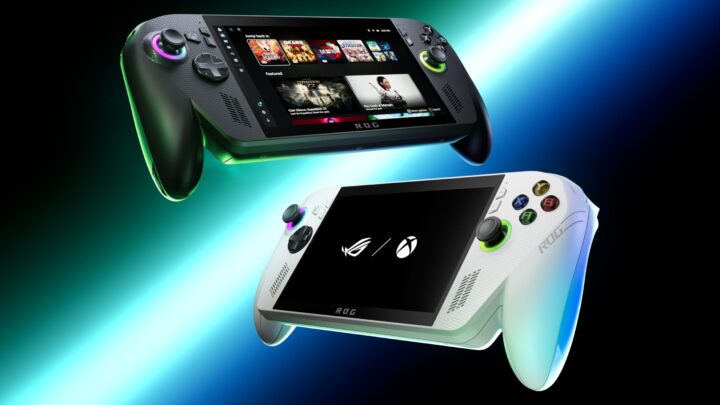
If you want maximum performance, native Game Pass support, and a high-refresh VRR screen, and you do not mind paying $999.99 for a Windows-based system, the ROG Xbox Ally X is the better buy. The hardware is faster, more modern, and better equipped for the future of PC gaming.
If you absolutely require the console-like polish of SteamOS, value the deeper contrast of a true HDR OLED screen, and want the physical trackpads for strategy games, the Steam Deck OLED remains a compelling piece of hardware. However, you must accept that you are paying $949 for older internal components and lower overall performance.
I recommend the ROG Xbox Ally X. Now that Valve has raised the price of the 1TB Steam Deck OLED to $949, paying the small $51 premium for the Ally X to secure 24GB of RAM, a modern Ryzen AI processor, and 80Wh of battery capacity is an easy call. I would buy the Ally X over the Steam Deck OLED to avoid spending $949 on older Zen 2 architecture.



Comments