
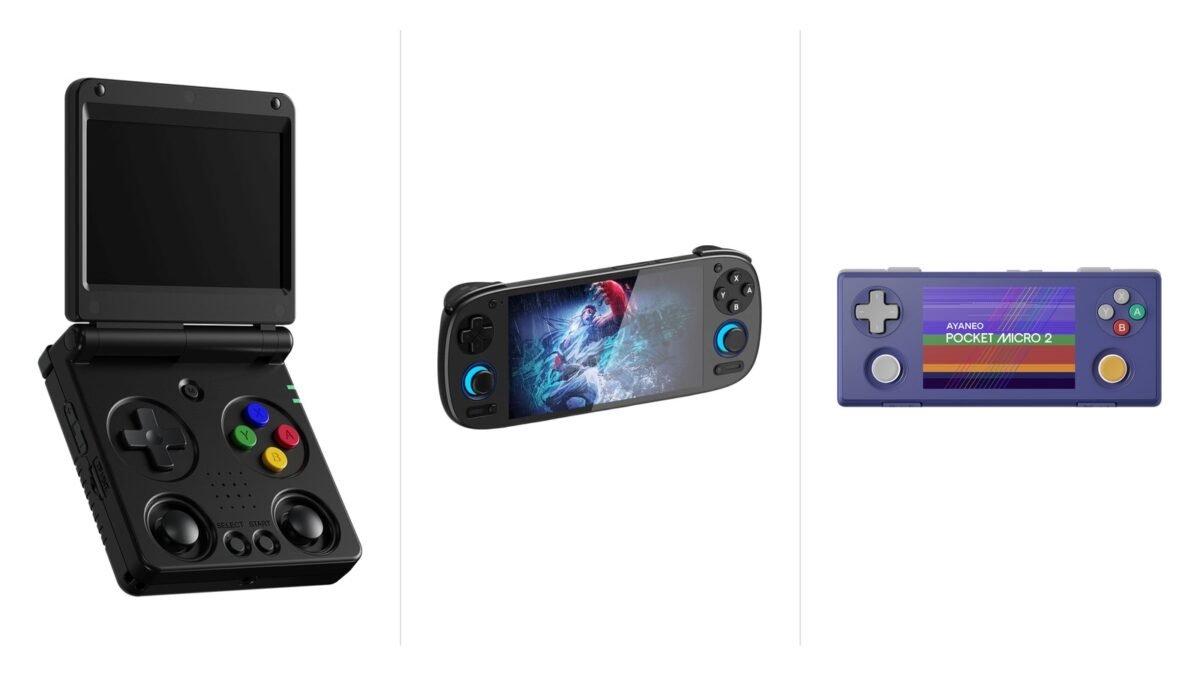
Buying a budget retro gaming handheld in the middle of 2026 feels like watching a grocery store shrink your favorite cereal box while raising the price. The most striking example of this trend is the Anbernic RG 34XXSP, a device that originally shipped with 2GB of RAM, quietly dropped to 1GB, and eventually bottomed out at a meager 512MB of older memory. This silent hardware evaporation is the front line of a global hardware squeeze that is rewriting the rules of the portable gaming market.
What actually matters here is that the era of the ultra-cheap, over-specced budget handheld is ending because the silicon supply chain no longer cares about low-end consumers. While marketing teams attempt to spin these shifts as minor product updates or temporary hiccups, the reality is that memory manufacturers are actively abandoning the legacy DDR2, DDR3, and older DDR4 production lines that budget retro devices rely on. For anyone looking to buy a device, the choice is no longer about finding the absolute cheapest option, but about securing a device before its internal components get quietly swapped for worse ones.
The Anatomy of the Great RAM Downgrade
To understand how bad the situation has become, we have to look at the rapid regression of Anbernic’s product line. When the RG 34XXSP first hit the radar, the device shipped with the H700 chipset and 2GB of RAM before the cuts. That did not last. Anbernic cut the RG 34XXSP’s RAM from 2GB to 1GB in January 2026, and then slashed it again to 512MB in May 2026, while also swapping the memory type from LPDDR4 to the much older, slower LPDDR3 standard. The company eventually blamed the second cut on an unexpected error and offered replacements to affected buyers, but the damage was done. The community quickly noticed the change when performance dipped in memory-intensive emulation tasks.
This is not just an Anbernic problem. Up the pricing ladder, Retroid is actively raising prices on its upcoming hardware. Retroid is raising prices on the Pocket 5 and Flip 2 by $10 effective July 14, 2026, pushing the Pocket 5 from $199 to $209 and the Flip 2 from $209 to $219. To soften the blow for early adopters, Retroid is auto-upgrading unfulfilled orders for the 8GB RAM and 128GB storage configurations of both devices to a 12GB RAM tier at no extra cost, effectively killing off the 8GB tier entirely. While Retroid has not publicly blamed memory costs for the price hike, the timing lines up perfectly with the broader industry crunch.
Even premium niche manufacturers are feeling the heat. Ayaneo’s Pocket Micro 2 sold out its initial run in just 20 minutes, after which the company’s CEO publicly stated that the handheld might never return because the RAM shortage had driven manufacturing costs to unsustainable levels. Ayaneo reversed that stance on July 10, 2026, restocking the device but introducing a new, lower-spec 6GB RAM and 128GB storage tier priced at $239, or $269 for the Stardust Purple edition, to sit alongside the existing 8GB and 256GB tier which costs $279, or $309 for the purple variant. The premium boutique experience is now just as vulnerable to supply chain volatility as the budget sector.
| Model Variant | RAM / Storage | Standard Price | Stardust Purple Price |
|---|---|---|---|
| Pocket Micro 2 (New Tier) | 6GB / 128GB | $239 | $269 |
| Pocket Micro 2 (Original Tier) | 8GB / 256GB | $279 | $309 |
Why Retro RAM is Going to the Moon
The underlying cause of this crisis has nothing to do with retro gaming itself and everything to do with the massive artificial intelligence infrastructure boom. Market research firm TrendForce reports that DDR2 contract prices rose 55% to 60% in Q2 2026, with an additional 35% to 40% hike projected for Q3 2026. The world’s largest semiconductor fabs are converting their production lines to manufacture high-bandwidth memory and high-density server DRAM for AI data centers. Because these enterprise components carry massive profit margins, legacy consumer silicon like DDR2, DDR3, and standard DDR4 has been pushed to the absolute bottom of the priority list.
This shift has forced smaller memory designers to scramble for whatever fab capacity remains. Winbond is currently winding down its DDR2 production entirely, reallocating its internal capacity to DDR3, DDR4, and LPDDR4. To prevent a total collapse of the legacy supply chain, ESMT is maximizing its DDR2 output at wafer maker PSMC to fill the massive void left by Winbond. This game of musical chairs among chip suppliers means that retro handheld makers, who operate on razor-thin margins, simply cannot secure stable, low-cost memory contracts anymore. If they want RAM, they must pay premium spot-market prices or settle for whatever obsolete, lower-density chips happen to fall off the back of the truck.
There is no quick fix on the horizon. SK hynix plans to double its silicon wafer output over the next five years, but that capacity will take years to bring online. Similarly, Micron does not expect to see meaningful new output from its Virginia fab expansion until 2027 or 2028. The hardware pinch we are seeing today will likely persist for at least another eighteen months, forcing manufacturers to either inflate their retail prices or compromise their hardware designs to survive.
The Global Memory Crunch
It is easy to look at the retro handheld market and assume this is a niche problem, but the exact same memory crunch is wreaking havoc on mainstream gaming hardware. Microsoft was forced to raise Xbox Series X and Series S retail prices by $150 in several markets to offset rising component costs. In the portable PC space, the situation is even more extreme. The MSI Claw 8 EX AI+ launched at an astronomical $1,800, while high-end Lenovo Legion Go 2 configurations have climbed to nearly $3,000. When multi-billion-dollar hardware giants cannot absorb these memory price increases, tiny companies like Anbernic and Retroid stand zero chance of keeping their prices flat.
The financial pressure has already claimed its first major casualties. Ayaneo canceled its highly anticipated Next 2 handheld PC entirely, explicitly pointing to runaway memory costs as the reason the project became financially unviable. If you are looking for a high-performance portable, checking out a best retro handheld buying guide for every budget in 2026 is more critical than ever, as the value proposition of mid-tier and high-tier devices is shifting on a weekly basis.
What the Spec Sheet Hides
The real issue here is not just that the numbers on the box are getting smaller, it is that these RAM cuts directly impact what these devices can actually play. What the spec sheet hides is that retro emulation is highly dependent on memory bandwidth and operating system overhead. A Linux-based handheld running a lightweight frontend can get by on 512MB of RAM for basic 8-bit and 16-bit emulation, but once you start pushing into PlayStation 1, Nintendo 64, or Dreamcast, that lack of memory headroom becomes a massive bottleneck.
Many of these budget devices rely on community-developed custom firmware to run at their best. These custom operating systems often use modern Linux kernels that expect at least 1GB of system memory to run smoothly alongside background features like scraping box art, retro achievements, and Wi-Fi multiplayer. When you drop a device down to 512MB of LPDDR3, you are not just losing raw performance, you are locking yourself out of the best software experiences the community has spent years building. If you want to avoid these downgraded hardware traps, you should stick to the verified recommendations in our guide on the best budget retro handheld picks for 2026 to ensure you get a device that actually performs as advertised.
The community sentiment surrounding these downgrades has been understandably frustrated. Many hobbyists have noted that the golden era of cheap, incredibly capable handhelds is rapidly slipping away, replaced by a market where manufacturers must cut corners just to keep retail prices under $100. Some users who bought the RG 34XXSP specifically for its pocketable design have expressed disappointment that they now have to double-check the motherboard revision of their units just to know if they received the advertised hardware or a downgraded 512MB LPDDR3 variant.
Reality Check: Is the Panic Overstated?
The narrative of a total budget handheld collapse is overblown, and the manufacturers are exploiting this supply panic to justify lazy cost-cutting on devices that do not even need premium silicon. Let us be clear: for gamers who only care about emulating Game Boy, Game Boy Advance, and 16-bit Sega or Super Nintendo games, a drop from 1GB to 512MB of RAM has zero practical impact on gameplay. These older consoles require less than 16MB of working memory to emulate perfectly, meaning even a heavily downgraded chip has plenty of headroom. Additionally, ultra-budget vertical handhelds like the Miyoo Mini Plus have managed to maintain their low pricing precisely because they never targeted high-end specs to begin with. If your gaming goals are strictly retro, the RAM crisis is a background noise issue rather than a barrier to entry.
We can see this play out in head-to-head hardware matchups, such as the Miyoo Flip V2 vs Anbernic RG40XXV comparison, where software optimization and screen quality often matter far more than whether a device has a slight edge in raw memory bandwidth. If you are shopping in the sub-$70 category, a well-optimized 512MB device will still deliver a fantastic experience for the vast majority of classic titles. The panic is real for those trying to emulate demanding 3D consoles, but for the casual retro gamer, the sky is not falling just yet.
How to Make Your Decision
If you are looking to play high-end systems like the PlayStation 2, Nintendo GameCube, or Android-native ports, buying a mid-tier device like the Retroid Pocket 5 or Ayaneo Pocket Micro 2 right now makes absolute sense before further price hikes or spec reductions take effect. Securing a 12GB upgraded unit or an 8GB original model guarantees you the hardware overhead required to run these demanding emulators without stuttering.
If you only care about simple, pocketable 8-bit and 16-bit gaming on the go, it makes more sense to ignore the spec-sheet panic entirely and buy a cheap, established device like the Miyoo Mini Plus or a basic Anbernic RG35XX variant. These devices are already optimized for lower memory footprints, and you will not benefit from paying a premium for extra RAM that your emulators will never actually use.
The window to buy cheap, overpowered hardware is closing fast, and waiting for prices to drop back to 2024 levels is a losing strategy. If you want guaranteed performance, buy your hardware based on what is currently sitting on store shelves today, because tomorrow’s batch might ship with half the memory for ten dollars more.




Comments