
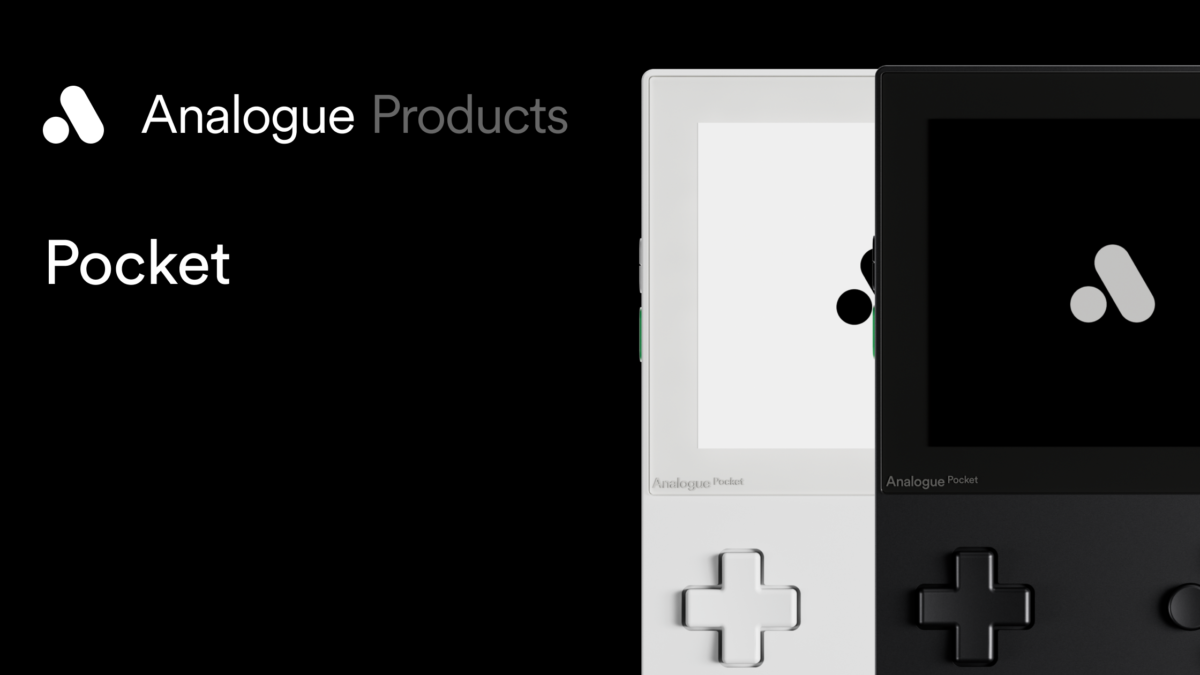
The FPGA handheld market in 2026 looks very different from what it was in 2022. The Analogue Pocket launched at $219 with a multi-month back-order queue and genuine community excitement; in 2026, you are paying $239 for the same hardware after two rounds of price increases driven by US tariff changes. No hardware revision, no second generation, and no announcement that either is coming. The same iCE40 UP5K FPGA inside the same premium aluminium chassis, now $20 more expensive than it was at launch.
Two challengers have entered the conversation since then. The Game Bub, crowdfunded on Crowd Supply and targeting a July 2026 ship date, uses an AMD Artix 7 FPGA with significantly more programmable logic cells than the Pocket iCE40; on paper it is more powerful, but the core library is in early development and the device has not yet reached backers. The second challenger is the MiSTer FPGA, which is not portable at all. It runs on the DE10-Nano development board, outputs to your TV via HDMI, and has been in active community development since 2017. As of 2026, the MiSTer carries the most mature and accurate FPGA core library of any platform in this comparison, and the gap over the Pocket is not close.
These three platforms are not competing for the same buyer, which is the first thing to understand before spending money on any of them. The Pocket is for someone who wants an FPGA portable with cartridge support and near-zero configuration overhead. The Game Bub is for someone who wants cutting-edge portable FPGA hardware and is willing to wait for the core library to grow around it. The MiSTer is for someone who wants the maximum in FPGA accuracy and is comfortable building a dedicated desk setup. The question is not which one is best in the abstract; it is which one fits your actual situation in mid-2026.
The FPGA argument for retro gaming rests on a specific premise: cycle-accurate emulation through hardware logic replication produces an experience that software emulation cannot fully match. Scanline timing, audio channel behaviour, and hardware quirks that software emulators approximate are replicated exactly on FPGA because the chip is literally reconfigured to behave as the original hardware at the logic level. For competitive players, audio purists, and anyone running titles with timing-sensitive mechanics, this matters in a measurable way. For casual play through a Final Fantasy or a Pokemon title, the difference between a well-tuned RetroArch core and an FPGA core is not audible or visible without direct A/B testing on appropriate output hardware.
The software emulation counter-argument is stronger in 2026 than it has ever been, and that is context you need going in. The Mangmi Air X at $89.99 runs SNES, GBA, and PS1 at full speed via RetroArch with accurate cores on a 1080p IPS display. The Retroid Pocket Classic at $149 handles everything through GameCube on an AMOLED panel. Both devices use software emulation, and both are available at a fraction of what any FPGA platform in this comparison costs. The FPGA premium starts at $200 and reaches $350 or more for a complete MiSTer build; you need to know exactly what you are paying that premium for.
Here is where each platform stands as of mid-2026. The Analogue Pocket openFPGA community library has grown to over 200 cores, covering Game Boy, GBC, GBA via the native cartridge slot, Game Gear, Lynx, Neo Geo Pocket, Sega Genesis, SNES, NES, TurboGrafx-16, and more. The Pocket does not and likely never will support N64, PS1, or Sega Saturn cores given the iCE40 logic cell count ceiling. The MiSTer released its N64 Turbo core in 2025, which handles the majority of the N64 library at full speed with RetroAchievements integration, and added a GBA core that year as well. The Game Bub has not yet shipped to backers, and its core development is ongoing.
The Analysis
Is the Analogue Pocket Worth Buying in 2026?
The Analogue Pocket is worth buying in 2026 if you own Game Boy, GBC, or GBA cartridges and you specifically want cycle-accurate hardware playback on one of the best portable displays ever manufactured. If you do not own cartridges and you are not paying the premium specifically for FPGA accuracy, software emulation on a Retroid Pocket Classic at $149 achieves equivalent practical results at $90 less, on a display that is arguably better for anything that is not a Game Boy title.
Full platform comparison:
| Platform | Price (2026) | FPGA Chip | Portable | Core Library | Cartridge Support | Display |
|---|---|---|---|---|---|---|
| Analogue Pocket | ~$239 | iCE40 UP5K | Yes | 200+ mature cores | GB / GBC / GBA native; adapters for others | 3.5″ 615ppi LCD |
| Game Bub | ~$299 est. | AMD Artix 7 | Yes | In development | TBD | TBD |
| MiSTer FPGA | $200 to $350+ | Intel Cyclone V | No | 100+ mature cores | Via IO board | TV or monitor via HDMI / VGA |
Core library maturity is the most important factor in this comparison, because FPGA hardware is only as useful as the cores running on it:
| System | Analogue Pocket | Game Bub | MiSTer FPGA |
|---|---|---|---|
| Game Boy / GBC / GBA | Native cartridge slot, cycle-accurate | Core in development | Mature core, cycle-accurate |
| SNES | Community core, mature | Core in development | Most complete SNES core available anywhere |
| NES | Community core, mature | Core in development | Cycle-accurate, mature |
| Sega Genesis | Community core, mature | Core in development | Cycle-accurate, mature |
| Neo Geo | Community core, mature | Core in development | Mature, arcade-accurate |
| Arcade (CPS1/2/3) | Limited community cores | Core in development | Extensive mature library |
| PS1 | Not possible, FPGA too small | Potentially possible | Mature core, cycle-accurate |
| N64 | Not possible | Potentially possible | N64 Turbo core; most titles playable |
| Sega Saturn | Not possible | Potentially possible | In development, incomplete |
The Analogue Pocket most defensible feature in 2026 is its display, and it is worth understanding specifically why. The 3.5-inch panel at 615 pixels per inch renders Game Boy games with sub-pixel accuracy; every pixel of a GBA title is visible at its correct size without any upscaling applied. You can enable scanline overlays that accurately replicate the original Game Boy LCD grid, producing a result that no software emulator on any Android device can match. The reason is straightforward: the pixel density of most portable screens cannot resolve individual Game Boy pixels without scaling them up, which introduces interpolation that changes how the image looks. The Pocket does not scale. It renders the original resolution at pixel-perfect size on a panel designed specifically for it, and that is a genuine differentiator that no $149 Android handheld replicates.
The Game Bub is the most interesting wildcard in the FPGA portable space right now. The AMD Artix 7 has approximately three to four times the logic cells of the Pocket iCE40 UP5K, which means cores that are impossible on the Pocket, including PS1 and N64, are theoretically achievable on the Game Bub without the compromises the Pocket chip imposes. The critical caveat is that FPGA core development is measured in developer-years, not months; the MiSTer community N64 core took multiple years of full-time development work to reach its current level of game compatibility. The Game Bub core library is starting from scratch, which means buying a Game Bub in mid-2026 means buying hardware potential rather than a finished library. For early adopters who want to support the platform from the ground up, that may be exactly the right call. For someone who wants to play PS1 on FPGA hardware today, it is not.
The MiSTer FPGA in 2026 is the most complete FPGA gaming platform available at any price, and the gap over the Pocket in library depth is significant. The N64 Turbo core added in 2025 supports the majority of the N64 library at full speed with RetroAchievements integration, making it the only way to play N64 on FPGA hardware right now. The SNES core is the most cycle-accurate SNES implementation that exists outside of original hardware. The CPS1, CPS2, and CPS3 arcade cores run every title in those catalogues at arcade-perfect timing. The trade-off is total portability: the MiSTer is a desk unit that outputs to your TV via HDMI, and that disqualifies it for any buyer who needs to play on the go, regardless of how strong the core library is.
The cost of a complete MiSTer setup is worth stating plainly, because the entry point is lower than people assume and the full cost is higher. The DE10-Nano development board runs $100 to $130, but a properly configured MiSTer also requires a USB hub for controllers, an IO board for audio and video outputs, an SDRAM add-on module for certain cores, and a case. A complete ready-to-use build from community suppliers runs $200 to $350 depending on the configuration. That is comparable to or more than the Analogue Pocket at $239; the justification is that the MiSTer library includes PS1-accurate playback and a mature N64 core that the Pocket cannot deliver at any price.
The Jay Respawns Position
Buy the Analogue Pocket if you own Game Boy, GBC, or GBA cartridges and you want cycle-accurate portable playback on a premium display. The $239 price tag is frustrating given that the hardware is unchanged from launch, but the product remains genuinely unique; nothing else portable plays Game Boy cartridges on a 615ppi display with zero software emulation overhead, and no equivalent is shipping in 2026. If that is your specific use case, the Pocket is still the only device that delivers it.
Do not buy the Pocket if your primary interest is SNES, Genesis, or anything newer. The community cores for those systems are good, but they are available on the MiSTer at higher cycle accuracy for a comparable total cost if you are building a desk setup. And if you want portable SNES without owning physical cartridges, you are paying $239 for something a $44 Miyoo Mini Plus handles at full speed via a well-tuned RetroArch SNES9x core. The FPGA premium is not justified for systems where software emulation is already effectively indistinguishable from hardware in blind testing.
Do not buy the Game Bub if you need it to work today. Buy it if you believe in the platform and want to back it from the early stages, because the AMD Artix 7 inside it is genuinely capable of running PS1 and N64 cores that the Pocket cannot support. If the community builds those cores to the standard of the MiSTer library, the Game Bub will be the most capable FPGA portable ever made; that is a real long-term case. It is just not a compelling argument for a mid-2026 purchase if your goal is to sit down and play games this week.
Buy the MiSTer FPGA if portability is not a requirement and you want the best FPGA core library available at any price. The N64 Turbo core alone justifies the platform for anyone who wants FPGA-accurate N64 playback, because right now it is the only way to get it. The SNES, arcade, and Neo Geo cores are mature enough to be indistinguishable from original hardware in blind testing, and the growing GBA core competes directly with the Pocket native playback for most titles.
The honest FPGA verdict in 2026 is this: FPGA still matters if your use case specifically requires it. Game Boy cartridge playback on the Pocket, cycle-accurate SNES and N64 on the MiSTer, and the long-term potential of the Game Bub are all things that software emulation does not fully replicate. But the gap between FPGA accuracy and a well-configured RetroArch setup on modern Android hardware has narrowed enough that most buyers will not notice a practical difference in daily play. Know exactly why you want FPGA before you spend $239 or more to get it; if the answer is specific and technical, the investment is justified, and if it is vague, the Retroid Pocket Classic at $149 is a better use of the money.
For more on how the battery holds up, head over to The 2026 Battery Battle: Deep Dive into Handheld PC and Console Gaming Endurance.

Comments