
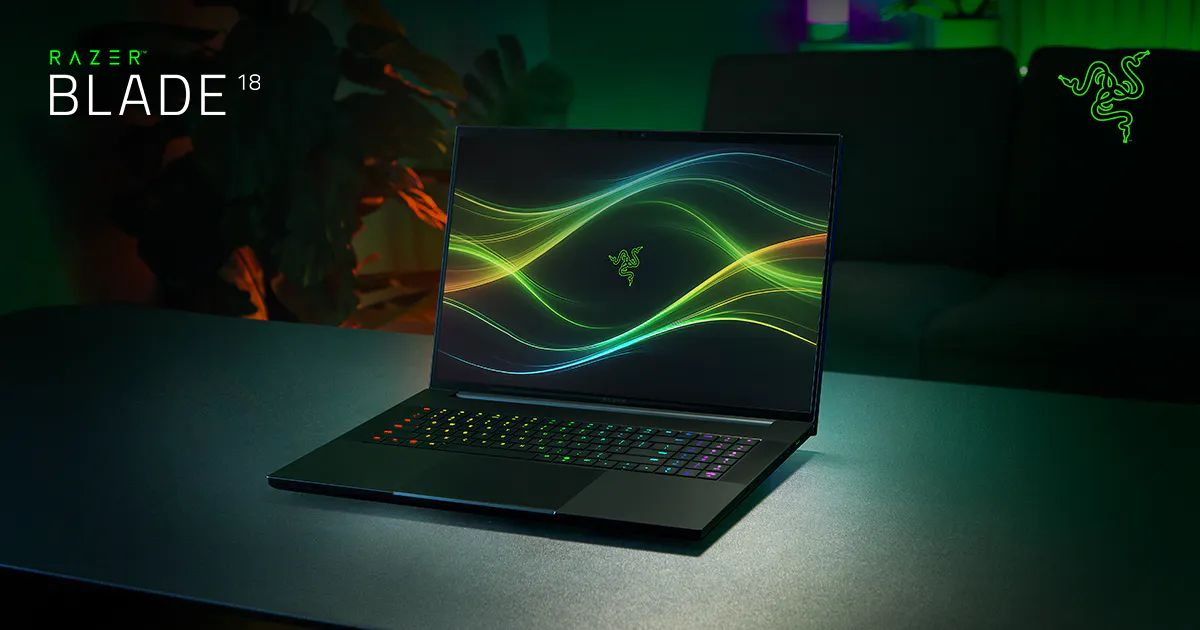
The 2026 Razer Blade 18 represents a profound surrender in laptop design. For years, the appeal of a premium gaming notebook was the illusion of uncompromised rendering capability housed in a thin, easily transportable shell. By building a massive chassis to accommodate desktop-grade silicon, Razer is admitting that physics has finally won, abandoning elegance for pure, heavy brute force.
The official hardware update, published on July 16, 2026, as detailed by Razer, outlines a machine built entirely on excess. The manufacturer is swapping out the Intel Core Ultra 275HX processor for a shiny new 290HX Plus model. This high-wattage CPU sits alongside an Nvidia 5000-series GPU and a dual-mode 4K display, all wrapped in their signature CNC-milled aluminum. The marketing frames this as a portable powerhouse, but the component list describes a stationary desktop computer tethered to a lithium-ion battery.
What Is the Performance of the Razer Blade 18 With an Nvidia 5000-Series GPU?
The raw output matches high-end desktop benchmarks in synthetic workloads, scaling aggressively when plugged directly into a wall outlet. Reviewer Matthew Moniz called it “The best gaming laptop I’ve used this year so far”, a sentiment echoed across early hands-on impressions testing maximum frame rates. When you feed a 290HX Plus processor and a 5000-series graphics card enough continuous wattage, performance in modern titles spikes accordingly. The dual-mode 4K display allows users to switch between high resolution for creative workflows and extreme refresh rates for competitive shooters.
That performance requires a physical footprint that defeats the core utility of a mobile device. Early buyers on Reddit are already posting pictures of the massive retail boxes with comments like, “It just arrived and its a huge bad boy!” That sheer scale is not a feature; it is a strict thermal necessity. High-wattage silicon produces heat that must be dissipated through large copper vapor chambers and high-RPM fans. You cannot cheat thermodynamics, and the result is a chassis that dominates any desk it sits on.
The Death of the Slimline Illusion
Razer built its modern reputation on the Razer Blade 15, a machine that forced competitors to rethink notebook aesthetics. The Blade 15 established that gamers would pay a premium to avoid carrying a heavy, plastic spaceship in their backpacks. The company then pushed the thermal limits with the Razer Blade 16, and eventually scaled up to the Razer Blade 17. Each sequential step up in screen size brought a corresponding increase in weight, power draw, and physical footprint.
The jump to an 18-inch form factor crosses a critical threshold in usability. A laptop of this size cannot comfortably fit on an airplane tray table or sit on a lap during a daily commute. It is a device built to move from a large desk at home to a large desk at a hotel, plugged into a wall outlet at both ends. This shift mirrors how high-end PC gaming has increasingly marginalized standard, accessible setups in favor of extreme, stationary hardware.
The Math on Price Efficiency Fails the Consumer
The financial reality of the Blade 18 is difficult to justify for anyone outside the most affluent buyer brackets. As hardware communities dissect the specification sheets, Reddit users have bluntly noted that “Razer laptops definitely have lower ‘price efficiency'” compared to competing machines from Asus or Lenovo. Buyers pay a massive premium for the sleek aluminum block and the green snake logo, but those aesthetic touches offer zero extra frames per second.
When a buyer pays thousands of dollars for a 290HX Plus and an Nvidia 5000-series GPU inside a laptop shell, they are inherently paying for thermal throttling. A mobile 5000-series chip will never match the raw computing output of its desktop counterpart because the laptop simply cannot draw the required continuous wattage without overheating. The buyer is funding top-tier silicon but only receiving a capped percentage of its potential performance. The cost-to-frame ratio is significantly worse than building a dedicated small-form-factor desktop. We have seen this same premium hardware trap recently, much like the exorbitant pricing models attached to specialized local AI processors.
The promotional materials promise a sturdy battery life, but this claim falls apart under the stress of actual gaming workloads. Running a 4K display and a 5000-series GPU on battery power limits the system to a fraction of its plugged-in performance, often draining a full charge in under an hour of intensive rendering. The battery exists primarily to keep the machine awake while you carry it to the next power source.
The Desktop Replacement Defense
The standard defense for this category of machine is that it serves a specific niche of traveling professionals who need maximum rendering capacity on location. Proponents argue that video editors, 3D animators, and touring esports players need a workstation they can pack into a heavy-duty transit case. For this specific demographic, the massive footprint is an acceptable trade-off for having their entire studio portable.
This defense ignores the reality of how these machines are actually marketed and sold. Razer is not pitching this exclusively to Maya animators or professional rendering farms. They are marketing it as a consumer device, promising players “Razer’s largest and most powerful laptop to date”, which targets the enthusiast gamer who believes spending the maximum amount of money guarantees the best possible experience. For the vast majority of these buyers, the laptop will sit on a single desk for three years, functioning exactly like a desktop but with a smaller screen, louder fans, and zero upgrade paths.
A gaming laptop that requires a massive external power brick just to maintain its base clock speeds defeats its own purpose. The dual-mode 4K display is a stunning piece of visual hardware, but it demands an amount of graphical horsepower that forces the cooling system into a jet-engine acoustic profile. You are left with a machine that is too heavy to travel with casually and too loud to use without noise-canceling headphones.
The 2026 update indicates that the industry has run out of clever ideas for mobile PC hardware. Instead of engineering more efficient chips or designing better cooling solutions for portable frames, the current strategy is simply to make the box bigger to accommodate desktop-class heat. Paying a massive premium for a 290HX Plus processor and a mobile 5000-series GPU just to leave it permanently plugged into a bedroom wall outlet is a profound waste of silicon. Related: NVIDIA Drops GeForce Hotfix 610.52 to Resolve G-Sync Pacing Issues.
Featured image via razer.com


Comments